Source document
Quoted word for word from HAER MASS,9-WATO,5-.
Not written, edited or summarised by this site.
Initially the Arsenal operated primarily for the receipt, storage, and issue of ordance supplies. During the Civil War the Arsenal expanded its production capabilities to include field and seacoast gun carriages. By the the Arsenal was engaged in the production of larger and more complex gun carriages. By the Watertown Arsenal was producing steel guns to be used in World War II. Watertown Arsenal possesses significance as a major development and production facility for and century military hardware. Historical Report Prepared by: Libby Baylies Burns and Betsy Bahr Prepared for Transmittal by: Robie S. Lange, HABS/HAER, Watertown Arsenal HAER No. MA-20 Page &
Executive Summary
The Watertown Arsenal was established in at Watertown, Massachusetts on forty acres of land on the northern banks of the Charles River. Initially the Arsenal operated primarily for the receipt, storage, and issue of ordnance supplies. During the Civil War the Arsenal expanded its production capabilities to include field and seacoast gun carriages. By the the Arsenal was engaged in the production of larger and more complex gun carriages. By the Watertown Arsenal was producing steel guns to be used in World War II. The prominent and recurring historical pattern at the Arsenal is one of non-destructive materials testing development. In the Army curtailed operations at this location and redefined the mission of the site.
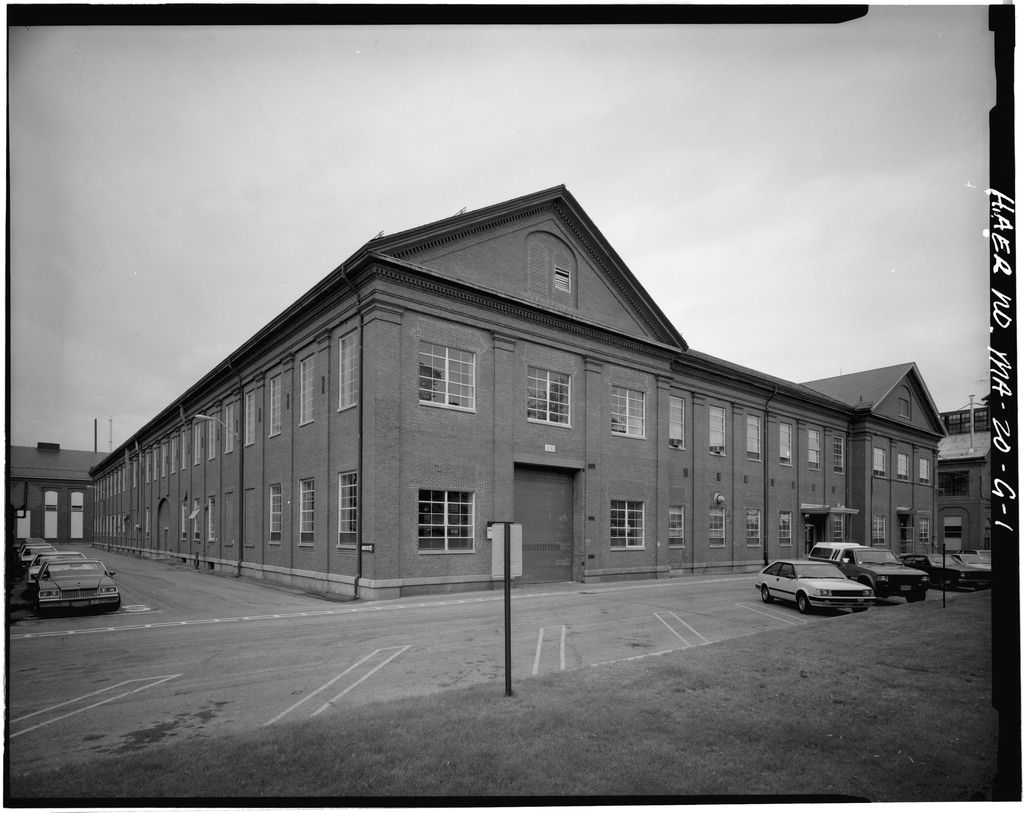
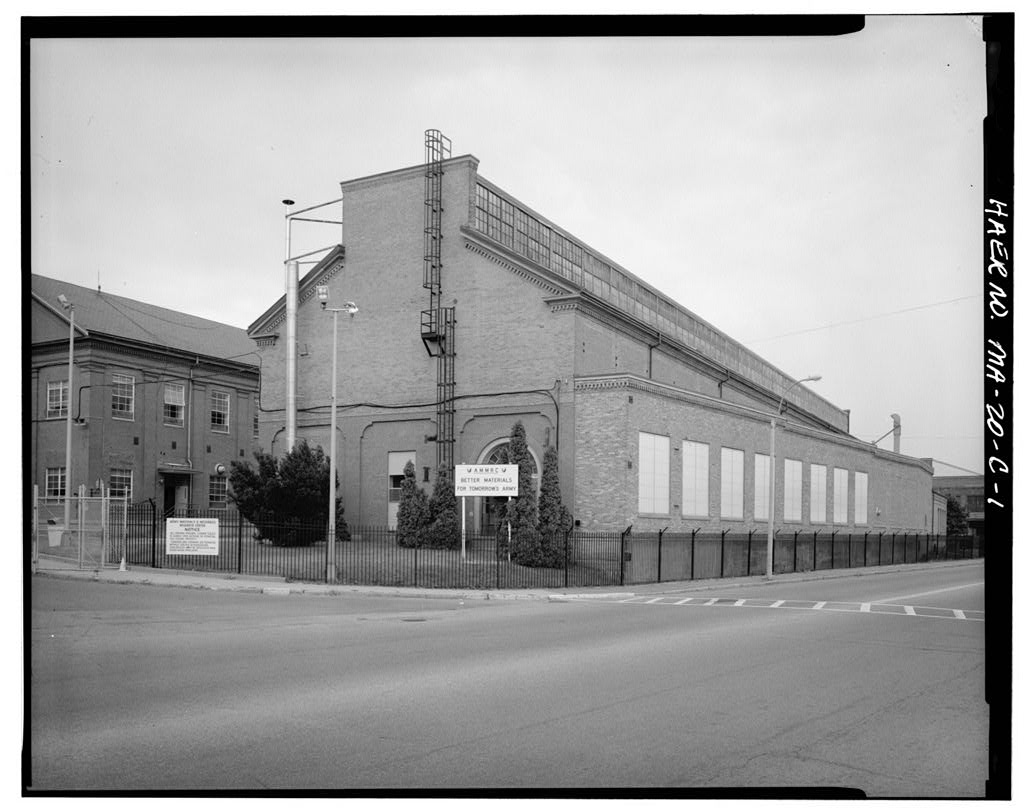
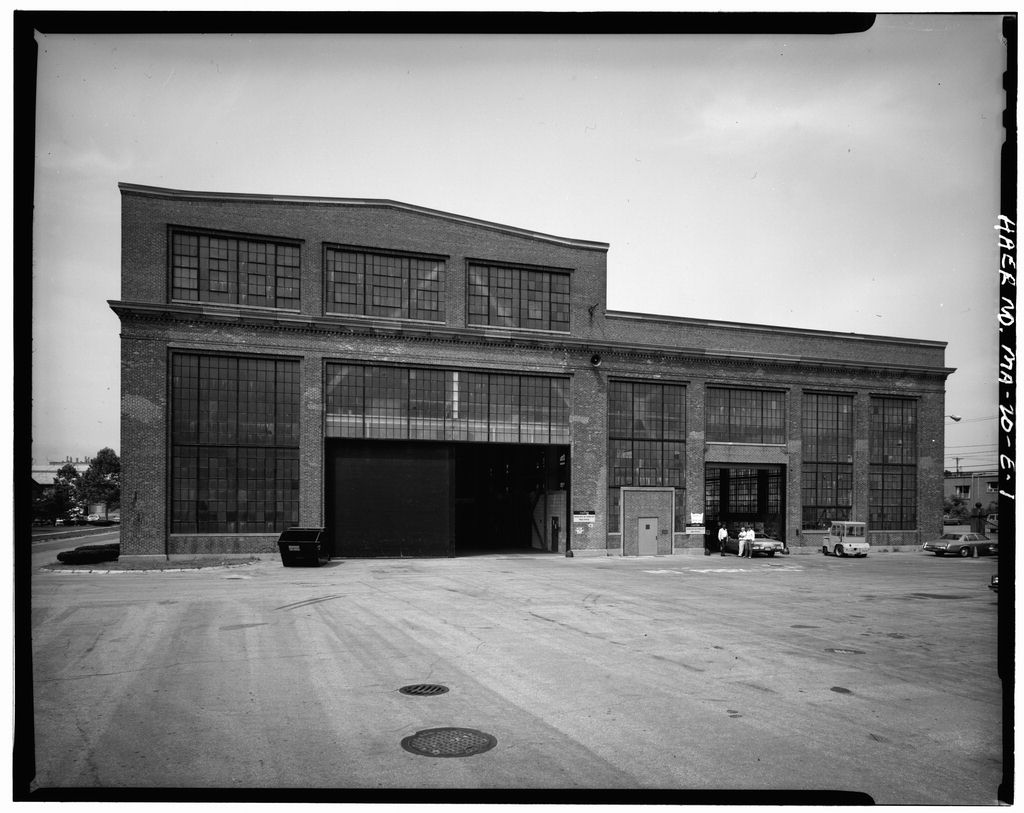
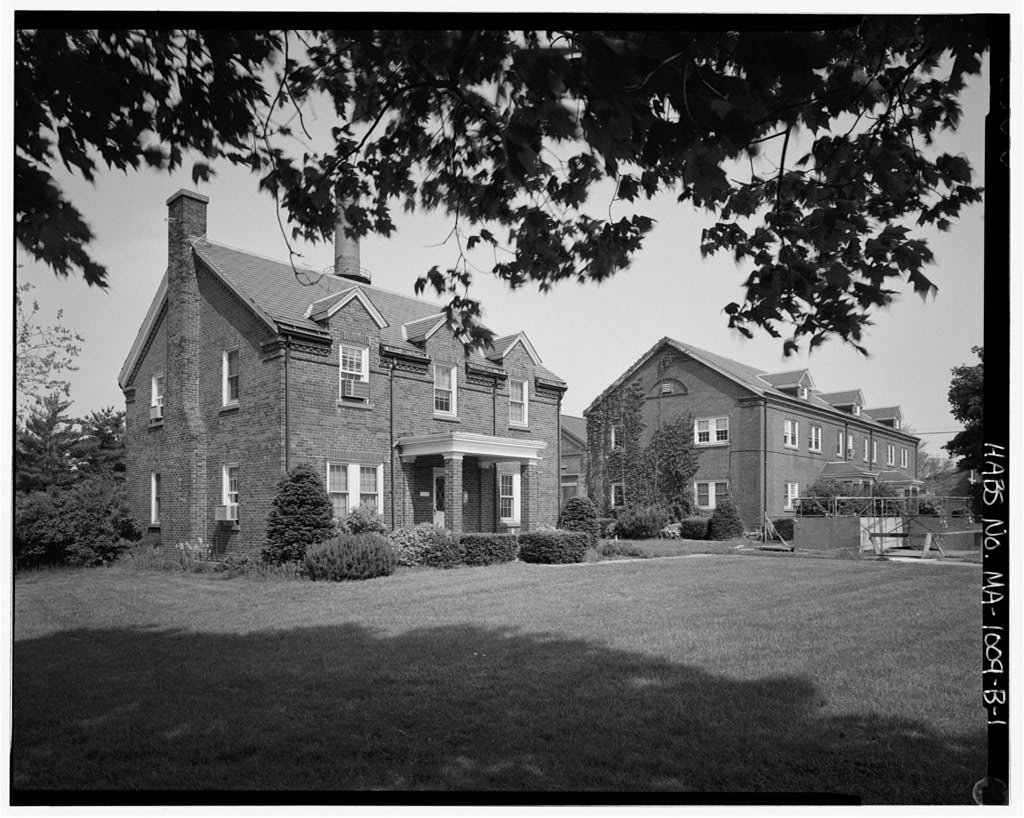
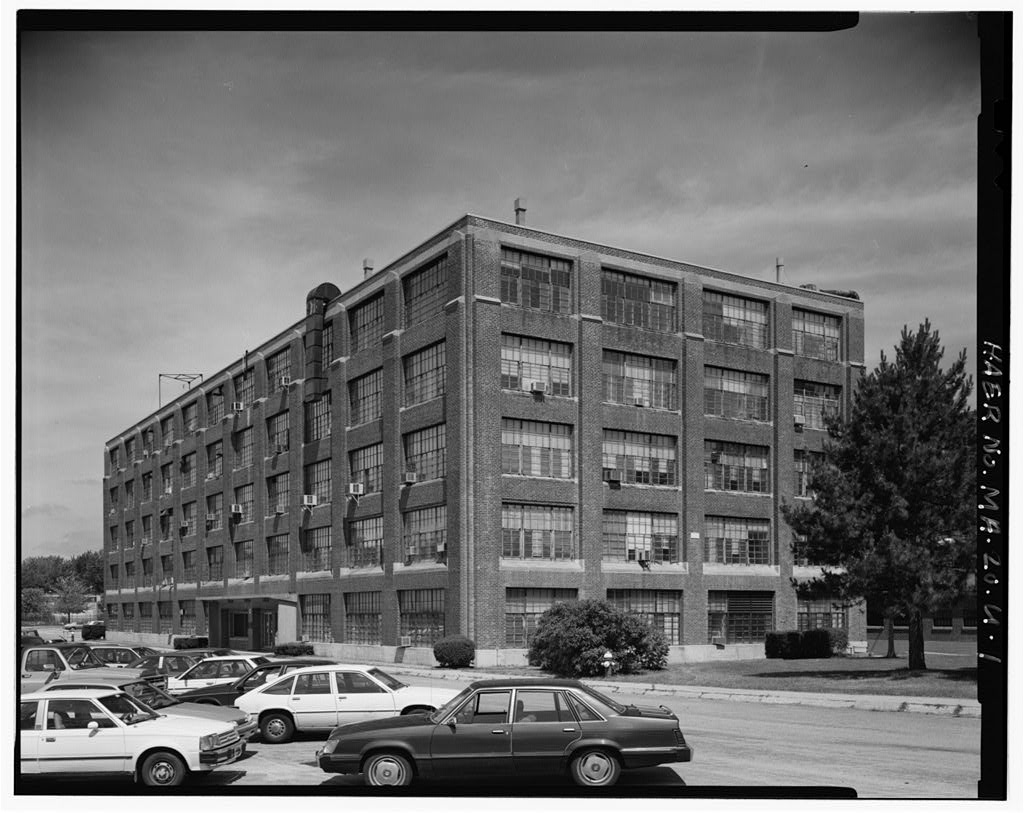
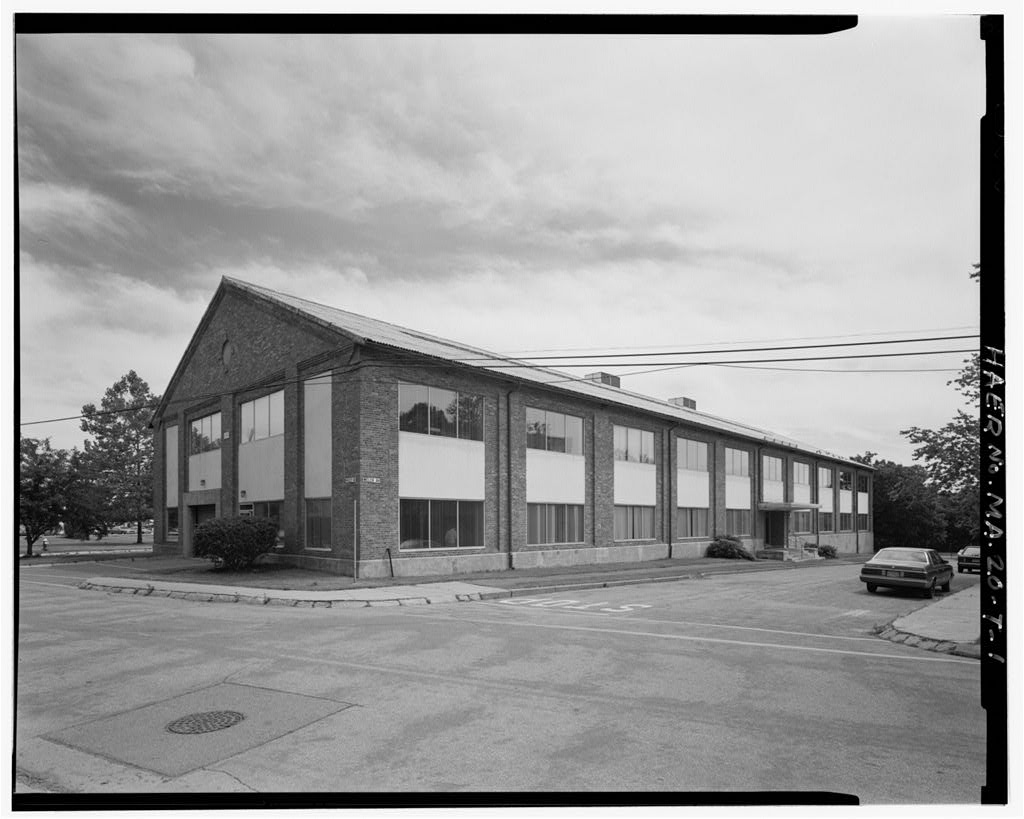
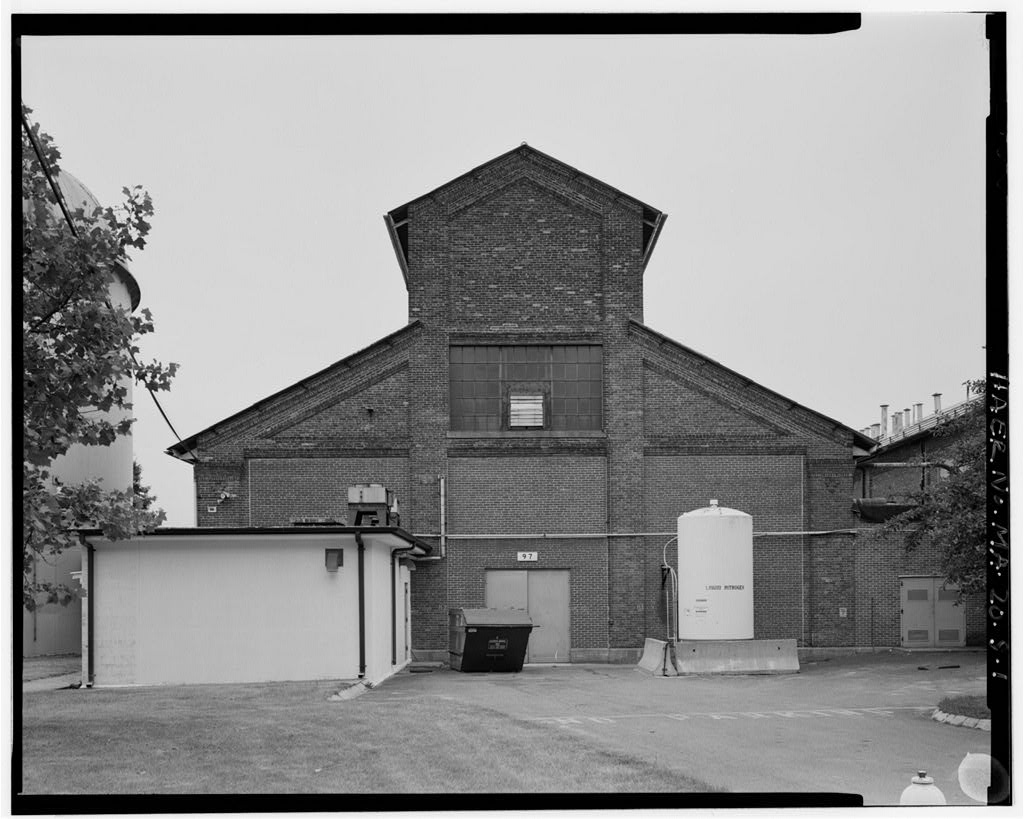
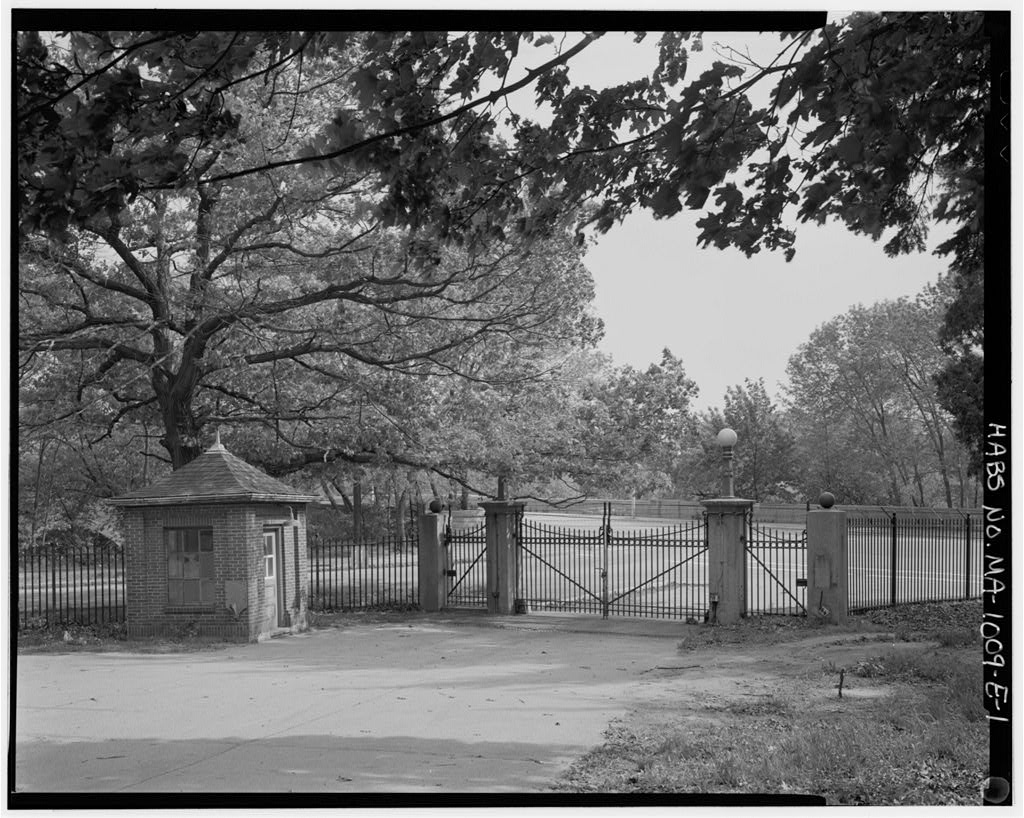
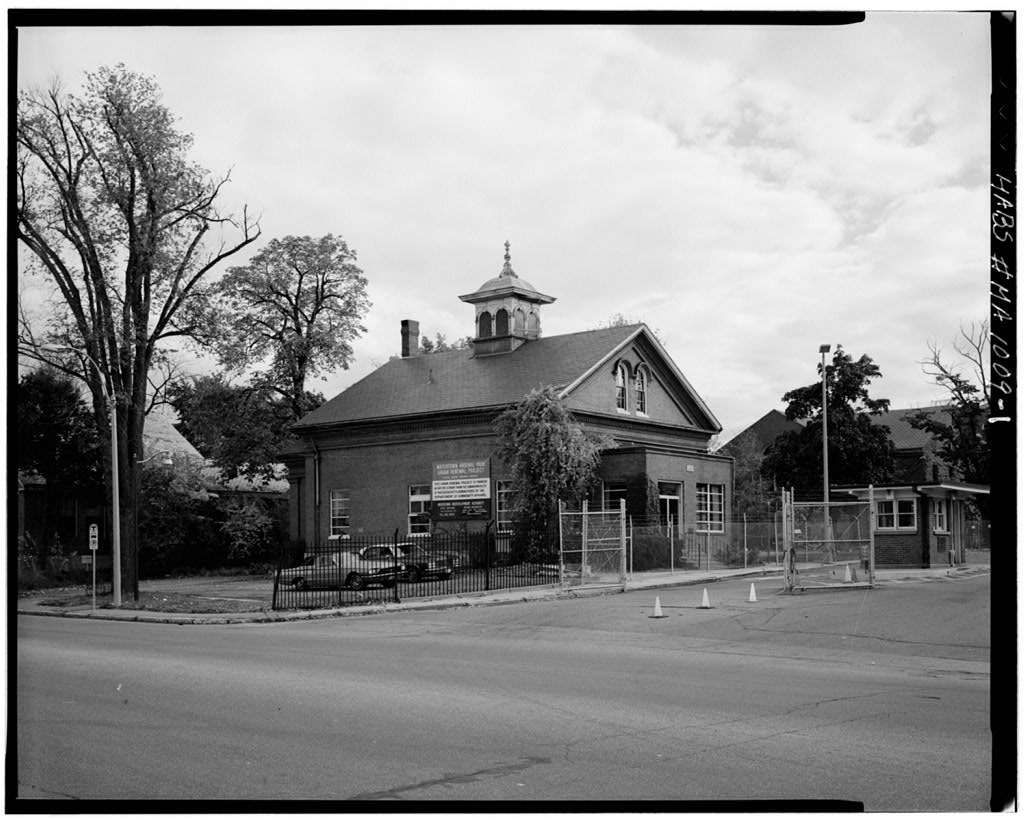
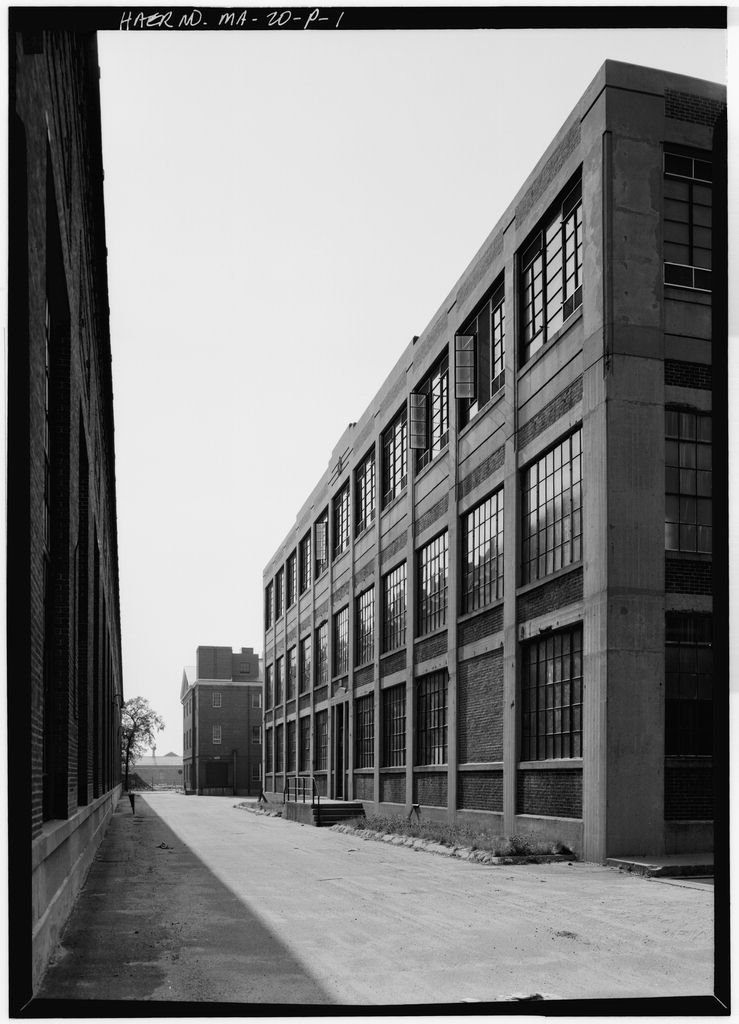
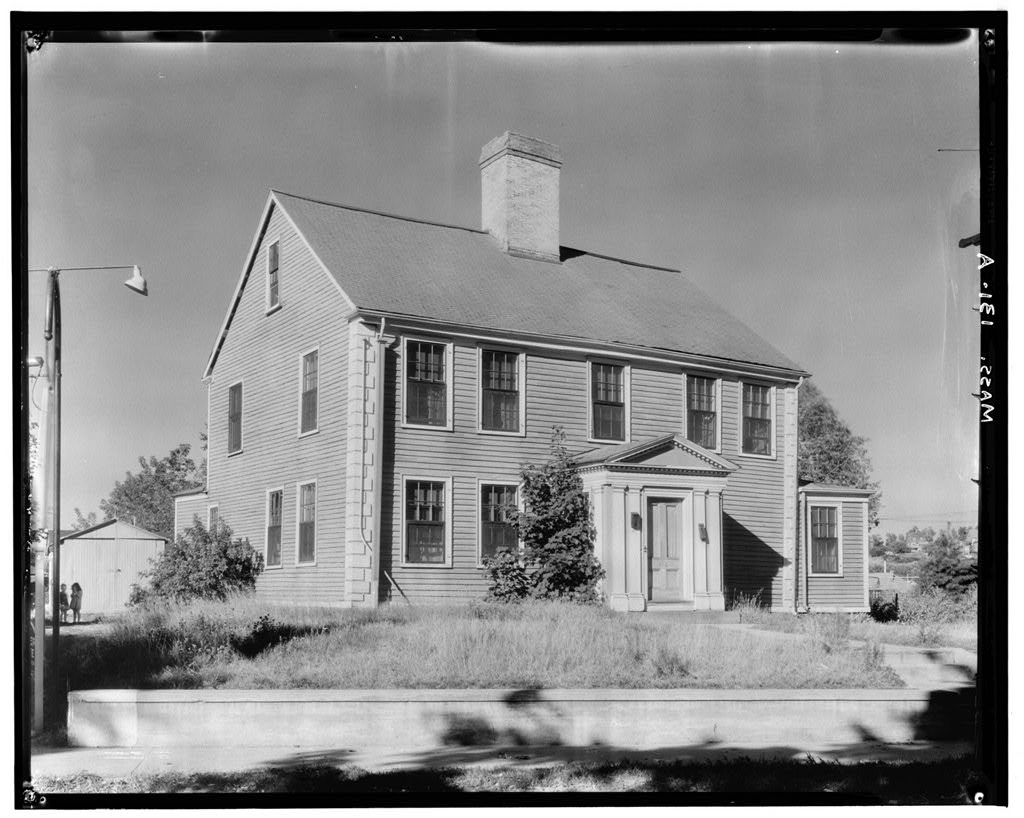
Forty-five acres were sold to the Watertown Redevelopment Authority; the remaining forty-eight acres were converted to the United States Army Materials and Mechanics Research Center. Only twenty-seven buildings remain under Army control. There are no Category I properties at Watertown Arsenal. There are seven Category II properties and the Horace Lester Reactor), and ten Category III buildings A National Register Nomination was prepared for the Gun Carriage Manufacturing Complex {Buildings and and is appended to this report. Twenty-four large format photographs were taken and may be located in the HABS/HAER collection of the Prints and Photographs Division of the Library of Congress. Watertown Arsenal HAER No. MA-20 Page 3 CONTENTS Executive Summary PREFACE 1 1.
INTRODUCTION 3 Scope 3 Methodology 4 2. HISTORICAL OVERVIEW 19 Background 19 The Development of the Watertown Arsenal Site, The Industrial History of Watertown Arsenal 74 Prom Factory Site to Testing Facility 133 3. PRESERVATION RECOMMENDATIONS 160 Background 160 Category I Properties Category II Properties 165 Category III Properties 172 BIBLIOGRAPHY 181 Watertown Arsenal HAER No. MA-20 Page t/- PREFACE This report represents the results of an historic properties survey of Watertown Arsenal. Prepared for the United States Array Materiel Development and Readiness Command (DARCOM), the report is intended to assist the Army in bringing this installation into compliance with the National Historic Preservation Act of and its amendments, and related federal laws and regulations.
To this end, the report focuses on the identification, evaluation, documentation, nomination, and preservation of historic properties at Watertown. Chapter 1 sets forth the survey's scope and methodology; Chapter 2 presents an architectural, historical, and technological overview of the installation and its properties; and Chapter 3 identifies significant properties by Army category and sets forth preservation recommendations. Illustrations and an annotated bibliography supplement the text. This report is part of a program initiated through a memorandum of agreement between the National Park Service, Department of the Interior, and the U.S. Department of the Army.
The program covers 74 DARCOM installations and has two components: 1) a survey of historic properties (districts, buildings, structures, and objects), and 2) the development of archeological overviews. Stanley H. Fried, Chief, Real Estate Branch of Headquarters DARCOM, directed the program for the Army, and Dr. Robert J. Kapsch, Chief of the Historic American Buildings Survey/Historic American Engineering Record (HABS/HAER) directed the program for the National Park Service. Sally Kress Tompkins was ^ Watertown Arsenal HAER No. MA-20 Page 5 program manager, Robie S. Lange was project manager for the historic properties survey. William Lebovich served as project leader and directed the field work at Watertown Arsenal.
This report was one of five pilot studies undertaken by the HABS/HAER office in the summer of Summer field teams, under the direction of HABS/HAER staff members, were sent to five DARCOM installations for the purpose of testing and tapering HABS/HAER survey methodology to the specific requirements of the DARCOM Project. Libby Baylies Burns and Betsy Bahr, historians, did the field work and prepared this report. The authors greatly acknowledge the help of the staff at Watertown, particularly Don Diamond, Gardner Dean and Paul McManus. The complete HABS/HAER documentation for this installation will be included in the HABS/HAER collection at the Library of Congress, Prints and Photographs Division, under the designation HAER # MA-20. Watertown Arsenal HAER No. HA-20 Page Co Chapter 1
Introduction Scope
This report is based on an historic properties survey conducted in of all Army-owned properties located within the official boundaries of Watertown Arsenal. The survey included the following tasks: Completion of documentary research on the history of the installation and its properties. Completion of a field inventory of all properties at the installation. Preparation of a combined architectural, historical, and technological overview for the installation. Evaluation of historic properties and development of recommendations for preservation of these properties.
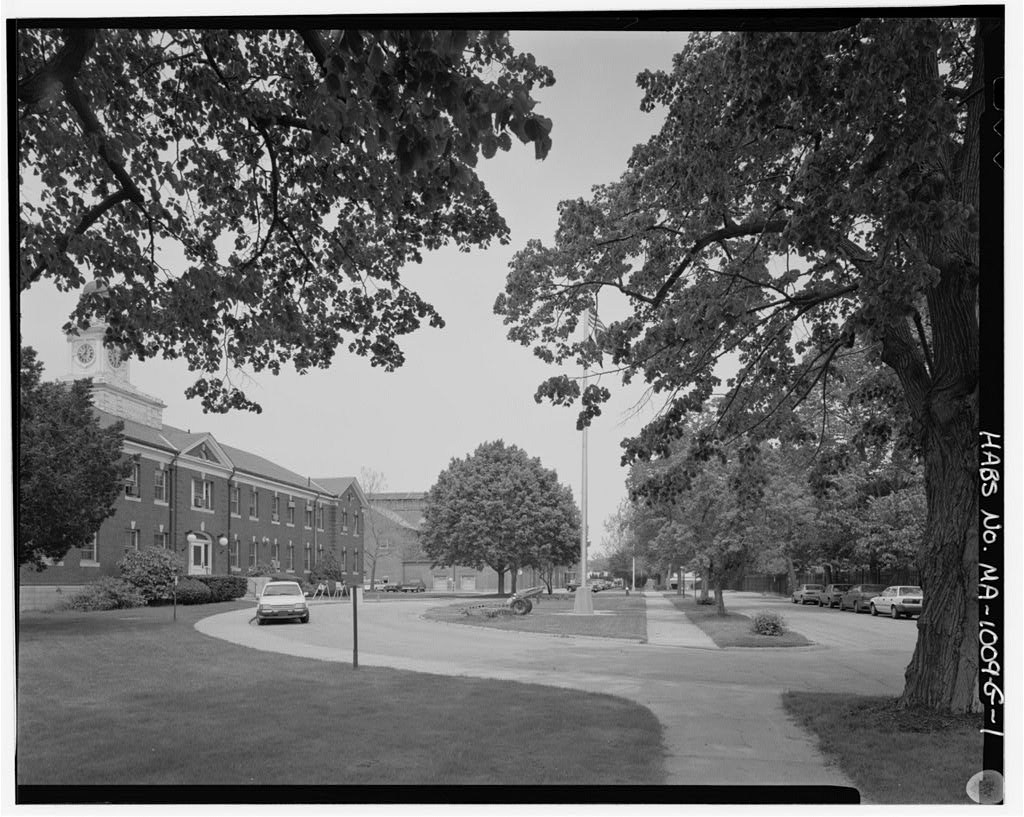
A National Register Nomination was prepared for the Gun Carriage Manufacturing Complex (Buildings 43, and Also completed as a part of the historic properties survey of the installation, but not included in this report, are HABS/HAER Inventory cards for 27 individual properties. These cards, which constitute HABS/HAER Documentation Level IV, will be provided to the Department of the Army. Archival copies of the cards, with their accompanying photographic negatives, will be transmitted to the HABS/HAER Watertown Arsenal HAER No. MA-20 Page collections at the Library of Congress. In addition, large format photography was done to HABS/HAER standards resulting in twenty-four images.
These photographs will be transmitted to the HABS/HAER collection in the Prints and Photographs Division at the Library of Congress. The methodology used to complete these tasks is described in the following section of this report. METHODOLOGY 1. Documentary Research The present AMMRC site, owned and operated by the United States Army, DARCOM, comprises only part of what was once a larger military property. Established in the property originally served as the Watertown Arsenal. In the Army curtailed operations at this location and redefined the mission of the site. Fifty-five acres were sold to the Watertown Redevelopment Authority; the remaining forty-eight acres were given over to AMMRC.
In order to conduct an accurate historical assessment of the present site, it was considered essential to understand the history of the Arsenal in its entirety. The development of the site over time and historical events or persons associated with the Arsenal were all considered when establishing a historical frame of reference for evaluating the Watertown site. However, only the buildings presently owned by DARCOM (and used by AMMRC) have received in-depth research on such topics as construction Watertown Arsenal HAER No. MA-20 Page % technology and industrial use, as outlined by the "Scope of Work." The overview covers the years the latter date being determined by the closing of the Watertown Arsenal.
In examining the Watertown Arsenal site, buildings, and activities, it was apparent that the prominent and recurring historical pattern is one of non-destructive materials testing development, dating from the mid-nineteenth century to present day. This theme then became the touchstone for the research. Information on materials testing pertaining to what was tested, how the tests were performed, and was consistently sought. Still, understanding building construction and use, industrial processes, physical site development, and the relationship between buildings remained important. A literary search was conducted to locate both primary and secondary sources documenting the establishment and growth of the Watertown Arsenal.
A History of the Watertown Arsenal, written by Judy Dobbs provided an introductory history and a bibliography from which to work in locating pertinent sources. Much of the material found was located on the AMMRC base. However, none of this material included manuscript or archival records and most of the information described the Arsenal's operation during the twentieth century. The richest local resource in volume and scope was a collection of photographs located in the Public Affairs Office (Building the Photo Lab (Building and in the private hands of Paul McManus, Security Intelligence Officer. The photographs showed both interior and *f Watertown Arsenal HAER No.
MA-20 Page l exterior views of work and manufacturing operations at the Watertown Arsenal dating principally from the World War I and II eras. The Public Affairs Office was also the source of some secondary literature, including a few historical pamphlets; back issues of The Arsenal News, an internal military publication and newsletter; and two unpublished, typescript histories of the Watertown Arsenal compiled and written by former Commanding Officers Colonel Dickson and Colonel John Mather in and respectively. The Technical Library maintained on the base was of no value to this study; its collection policy serving only the current research needs of AMMRC laboratory scientists and technicians.
A local library search revealed no primary source material, but turned up a few local histories that were of minor importance to the study. The Watertown Free Public Library keeps a run of city directories for Watertown dating from to the early twentieth century, in addition to a gazetteer of local industries and businesses for These sources contain valuable data on local industries and occupations affiliated with the operation of the Watertown Arsenal in the nineteenth century. However, this avenue of investigation did not fall within the limits of the immediate scope of work, and was not pursued. Of greater value to the study were a few early maps of Watertown and a bird's-eye view of the town showing an isometric view of the Arsenal.
Both these items are in the local history collection at the Watertown Free Public Library's main branch. An investigation of manuscripts and reference material at the Massachusetts State House Library and Archives provided little pertinent information. The Library's collection offered virtually nothing of significance for the research and survey purposes. Although the State s# Watertown Arsenal HAER No. MA-20 Page i5 Archives maintains bound volumes of acts and resolutions of the State of Massachusetts, some of which pertain to issues between the State and the U.S. Ordnance Department at Watertown Arsenal, most of this legislation was of peripheral interest. One repository, the State Archives Annex, contained a few nineteenth century maps and atlases for Watertown and Middlesex County.
Some of these contributed to the graphic documentation of the Arsenal's property development during the nineteenth century. A singular find was made at the Boston Atheneum. This item was an unpublished typescript, "Report on Inspection and Recommendations for Safety in the Workplace, describing working conditions at the Arsenal. The report also featured many orginal photographs showing building interiors and machinery in situ. This visual material documents the Arsenal from an earlier date than that covered by the photo collection at AMMRC. The Society for the Preservation of New England Antiquities (SPNEA) had a few early postcard views of the Arsenal (c.
SPNEA also collected an illustrated article on the Watertown Arsenal that was featured in Gleason's Pictorial Drawing Room Companion in A local history reference, Massachusetts: A Bibliography of Its History, was also examined at this repository, but aided the search little beyond identifying standard institutional, parish, or geneological histories. Local histories, found at Widener Library, Harvard University, were of very little value. The Widener Library collection does include some nineteenth century ordnance and military publications but these did not Watertown Arsenal HAER No. MA-20 Page I) document the Watertown Arsenal proper. An Watertown map, maintained in the Library's Map Division, duplicated a map found at the Massachusetts State Archives.
A full run of issues of Army Ordnance Magazine, from to was located at the library of the Massachusetts Institute of Technology. This publication chronicled contemporary events in ordnance history and featured a article on the laboratory facilities at Watertown Arsenal written by Colonel Dickson, Commanding Officer. The catalogue of imprints at the Boston Public Library, and maintained by the Research Library, contained a substantial number of citations under the subject heading for "Ordnance," Among the titles were out of print reports and other secondary literature published by the U.S. Government for the Department of Ordnance. The Boston Public Library is also a federal repository for government documents.
Included in the library's collection of Congressional Reports, and kept on microtext, were Annual Reports of the Secretary of War covering the late eighteenth through the nineteenth and early twentieth centuries. The reports included an Annual Report of the Chief of Ordnance, which often combined yearly reports of the principal operations at each arsenal. These reports from the chief of Ordnance and the Commanding Officers at respective installations provided much information not otherwise found in secondary and archival sources. A descriptive essay, "Nomination of the Watertown Arsenal as a National Historic Civil Engineering Landmark," was provided by the Boston Section .8- Watertown Arsenal HAER No. MA-20 Page 1 3L of the American Society of Civil Engineers.
The local chapter headquarters, however, had little else in its holdings relating to the Arsenal or to early engineering materials testing. An inquiry into the Federal Archives and Record Center at Waltham, Massachusetts, met with disappointing results. In the Records Center's holdings on the Watertown Arsenal, including periodic reports, correspondence, and photographs, were transferred to the National Archives in Washington, A detailed transmittal report from Waltham listing the volume and content of the records that were transferred was received. This aided the evaluation of the research potential of the National Archives collections.
Due to time limits, the holdings of the Harvard School of Design Library; the Baker Library, Harvard Graduate School of Business Administration; or the Olmstead Assocites Archives were left unexamined. Several useful publications, made available through inter-library loan, were received form the U.S. Army Military History Institute at Carlisle Barracks, Pennsylvania. While the Institute maintains both an archives and a library division, only the library had imprints that were of value to this study.
The historical volumes that were of interest included the Surgeon General's and Quartermaster General's Reports of the and Rodman's Reports of Experiments on the Properties of Metals The Military Institute also maintains a full run of Ordnance Notes, and the annual Reports of Experiments on Metals Testing at Watertown from to Watertown Arsenal HAER No. MA-20 Page \ '' Judging from the local literary search, it became apparent that primary sources documenting the industrial history of Watertown Arsenal were housed in repositories outside the Boston area.
The main body of manuscript material from and about Watertown Arsenal is maintained in the Records of the Chief of Ordnance, Record Group at the National Archives, Washington, This collection supplied the bulk of the primary source material used in the historical overview. The inventory for this collection, available in the Navy and Old Army Records office at the Archives, identified runs of correspondence and reports from the office of the Chief of Ordnance, as well as records created at Watertwon Arsenal. The principal entries consulted and which yielded the most useful information for the historical overview are identified in the bibliography.
Other collections at the National Archives that suggested the possibility of providing site specific documentation, but which were not examined due to time constraints, included Records of the Inspector General, Record Group Records of the Office of the Quartermaster General, Record Group 92? and Records of the Office of Chief of Engineers, Record Group 77. In addition to the National Archives, the collections of the Smithsonian Institution in Washington, provided documentation on the Emery Testing Machine. The actual machine is maintained in the artifact collection of the National Museum of American History, Division of Mechanical and Civil Engineering.
Originally installed at the Watertown Arsenal in the Emery Testing Machine was used to perform precision tests on the strength of constructive engineering materials. The introduction of the machine at Watertown marked a period of laboratory ^i3 Watertown Arsenal HAER No. MA-20 Page i^ testing and experimentation which has come to define the mission of the present AMMRC installation. The material at the Smithsonian thus provided valuable information on the establishment and early development of Watertown's Laboratory facility. Oral interviews were conducted with several AMMRC employees. The aim of such interviews varied. Long-time employees provided general historical information and occasionally, along with other employees, gave more detailed and site specific information. 2.
Field Inventory Field inventory procedures were based on the HABS/HAER Guidelines for Inventories of Historic Buildings and Engineering and Industrial Structures. All areas and properties were visually surveyed. Building locations and approximate dates of construction were noted from the installations property records and field-verified. Field inventory forms were prepared for, and black and white 3 5mm photographs taken of all buildings and structures through except basic utilitarian structures of no architectural, historical, or technological interest. Field inventory forms were also completed for representative post-1945 buildings 2 and structures. Information collected on the field forms was later evaluated, condensed, and transferred to HABS/HAER Inventory cards.
To augment field survey data, literature searches were undertaken for each building. Building construction and alteration dates, in addition to building use, were verified by consulting the Real Property Records of the ar" Watertown Arsenal HAER No. MA-20 Paee \5 Facilities Office; the Installation Inventory of Military Real Estate Property, current as of March 31, architectural drawings and site plans; commanding officers' written histories; and Judy Dobbs' A History of the Watertown Arsenal. Oral interviews with long time employees and photographs from the Public Affairs Office (PAO), AMMRC photo lab, the boiler plant, and the security office provided additional information about the Arsenal development in the twentieth century.
From these sources facts about the Arsenal's former manufacturing processes, industrial equipment, labor organization, ordnance products, and changes in building appearances over time were made available. It was anticipated that more detailed information of this sort could be found, however, within Record Group 156 (Records of the Chief of Ordnance) at the National Archives in Washington, 3. Historic Overview A combined architectural, historical, and technological overview was prepared from information developed from the documentary research and the field inventory. It was written in two parts: 1) an introductory description of the installation, and 2) a history of the installation by periods of development, beginning with pre-military land uses.
The objectives of the overview were to 1) establish the periods of major construction at the installation, 2) identify important events and individuals associated with specific historic properties, 3) describe patterns and locations of historic property types, and 4) analyze specific building and industrial technologies employed at the installation. ^*T Watertown Arsenal HAER No. MA-20 Page ( Vo 4. Property Evaluation and Preservation Measures Based on information developed in the historic overviews, properties were first evaluated for historic significance in accordance with the eligibility criteria for nomination to the National Register of Historic Places.
These criteria require that eligible properties possess integrity of location, design, setting, materials, workmanship, feeling, 3 and association, and that they meet one or more of the following: A. Are associated with events that have made a significant contribution to the broad patterns of our history. B. Are associated with the lives of persons significant in the nation's past. C. Embody the distinctive characteristics of a type, period or method of construction, represent the work of a master, possess high artistic values, or represent a significant and distinguishable entity whose components may lack individual distinction. D. Have yielded, or may be likely to yield, information important in pre-history or history.
Properties thus evaluated were further assessed for placement in one of five Army historic property categories as described in Army Regulation s* Watertown Arsenal HAER No. MA-20 Page t ') Category I Properties of major importance Category II Properties of importance Category III Properties of minor importance Category IV Properties of little or no importance Category V Properties detrimental to the significance of adjacent historic properties Based on an extensive review of the architectural, historical, and technological resources identified on DAJ3C0M installations nationwide, four criteria were developed to help determine the appropriate categorization level for each Army property.
These criteria were used to assess the importance not only of properties of traditional historical interest, but of the vast number of standardized or prototypical buildings, structures, and production processes that were built and put into service during World War II, as well as of properties associated with many post-war technological achievements. The four criteria were often used in combination and are as follows: 1) Degree of importance as a work of architectural, engineering, or industrial design.
This criterion took into account the qualitative factors by which design is normally judged: artistic merit, workmanship, appropriate use of materials, and functionality, 2) Degree of rarity as a remaining example of a once widely used architectural, engineering, or industrial design or process. This criterion was applied primarily to the many standardized or prototypical DAfiCOM buildings, structures, or industrial processes. The more widespread or influential the design or process, the greater Watertown Arsenal HAER No. MA-20 PageU- the importance of the remaining examples of the design or process was considered to be. This criterion was also used for non-military structures such as farmhouses and other once prevalent building types, 3) Degree of integrity or completeness.
This criterion compared the current condition, appearance, and function of a building, structure, architectural assemblage, or industrial process to its original or most historically important condition, appearance, and function. Those properties that were highly intact were generally considered of greater importance than those that were not. 4) Degree of association with an important person, program, or event. This criterion was used to examine the relationship of a property to a famous personage, wartime project, or similar factor that lent the property special importance. The majority of DARCOM properties were built just prior to or during World War II, and special attention was given to their evaluation.
Those that still remain do not often possess individual importance, but collectively they represent the remnants of a vast construction undertaking whose architectural, historical, and technological importance needed to be assessed before their numbers diminished further. This assessment centered on an extensive review of the military construction of the period, and its contribution to the history of World War II and the post-war Army landscape. X Watertown Arsenal HAER No. MA-20 Page ' ; Because technology has advanced so rapidly since the war, post-World War II properties were also given attention. These properties were evaluated in terms of the Nation's more recent accomplishments in weaponry, rocketry, electronics, and related technological and scientific endeavors.
Thus the traditional definition of "historic" as a property 50 or more years old was not germane in the assessment of either World War II or post-war DAfiCOM buildings and structures; rather, the historic importance of all properties was evaluated as completely as possible regardless of age. Property designations by category are expected to be useful for approximately ten years, after which all categorizations should be reviewed and updated. Following this categorization procedure. Category I, II, and III historic properties were analyzed in terms of: o Current structural condition and state of repair. This information was taken from the field inventory forms and photographs, and was often supplemented by rechecking with facilities engineering personnel.
o The nature of possible future adverse impacts to the property. This information was gathered from the installation's master planning documents and rechecked with facilities engineering personnel. Watertown Arsenal HAER No. MA-20 Page . Based on the above considerations, the general preservation recommendations presented in Chapter 3 for Category I, II, and III historic properties were developed. Special preservation recommendations were created for individual properties as circumstances required. 5. Report Review Prior to being completed in final form, this report was subjected to an in-house review. It was then sent in draft to the subject installation for comment and clearance.
When the installation cleared the report, additional draft copies were sent to DAKCOM, the appropriate State Historic Preservation Officer, and, when requested, to the archeological contractor performing parallel work at the installation. The report was revised based on all comments collected, then published in final form. Watertown Arsenal HAER No. MA-20 Page -A; NOTES 1. Historic American Buildings Survey/Historic American Engineering Record, National Park Service, Guidelines for Inventories of Historic Buildings and Engineering and Industrial Structures (unpublished draft, 2.
Representative post-World War II buildings and structures were defined as properties that were: (a) "representative" by virtue of construction type, architectural type, function, or a combination of these, (b) of obvious Category I, II, or III historic importance, or (c) prominent on the installation by virtue of size, location, or other distinctive feature. 3. National Park Service, How to Complete National Register Forms (Washington, U.S. Government Printing Office, January 4. Army Regulation Historic Preservation (Headquarters, U.S. Army: Washington, 15 April Watertown Arsenal HAER NovMA-20 Page '^ Chapter
The Historical Overview Background
Established in the Watertown Arsenal site evolved from an ordnance military supply depot to an important manufacturing and materials testing facility of the U.S. Army by the end of the nineteenth and early twentieth centuries. The majority of the historic buildings remaining on the present AMMRC site survive from this later period. The collection of building designs and alterations document the gradual evolution of the installation's mission and industrial productivity over time. The history of the Watertown Arsenal's operation from ordnance depot to factory and laboratory site was not a smooth and linear one.
Subject to the vagaries of national political and economic affairs, and the personalities of ordnance chiefs and commanding officers, Watertown Arsenal underwent periods of both exceptional growth and relative inactivity. The nature and purpose of this history is site specific. As a result, greater attention will be given to the historical moments of the past which contributed to the establishment of the present AMMRC site. The following narrative will trace the physical and industrial development of the Watertown Arsenal from to Particular emphasis will be given to the years between and when major strides in building expansion and industrial production took place at this installation. The historical account will include: 1) A summary of rf Watertown Arsenal HAER No.
MA-20 Page ^ 3 the Arsenal's site development from its inception in to the closing of Watertown Arsenal and the relocation of AMMRC in 2) A detailed and chronological description of the Arsenal's evolving mission and industrial accomplishments; and 3) A survey of the materials testing programs conducted at the Arsenal addressing their history and industrial impact. THE DEVELOPMENT OF THE WATERTOWN ARSENAL SITE, Early Development and the Quadrangle Plan The establishment of a United States Arsenal at Watertown, Massachusetts owes its origins to an earlier installation situated in the vicinity of Boston in the town of Charlestown, Massachusetts. Authorized by an Act of Congress in and approved by the Massachusetts State Legislature in the U.S.
Arsenal at Charlestown supplied ordnance to the Army and organized militia in the New England states. The operation of the Charlestown Arsenal was short-lived, however. With the War of and United States military involvement at sea, the need for a naval repair yard in Boston Harbor became readily apparent. Under the direction of Colonel George Bomford, then Chief of Ordnance, the Charlestown Arsenal was dutifully turned over to the Navy Department, and an alternative location for the Arsenal was immediately sought. Captain George Talcott, Commander of the Charlestown Arsenal, took charge of selecting a new site. Talcott surveyed several possible locations - near Portsmouth, New Hampshire, along the Kennebec River in Maine, and a Watertown Arsenal HAER No. MA-20 Page 3.
4 few towns in the Boston vicinity - but decided upon the Watertown site just north of the Charles River. In presenting his selection to Colonel Bomford, Talcott argued that Watertown offered several desirable features which surpassed other locations. The site was within the proximity of Boston and available building materials; it was easily accessible by a navigable waterway, facilitating the receipt and issue of ordnance stores; and the proposed arsenal site was sufficiently secure from enemy attack by water or over land due to its elevated inland location. Following Bomford*s acceptance and approval of Talcott's proposal, the U.S. Government acquired consent from the State of Massachusetts in authorizing the purchase of land at Watertown for the establishment of an ordnance depot.
That same year, the U.S. bought forty acres of land on the northern banks of the Charles River and work began immediately on erecting the Arsenal. (Fig. 1) Given the responsibility for designing the new Arsenal at Watertown, Captain Talcott1s plan resulted in both a formal and a functional arrangement. Located on a rise overlooking the Charles River to the south, twelve buildings were arranged on a north/south axis in a quadrangle surrounding a central parade ground. A two-story Federal style military store and an arsenal of similar design anchored the ends of the green to the north and south respectively. Flanking the east and west sides were two two-story officers' quarters and two two-story barracks at the corners and six one-story shops with shed roofs for artificers.
A formal entrance road led from Market Street on the Charles Watertown Arsenal HAER No. MA-20 Page c^ >.. ;W- SIL~. - H; j < W ^r/ io^ ijo^ / ? /we- - " A ^ 3 <6r O/ *&- Figure 1 - Map illustrating Arsenal land purchases to (Photo Lab, AMMRC) A Watertown Arsenal HAER No. MA-20 Page M * River northward up the incline to the Arsenal Building. Finally, the whole was to be "connected by a brick wall fifteen feet high so as to 2 form an enclosure agreeably to the ground plan." (Fig. 2) Simple and forthright in its design, Talcott may have modeled the Watertown Arsenal site after an existing plan. In a letter to Colonel Wadsworth at the Ordnance Department in July of Talcott writes of a sketch for its ground plan.
"The general arrangement is similar to the Arsenal at Gibbonsvile, with the addition of a large building for a military store (specially ordered) which has obliged me to divide the barracks." Gibbonsville, later known as Watervliet, New York, had been established as an arsenal in Its plan consisted of a similar arrangement of ten brick buildings arranged squarely around a yard which ^ft functioned as a parade and drill ground. The buildings, like the plan, had a formal presence their simple yet functional military design. All were built of brick with slate roofs. Freestone, granite, and rough stone were used for foundations, lintels, sills and cornices.
Stonework and hard weather brick were chosen for their strength and durability in preference to weaker and more perishable building materials. The buildings were protected from fire or attack by their design and orientation. A high encircling brick wall protected the Arsenal from unwanted intruders and most buildings could only be entered by doors opening onto the green. (Fig. 3) WaterCown Arsenal HAER No. MA-20 Page c^ r / Machine Shop Laboratory Blacksmith Shop I North Arsenal rfest Barracks East Barracks Paint Tool House Shop Parade Grounds Carpenter Amour's Shop Shop v_y s_y East West South Arsenal Quarters Quarters Figure 2 - Revised plan of Talcott's original quadrangle design, showing buildings erected (Dobbs) Watertown Arsenal HAER No. MA-20 Page d '&' < o Ul O .c CU 1_ o A-i !
x t/J X 1_ o c c .*: o o a) c j x fU ra 3 a/ CO 1 3 Watertown Arsenal HAER No. MA-20 Page -* ' : The first Arsenal buildings were designed in a simple Federal style. Straightforward in their massing and clean lines, these brick buildings were symmetrically arranged and lacked detailed ornamentation. Among their features the most prominent were the smooth facades of brick, the low pitched gable roofs and the occasional round arched bays. The North and South Storehouses are good examples of this style. At the same time, a more classical vocabulary was being employed in the design of the officer's quarters. Commonly known as Roman Classicism or Greek revival, this style was gaining in popularity through its use in the new federal government's buildings being erected in Washington.
Generally comprised of a Roman temple form, these buildings had pedimented gables and raised podium-like entrances with plain entablatures supported by columns of the Roman order. Built of brick, which was originally painted white, and symmetrically arranged around the quadrangle these styles combined well to visually integrate the site. (Fig. 4) Like many of the buildings later constructed at the Watertown Arsenal, these first buildings were designed by a local architect. Alexander Parris, formerly of the Corps of Artificers, was then an architect active in the Boston area. Trained in the office of Charles Bulfinch, Parris' hand is reflected in the clean lines and architectural massing of this unadorned adaptation of the Federal style to military architecture.
Later, Parris contributed his knowledge of Watertown Arsenal HAER No. MA-20 <) in CC 1_ r fl> T. l_ 4. M nft U < nj _i + <\) 0 11 +J 3 n O c J^ a. O o H o \L> <u CO 4-J u a> en 4-1 a -C fD CT i_ ._ -a L. 03 ^ \_ o* ID 4- <u SZ -J +-> ffl ^ (/I yi <D O ul L. 3 a 0 01 .c HJ 4-> L. (/> 0 fU 4-J CD e/i x: J-J JI n M o 3 in 0 c/ en c: 01 _*: 1_ o a) O w o <r.u n <i) <3; -o u </i u- m 4- ^^ O (U 4- r tf 0) (S <o LU i_ <r a <\) cj r r h- (/I Z3 Watertown Arsenal HAER No. MA-20 Page 3! military construction to the design of buildings at the Charlestown Navy 4 Yard in Boston and the Navy Yard in Portsmouth, New Hampshire. By the first buildings were completed and occupied. As an ordnance depot, the North and South Arsenal Buildings housed arms and the magazines stored ammunition.
In the Machine, Blacksmith and Carpenter's shops surrounding the Arsenal quadrangle, workmen repaired artillery and made small arms cartridges. Finally, officers' quarters and barracks housed men stationed at the Arsenal to protect and manage the post, (Figs. 5 and 6) In sum, the new Arsenal presented a formidable appearance. Durable building materials combined with militarized architectural design to create an expression of strength and solemnity in a stylish yet respectable manner. These elements were of central importance to Captain Talcott's plan.
Concern for their achievement is evident in his letter to Colonel Wadsworth, dated January 4, "It may be proper for me to state that in arranging the plan of this establishment I have considered our country as arrived at a stage of maturity and standing in the scale of nations which authorizes the expectation that public buildings should exhibit something of the state of taste and talents without being confined to that rigid economy which has always been practiced at the expense of permanency and which is therefore rather waste than economy. I have endeavored to combine ability, neatness and durability in every part..."-'* With the Arsenal's completion in Captain Talcott's vision attained successful expression. Watertown Arsenal HAER No. MA-20 Page 3& > O XI +-i <U fU *-> i- \~ 0 CD X!
> (0 c _J o I o (13 5- c . 4_J en c .- o i- o C 0) !^ CD _C o +J 1- cu /) 2 CO </f "D Cn 0) C > !- T> Q) 1/1 3 , > _ } CD t/1 O CD -M x: 4-1 1_ ' cn c c\ r- xi C (0 ~ 4-> CM 1/1 P-. =tfe - j^ ^ *s , r. . J_| <_) c s: r-. t/) = ;' ' 2: <c in en C D- -Q .- o ro XI -C _i tn ._ O D _C 4-1 _D 4-1 O JZ . - Q. CD oi - ' jb CD O c ro . . ro 1- CQ CD x> C ro x> . 3 C if) O1 iD u 0 CD o. JZ -c 0 W JZ >- (/) 1+- L. O 0) <u c X) -C ' . 4J jr CD u o 0 >TJ O ^ s 4-J 1 CD CD Watertown Arsenal HAER No. MA-20 Page 33 < -Q ID O o CO o o N CO (/I u <T3 CO c LL) 0! !_ =3 CD Watertown Arsenal HAER No. MA-20 Page 3H The ensuing years saw little physical change until the During this period the Arsenal manufactured wheeled and seacoast carriages, and various ordnance accessories.
The buildings were readily adapted to accommodate these varied tasks. Mid-Nineteenth Century -- The Evolving Arsenal Plan As early as an inspection officer visiting Watertown Arsenal recommended that the post be adapted from an ordnance depot to an "Arsenal of Construction." Anticipating an expansion of the Arsenal's duties, and hence size, thirteen acres of land to the east and west of the quadrangle were purchased, bringing the total Arsenal property to fifty-one acres. On the western addition a wood frame Greek Revival laboratory was erected in Separate from and unrelated to the quadrangle plan in both appearance and location, this was the first major deviation from the original design. (Fig.
7) By the the increasing manufacture of wooden field and siege gun carriages and their limbers and caissons required the construction of suitable storehouses for the timber and finished work. To date, the lumber was stored in rough framed sheds sided with unplaned pine boards and shingled roofs. Not only did this present a fire hazard, but the shed lacked proper ventilation and the result was that the finished Q carriages made from the unseasoned wood were subject to warping. Watertown Arsenal HAER No. MA-20 Page Figure 7 - Built in this Greek Revival building served as an early laboratory at the Arsenal. (Photo Lab, AMMRC) Watertown Arsenal HAER No.
MA-20 Page3 Co To rectify the problem in a field inspection officer suggested that "a timber home of brick such as has recently been erected at some of the other arsenals is required here." To this end, the East Timber Storehouse was built in for the storage and drying of lumber. A two-story long by 55' wide rectangular brick building with a slate gable roof, the storehouse had a full story arcade of arched windows along the first floor surmounted by a second story of segmental arched double hung sash to provide ventilation. The architectural design, according to Military Storekeeper Webber in an report, followed "upon the general plan prescribed by the Ordnance Department for buildings of the like character" which promoted timber seasoning by allowing a free circulation of air.
Immediately after its completion the West Timber Storehouse was erected in duplicating the design 9 of the first storehouse. (Pig. 8) While not identical to the earlier Arsenal buildings in their architectural style, the treatment of these buildings was sensitive to the existing plan. Rectangular in shape with gable roofs, the structures were simple forms. Their round arched bays formed an arcade similar to that in the barracks. However, their large size and lack of solid wall surface were a new introduction to architectural design at the Arsenal. Born of necessity, these features were essential to the buildings' function as a shelter for the drying and storage of timber. Watertown Arsenal HAER No. MA-20 Page 31 LA CO c CD V) (1) -n <D -M m o ^~ Q.
3 o -o rr; 7- fA < % A en 0) c o * T5 4- , <4- . O 3 OJ m i_ . OJ -s- 4- ^ < CO o c ** ^ o -o 3 <l> Q_ 4-1 o (1) i- <D (1) <n . 3 , s O 1 ( LA 0) ^fr L. " n +-* Cl) CO (/> T i_ 0 CD r n <i) F- 1_ , o 1- J-t V) w in 1_ 0> 0) 3 XI b 0) I ,r h- +-> +J C71 Ifl c: J . LU H O QJ O -C <U 1- -Q co 0) ^ 3 <J> Watertown Arsenal HAER No. MA-20 Page 3$ The construction of the two new Timber Storehouses marked the first direct and consciously designed addition to the site plan. Located to the east and west of the North Storehouse the structures created a new formal east-west axis running perpendicular to the original north-south axis. One can only speculate on the aesthetic reasons for such an arrangement.
There being no room within the existing quadrangle, it was necessary to extend beyond the original plan. The likely direction for such expansion would be to the east or west on the newly acquired acreage. In keeping with the symmetrical arrangement of the existing buildings on the site, the storehouses were located along the same axis to balance one another. They were of similar design and building materials which thus enhanced rather than detracted from the site's architectural image. Their axis was laid out to intersect with that of the original plan at a point which promoted a continuance of the original formal and stable design. The overall effect was aesthetically pleasing and maintained a cohesive plan. (Fig.
9) Within the same year the recommendation for the second Timber Storehouse was given, a new entrance to the grounds was established, an indication of the next decade's expansion. Main Avenue was constructed as an entrance from Arsenal Street to the north running south toward the river and between the planned West Timber Storehouse and the existing quadrangle. Considered more centrally located than the original entrance, South Avenue, in that year's Inspection Report it appears that the revised access to Arsenal Street provided a more direct route for the increasing goods and services both required and produced by the Arsenal. Watertown Arsenal HAER No. MA-20 Page 33 -a - -J 0) a) .c 03 OO a) >.
, o CC c s Ol s CO < i !_ A CO -Q _c 03 CJ _I CD O +J 0 \n 0_ 01 ' O i_ o fD <D C E QJ O (J i_ 01 *+- O "D o r s 0 0) o 3 > -Q f- Watertown Arsenal HAER No. MA-20 Page cyo With the onset of the Civil War, the Arsenal's greatly increased activities were accompanied by a spurt of physical expansion. In addition to issuing a variety of ordnance to troops, the Arsenal manufactured carriages and battery wagons, and related accessories for war. Beyond accommodating a sizeable output in the manufacture of military ordnance equipment the Ordnance Deparment directed the Arsenal to fashion seacoast gun carriages of wrought iron instead of wood.
This directive necessitated the construction of two major buildings in the early A recommendation for their erection was made in an Inspection Report: If it is contemplated to carry on here, operations to any extent, in the manufacture of wrought iron gun carriages, facilities will have to be provided which are not afforded by the present carpenter and machine shops, they being in every way illy contracted, badly lighted and inconveniently arranged...I would recommend the taking down of these shops and the erection of new ones improved in all respects. In a large machine shop and a smith shop were erected to the west along Main Avenue.
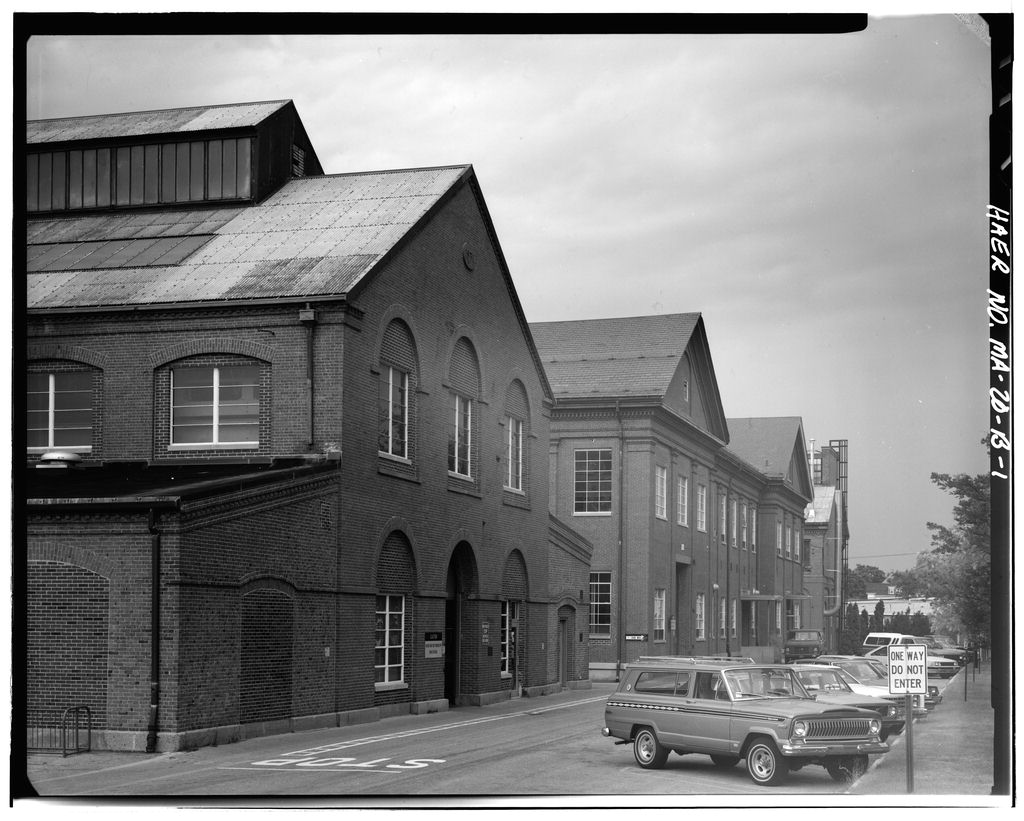
Built directly to the north of the west timber storehouse, at a cost of the machine shop was a twostory brick and mill construction U-shaped building, similar in design to the stone shop buildings later erected at Rock Island. The front was 175 feet by 50 feet with two wings each 250 feet by 50 feet. To the north, the smith shop was constructed as a one-story brick building, 300 feet long by 56 feet wide, at a cost of (Fig. 10) The construction of the machine shop and the smith shop introduced new but compatible designs that were the precursor to later industrial forms. Built of brick, these gable roofed buildings were of comparable Watertown Arsenal HAER No. MA-20 Page i-f ^ O o .c a. c (D CO c Watertown Arsenal HAER No. MA-20 Page 4 ^ scale to the timber storehouses.
Located directly to the north of #37 along Main Avenue, their facades recalled that of their neighbor's in their gabled ends, pedimented in and rhythmic fenestration. Building which was north of was provided with round arched windows to balance those of #37 to the south. For ornamentation, each had a dentil cornice of brick headers similar to that of the timber storehouses but surmounted by a browhstone cornice. This brick dentil cornice was to become a standard architectural feature for later Arsenal buildings. Windows were full story doubleand triple-hung sash with plain brownstone lintels and sills to provide interior lighting.
Although walls were load bearing, ornamental brick pilasters were located between bays in and the wall area recessed between piers in Parallel to one another and perpendicular to the west side of Main Avenue, buildings #3u, and #43 functioned as a small industrial complex. Timber, still used for siege and field artillery gun carriages, was dried and stored in building The smith shop forged the iron parts used in seacoast gun carriages; the machine shop operated as the central shop and power house for the Arsenal's industrial 12 and carriage manufacture. (Fig. 11) In addition to expanding the industrial facilities of the Arsenal, the Commanding Officer, Thomas Rodman oversaw the erection of new Officers' Quarters and a new Commanding Officer's Quarters.
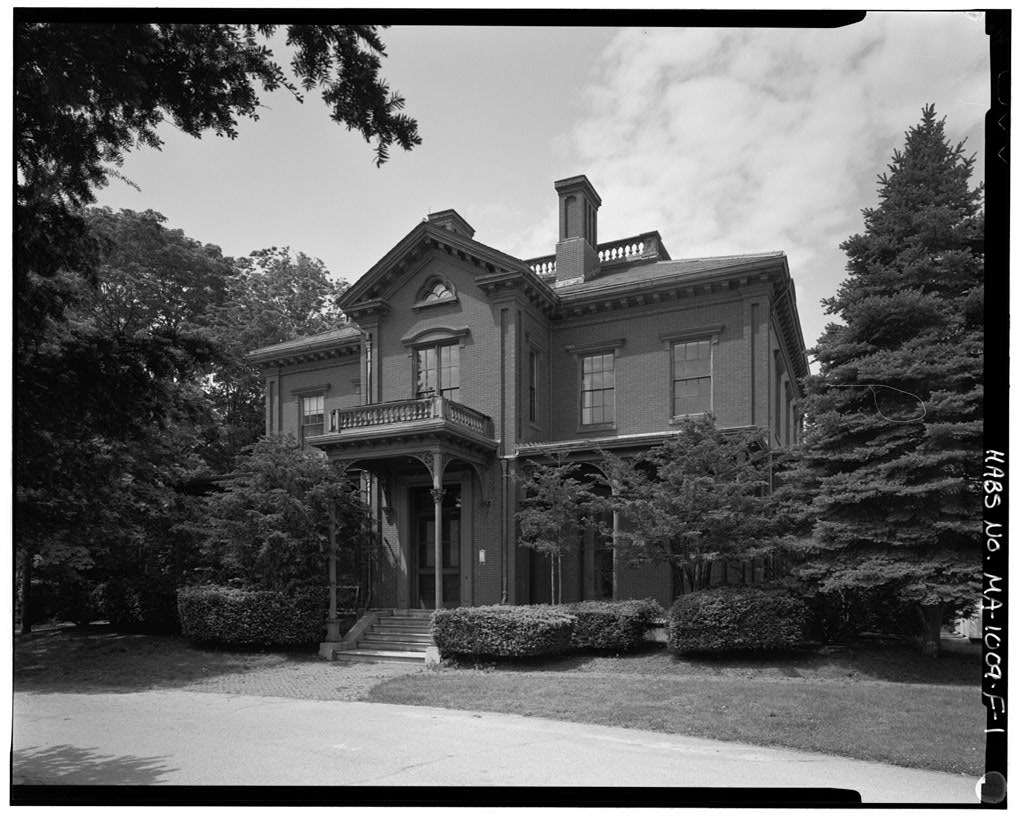
Completed in The Commanding Officer's Quarters was a three story brick, bracketed style mansion located at the southern end of Main Avenue overlooking the Watertown Arsenal HAER No. MA-20 Page Charles River. Rodman received consent from Ordnance Chief Major Dyer to build quarters like those at Springfield. However, the house plan evolved as both Rodman and Dyer suggested major changes to the local draughtsman, George W. Horn. The final design caused much controversy over both its architectural extravagance and cost, which was estimated to be as high as The final figure proved to be much less (Fig. 12} Evidently, physical parallels exist between the Watertown and Rock Island Arsenals which lead to speculation on Rodman's influence in their physical similarities.
Known to have been interested in architectural design, Rodman commanded the Watertown Arsenal from to constructing the Machine Shop, the Smith Shop and the Commanding Office's Quarters during this period. Upon leaving Watertown, Rodman was commissioned to oversee an extensive plan for the construction of the Rock Island Arsenal in Illinois. In this historical context, his efforts at Watertown can be seen as early expressions of ideas that were later carried out at Rock Island. For example, Rodman's design for the controversial Commanding Officer's Quarters appears at Rock Island a few years later but there it was built of stone and more richly ornamented. Of equal interest is the design of building and the grouping of buildings and to form an early industrial complex at Watertown.
Characterized as simple, brick, mill construction, the design of is reflected in the ten adjacent stone shops built as a manufacturing complex at Rock Island. Of great importance to Watertown's later growth and central to this discussion is Rodman's concept of the WaCertown Arsenal HAER No. MA-20 Page t-iS o < -Q LTV SO CO c E X) O a. c en ro Zl o !/) 1_ QJ U ^j -J <4- O SJ * o ^: C7) > i . C -J fb s_ k& o T3 C Z SZ Z aC * i O a --< Z J* a) < c _c 5 c> h- A ~* C i o d ,_ *N 4) as *J > u b0 u o a aj +J . en -- -< y u. CC Or Watertown Arsenal HAER No. MA-20 Page V f > manufacturing or industrial complex. Unlike Rock Island, Watertown was not yet an "Arsenal of Construction" at the time of Rodman's command.
However, Rodman's foresight and grand visions resulted in a deliberately designed industrial complex whose operations were integrated, due in part to building arrangement. In later years, the small complex formed by and #43 would be expanded with the addition of new buildings while continuing to function as the core of the Arsenal's manufacturing operations until WWI. The years following the Civil War define a period of relative inactivity in the Arsenal's physical development. Forty-four acres of land to the east were purchased from Willard Sears in the residence on that land was converted to a hospital later for Arsenal use. The remainder of the property was left undeveloped until WWI.
The acquisition of land from Sears was a precautionary measure to ensure the availability of property upon which to expand in the event of an increase of operations at the Arsenal. The rising value of conveniently located land caused Sears' property to be additionally attractive to the 14 military. (Fig. 13) In a gas house was built on the bank of the Charles River to supply fuel for lighting shop buildings and for the officers' quarters. A small iron and brass foundry was also erected adjacent to these buildings in All three structures were razed in It was not until the that the Arsenal's activities once again demanded further development of the site. (Fig. 14) Watertown Arsenal HAER No. MA-20 Page H ' c o c ro Q. X CD Q. a. o CL T> <D l/l <0 -C o l_ 3 Q. ^_ OJ c <u t_> in C L.
s: < Q) -C rn -W .a nj A _i ^ o CO M o -C c Q_ CO u Watertown Arsenal HAER No. 4A--20 |pge H%' n i O o c io oo t o to CO o 1_ 0) 1 > <x> is: % _C f-J h< a) x: S* * +- en X \ c o CO JZ -a 4> (1) O * _] ft) w -^ O 1_ J-) 0 O z c X </) m 01 TJ \- r rtl fa ^ >- . i- . X) > c ._ 3 0 0 M- fIJ X < *J -3" G) i- =3 CD ^ U_ Watertown Arsenal HAER No. MA-20 Page *y ^ The Industrial Plan Emerges The marked a significant turning point in the industrial history of the Arsenal. In the Army Gun Factory had been established at Watervliet in New York. In turn, Watertown Arsenal was designated at the gun carriage manufacturing plant for the Army. In Congress authorized the modernization of the Arsenal to accommodate the production of new model disappearing carriages for large guns.
At this point, the Arsenal's role in the military shifted from ordnance depot to manufacturing plant. The conversion required both new building construction and modification of existing facilities. New and larger equipment for casting, machining and erecting the carriages and their parts required housing. A facility for the storage of finished carriaqes was needed. The management and administration operations of the enlarged plant required an expansion of the Arsenal's administrative organization as well. To this end, an erecting shop was built and quipped with overhead cranes. A carriage storehouse and an administrative building were constructed within the next decade.
In addition, the West Timber Storehouse became a foundry, the forge was expanded and the activities in building were reorganized. Prior to the expansion, architectural design at the Arsenal was characterized by large rectangular brick buildings with gable roofs, symmetrical fenestration, and brick bearing walls whose surfaces are broken up by pilasters or recesses. New construction both influenced and was influenced by this extant design. Additions to buildings called for Watertown Arsenal HAER No. MA-20 Page B d by the Arsenal's new mission continued to be sensitive to and compatible with existing conditions. For example, building #37 was extended 119 feet to the west and a one-story wing and two-story pavilion were added to the south.
The westward extension duplicated the main building and the south additions incorporated the arched bays and dentil cornice into their designs. (Fig. 15) Newly built, building also influenced the design of alterations. In the west ends of both #37 and new elliptical arched openings were arranged to correspond with those in the east side of The design of the new erecting shop can be considered a transitional architectural type. Recalling some of the earlier features seen at the Arsenal it utilized a different construction tehcnology, which was expressed in its design. A rectangular form with a pedimented gable and brick dentil cornice, was a single story with a large open span.
Floor to ceiling segmental arch windows illuminated the interior between load bearing brick pilaster construction emphasizing a vertical direction in the structure, a unique feature. Perpendicular to the industrial complex's axis, three elliptical arch openings on the east side of the building corresponded to new openings in the west ends of north and south and (Fig. 16) A later addition, building #36 was constructed in a similar manner to in to serve as a storehouse for gun carriage parts. Again, red brick pilaster construction afforded large window openings for natural Watertown Arsenal HAER No. MA-20 Page b\ c cO CO O CO OJ co i i <D ^ Q. O u CD c 1- Zi u (0 4- 3 , c o 03 Q: E S z. 0) < CO 0) *.
<u 1_ o 1_ 03 4- o 4- O c Z3 I/) o> 1_ mmm y-ro t/) o D_ o^ < oo ' u * CD i -C -Q w D D- O S- [" 1_ en m c i+_ j*r O CO o -r u^ flj i_ D CO Watertown Arsenal HAER No. MA-20 Page ? *- m -o -a c <i> <D -o c <u o a. J3 i/i (0 <i> cri u. 1_ i_ o u 0) 0) 4-J T7 . 4> if) JD D +J 1 (/) M <T3 U CT> r tn o X O nj 0J in -C d) t/> o c <u ru x: i_ -M -I-J r a) o 4-J o -a z QJ .c o 1_ * m r^. cr\ 4) o (It a: i_ -o 2. r r ** 4-f ra < QJ *. n r_ a> h- <v\ o ^t= <4- . <4~ u_ ^r o o <Y\ CO Ul Ul r "O L. l- -n <1) m a> u_ +J (1) "4- o -C < a) J-J u o <U c ._ * *l P .o <N <n 3 o" C * c a> a) c a. 4-J o M- -c <u r ^ 4-J - . o CO 2 4-t \D a i_ : en Watertown Arsenal HAER No. MA-20 Page light.
From this point onward industrial design turned away from its historical precedents at the Arsenal, continuing to reflect the state of the art in industrial building design. (Fig. 17) With the completion of a necessary and well integrated facility existed for the manufacture of steel gun carriages at the Arsenal. A forge and foundry flanked building which operated as a central machine shop and power house. The perpendicular placement of the carriage erecting shop to the west of these buildings and the location of the storehouse beyond it facilitated the direct transfer of parts and further bound these buildings together as a productive manufacturing complex.
Unlike the original quadrangle plan, with its formal building arrangement and stylish architecture, this new complex had a tight and functional arrangement of large, long industrial buildings. (Fig. 18) Once begun, this course of construction permanently altered the image of the Arsenal. No longer did it consist of pristine buildings in a bucolic setting of tree-lined avenues overlooking the river. Railroad tracks replaced the gravel paths for the transport of items in the Arsenal. A later massive construction surge required by the demands of WWI filled the Arsenal to its boundaries with large industrial buildings. The marked the beginning of this new era in the physical development of the Arsenal. WaterCown Arsenal HAER No.
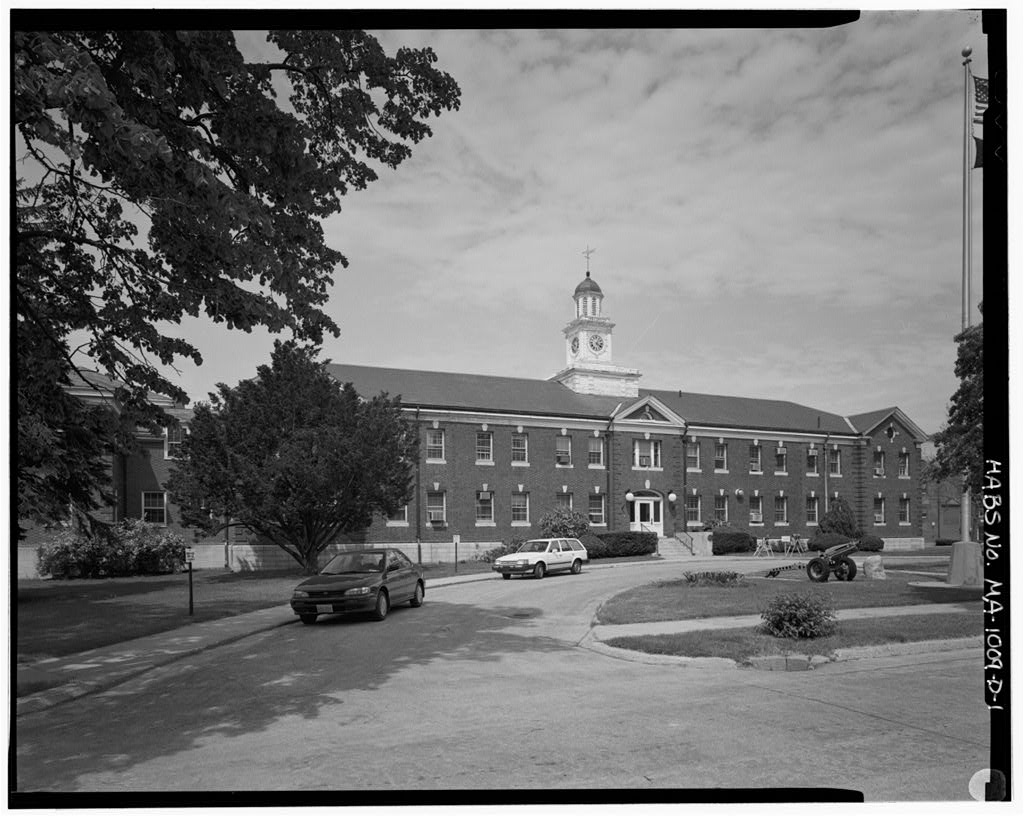
MA-20 Page 5 V ZJ O <T\ T3 (1) 4-J O 3 1_ +J ul C <> O r O w 0 -n iT3 n O M a: V. y O 3^ c <. OJ * XI 'D 03 c 1 r O , , +J O 0 ( - Q_ vO 0") (/> Ul QJ c ^ ^. f -n -M - O . ft) 3 1 <x> O i- ^ o 0 0 M- en O - <U r i_ . 3 4-1 X) u <u 'U M u- u 3 0) r L_ m LU fc= r- ~ (!) L. =3 Cl [atertown Arsenal 5R No. MA-20 CM t in d Watertown Arsenal HAER No. MA-20 Page S U Concurrent with this transition in industrial architecture, another trend was manifested in the design of the Administration Building which was constructed in in response to the general increase in the Arsenal's activities. Charles H. Aldenf a Boston architect, looked to the Georgian Revival style for inspiration, as did much of America in the early twentieth century.
The original structure was a nine bay, two-story, gable roofed rectangular building with a central entrance pavilion. An ornate cupola containing a four-sided clock sat squarely on the roof's ridgeline. The liberal use of much classical ornamentation made this structure the most ornate and stylish building constructed at the Arsenal since Rodman's Commanding Officer's Quarters in The highlight of this turn of the century building campaign, was loosely modeled after Philadelphia's Independence Hall and symbolized the Arsenal's commitment to safeguarding the nation's freedom. This building design became popular with the military and was later used for administration buildings at Picatinny and Frankford Arsenals. (Fig.
19) Situated along tree-lined Main Avenue, the building was located between the industrial complex and the Commanding Officer' s Quarters, to the north and south respectively. The resulting arrangement can be interpreted as a symbolic gesture illustrating the separation of management and labor wrought by the growing production demands of the Arsenal. Building location may also have been chosen to shield the Commanding Officer's home from the industrial complex. Watertown Arsenal HAER No. MA-20 Page r> <" A3 C 0> c a) -o c O- c -a o o en "O 4) M o n> L. < ) fl) r T- r. , 7" c"\ ^> #* ^^ .Q fU C7)-i r . O -n 4-J . o r -J n. CO CPi "" (1) 1_ D C7 Watertown Arsenal HAER No.
MA-20 Page 5 Within the next forty years, the Administration Building underwent a rapid succession of additions that reflected the Arsenal's continued growth and adherence to a uniformity of design. The building was extended to the north and south, and both building materials and architectural details were reused. A west wing erected during WWI and a south extension constructed during WWII continued the Georgian Revival tradition in their design. It is unknown whether this attempt at continuity of design within the Arsenal was unique to Watertown or was a general policy of military architectural design. (Figs. 20 and 21) For the most part, twentieth century development at the Arsenal was spurred by the increased production demands of WWI and WWII.
Building construction dating from this period incorporates the aforementioned ideas industrial design, functional plan, and a continuity in the Arsenal's visual image--into a new architectural tradition. Directed to produce carriages for 16-inch seacoast guns, Congress appropriated funds to erect the necessary facilities at Watertown Arsenal. During the next four years the Arsenal nearly tripled in size. A new foundry, forging shop, heat treatment plant and erection shop were among the twenty-three new buildings constructed by the Boston engineering firm of Stone and Webster. To this end, the Arsenal underwent a physical expansion which resulted in the occupation of all usable land within its boundaries. (Fig. 22) per Watertown Arsenal HAER No. MA-20 Page 59 Watertown Arsenal HAER No.
MA-20 &. < a. T3 4) -Q o TJ C .c M 0) U o E "O .c en c m 3 03 e "O <l , O fl> Oi r ? w T" ** < <T\ > . . a> cr\ o * * ^ u- >* u- DJ o CM 3 X Watertown Arsenal HAER Nq. MA-20 0> m Ui . <i> cr> t * u u 4) ^ in , . i_ .c m h- <u m ffl c c <i> <u t/> Ul i_ V- < < 4) 4> -C J_ XI 3 0) 4-> XJ o 4) 4) 4-J 1_ V) 4) 1_ 4) 4-1 u C 0> 0 3 o t/1 >- (J) c 4-1 . fO "O 4) 1 !_ . en ZJ XI ^ ^o 3 -C 3 <_: L. Q: M 4) X V) 712 ZJ C < "O (0 c x: o c 1/1 4) =1 JZ 4- o 4-J 4- 1- e Q) i/1 E 4) (. rs 4-1 i. c (D .- 1_ r r. 4-> 14- 1/1 M- g ^ <<- 3 CD . C i . 2 X i_ 41 _ D . Q. O > %h 1 Cs] 4) S_ 3 en Watertown Arsenal HAER No. MA-20 Page a- - Dating from this period and still standing is Building constructed expressly for the machining and erection of these new carriages.
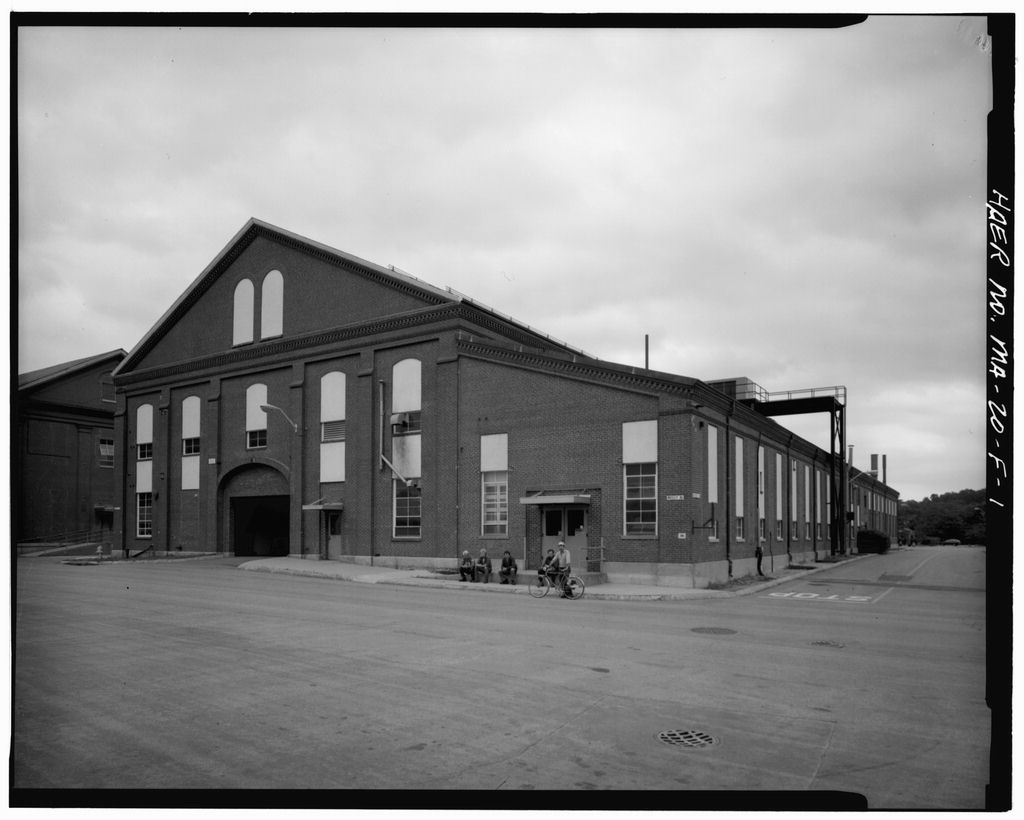
Built in with dimensions of long by wide, this steel frame structure was reported to be one of the largest in the U.S. The building's unusual size was dictated by the spatial demands of the industrial equipment, some of which was the largest in the world, and the carriages themselves. The movement of these heavy pieces required craneways and train rails. As a result, Building utilized a newly emerging industrial architecture. A steel frame and Warren roof truss enabled the creation of a large open space of great height which could accommodate machining equipment, rail cranes and the carriages. Large expanses of glass between brick-faced piers provided an abundance of natural lighting.
Standard gauge railroad track ran through the building connecting with railroad spurs throughout the Arsenal, and to the main Boston and Fitchburg Railroad line directly to the north. (Fig. 23) Unlike any previous buildings in either scale or design but similar to in concept, provided a new, yet continued, industrial image for the Arsenal. Other buildings constructed during this period were of similar design as well. The structural steel frame faced in red brick continued the use of this traditional building material. Buildings were rectangular in shape although notably much larger in scale than those in the early industrial complex. Ornamentation remained at a minimum. And the desire for natural lighting continued to be expressed by the large expanses of windows.
For example, erected in Building #97 served as a locomotive maintenance and repair shop. It was designed with a Watertown Arsenal HAER No. MA-20 Page < > 3 c u S ft] o E 0 U O (0 O M ~o o 4- VI o >- 3 * 1- 03 +J 4- irt 4- c < 0 u o VI ' <i3 .a a. VI cu en a. a] o JZ 1- VI 1- en o c w s- O 0) o en as i- a; c CO 3 O <D C > 0) -Q E - a> r- (/> o\ OJ c c 03 cN <D l_ CD >y Watertown Arsenal HAER No. MA-20 Page 4. *V clerestory monitor to augment natural lighting. Also built that year and adjacent to #97 was Building a metal and bar stock storehouse. Parallel to one another and located along the Arsenal's western border, these buildings connected directly to the Boston and Main Railroad for the receipt and transport of supplies and finished items. (Fig.
24) The continued arrangement of the site in a functional manner resulted in a further loss of the earlier formal site design. The erection of numerous large buildings strained the Arsenal's physical boundaries. Earlier considerations such as a building's visual impact on the overall site plan were now seen primarily in a functional light. (Fig. 25) For example. Building a cradle shop, and Building a manufacturing storehouse, were constructed in the midst of the old quadrangle where their location better served their industrial purposes. On the other hand, alterations made to existing buildings during this WWI period exhibited the same sensitivity to design as seen earlier. Building the Smith Shop, was renovated to accommodate the production needs of the new 16-inch seacoast carriages.
An essential addition was the installation of a rail crane. The impact on the structure resulted in a second story addition and monitor story whose design was compatible with the original building in both scale and building material. Of equal interest was the continued reuse of architectural details such as the brownstone cornice removed from the original roofline and placed on the new one. (Fig. 26) Watertown Arsenal HAER No. MA-20 Page ^O u o u f0 3 c 0) o H m X a) Cl u a. >- M m 0 m rf. . T r CN o~\ r, CM (1) u M- -n 4- 0) O -C </> <n L. y . 0 rn 0 M- +J M- </i < i_ 0 03 . cu . n <n D r Vw a. H "' -d- CS] (!) 1_ 3 ai Watertown Arsenal HAER No. MA-20 o -Q O c 03 c <u (/I < LA CM 13 en Watertown Arsenal HAER No.
MA-20 Page o -a c <U C <TJ < ro a) o D .- 4J <4- CO 4- -o o E ui 0 i- o O fO fO M- 0 < 4- u >. 1_ ^- O -D M 3 "O C O a c a) o tn nj to c > c .- D ai > fD C S TO cr\ 01 -3- C =*te - cnx C CD o XI n a) as > 0 r-- a. e <T\ u C 0 \0 C-4 a; 3 Watertown Arsenal HAER No. MA-20 Page (o S' The following WWII era, continued the same frugal approach to construction. With no land for expansion, the Arsenal purchased seven acres to the west which included the acquisition of a large industrial building owned by the Simmons Mattress Company. Oddly enough, this structure was originally designed as a piano factory for Vose Sons Piano Company and is almost identical in design to a proposed building design for a testing laboratory at the Arsenal which was never constructed.
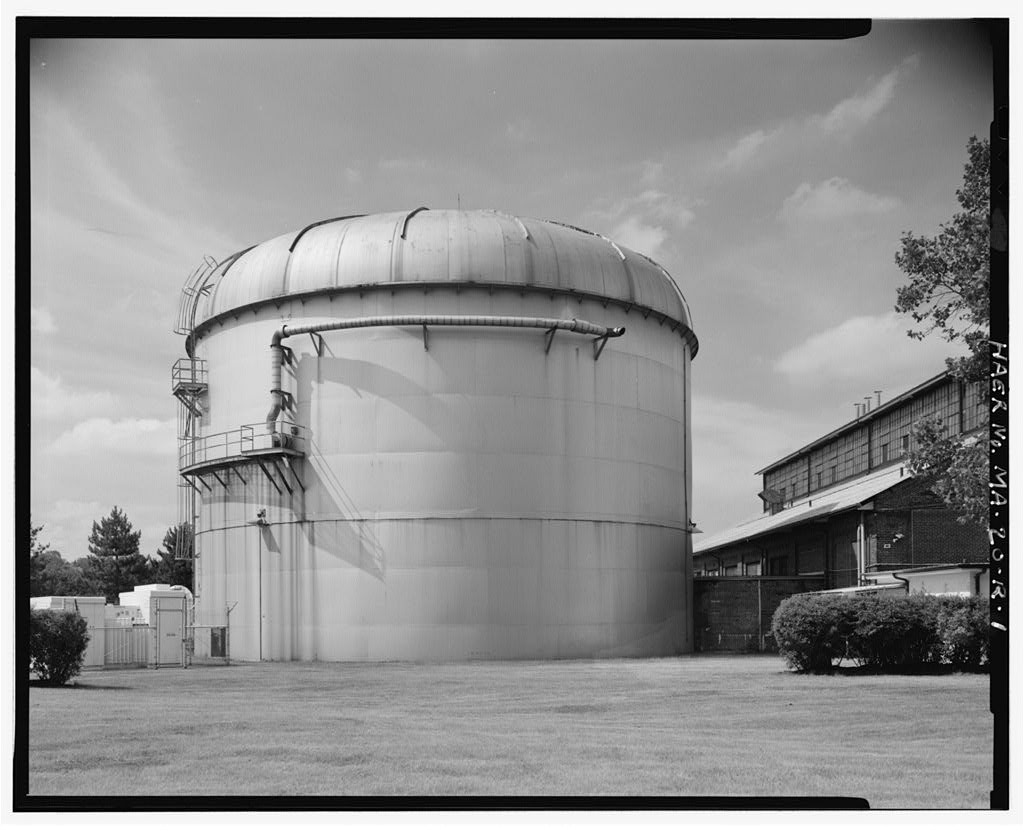
The structure was modified by the Army in and became the Watertown Arsenal Laboratories in {Figs. 27 and 28) Upon this same property, the erecting shop was extended westward to double its size in The addition was of identical design to the original structure; architectural ornamentation from the original west end was reused on the new west end addition. Little site development followed the WWII period. Rather, the mission of the Arsenal shifted from that of a manufacturing facility to a center for materials testing. In the Horace Hardy Lester Reactor, was erected adjacent to #97 to fulfill the needs of the research programs on materials for the U.S. Army. The Lester Reactor was based on the design of the Bulk Shielding Facility at Oak Ridge National Cemetery.
Shut down in the welded steel plate containment shell and cooling tower are all that remain today. The Arsenal underwent severe physical change during the Following a reorganization of the Army in and a realignment of priorities within the Department of Defense, Secretary of Defense Robert & L. Watertown Arsenal HAER No. MA-20 Page OtffWV^CK/ HI \1 M- < -Q 3 <& - OSVf <MU ** 3 -Q 3 .a <D in O Q. O J2 CD C O D) C i *- i~ a. 3 Watertown Arsenal HAER No. MA-20 w*8 >* i_ >. 0 -Q M U -o fO 0) Ll_ 01 O irr- W O <L> 1_ 1_ Q. 4-1 +J -Q fU fD s: c c Q +J. . E (/) o o cc t/) M s: s: 0) Q) < -C -C w M * 0) <u VI U E Q) .- ra n o _Q y- <u E o -Q 0) ui cn i_ a) c L. ._. 0) - +J i_ Q - . <u i 0) -a- c: -C cn o cn c .c C LU 3 . - ' >- OJ * c c r-. (13 0) C-J Q.
Ul E i_ 0J 0 < l_ _j O a) cn o -SZ c +J u_ -TJ >- 0> a. -Q <D C/i </> "O c 0) 0 l/l t/i (D cn _c -a o cn c i_ i m 3 Q. C <l) . . (/) CD 0 c > .- nj 0) C <N -Q <D <N VI a\ <U *- > U <C O <u M- (U -C 0) .C l- & -M CO CM <u l. 3 CD u Jat^at.tH^Ste iT Watertown Arsenal HAER No. MA-20 Page 1 i S. McNamara announced in that Watertown Arsenal's activities were to be phased out. The Arsenal was closed in However, the facilities of the Army Materials Research Agency (AMKA) remained at Watertown. The result was the eventual sale of fifty-five acres of surplus land on the eastern portion, including the original quadrangle, to the town of Watertown. Currently, this property is undergoing renovation to become a mixed-use office-retail complex.
The rest of the property remained in the possession of AMRA until Since then, the Army Materials and Mechanics Research Center (AMMRC) has occupied and maintained the site. (Fig. 29) Under the new AMMRC ownership the remaining Arsenal buildings were subjected to a series of changes which resulted in a loss of their architectural integrity. Up until the structures looked much as they had when first constructed. To save energy, original windows and doors were removed and replaced with more efficient contemporary industrial sash and aluminium frame doors. Many openings were bricked or stuccoed in and original stone lintels and sills were removed. The negative impact to their history has been severe in terms of an architectural loss.
However, the sale of much of the older site has increased the historical value of the twelve major buildings presently owned by AiMMRC , particularly those four which form the early industrial complex. Under these circumstances, the industrial complex has acquired heightened significance in terms of both its present physical setting and its place in industrial history. Watertown Arsenal HAER No. MA-20 Page n 9^- CO CD 2: O E C O 4- ._ 4-1 0 vi +-1 O 4-t <u ' -D JZ > en to . JZ <D i_ vi > 3 0) c O JZ f0 JZ 4-J E 1_ 0 .n O +J CO -M ^o to vt cr\ en 1 JZ c 4-J . c 3 -a . O . t/) c 3 3 <1> -Q 0 JZ JZ <u -o h- 4- C A3 (3 i_ 03 0 <U "O 4-1 O C i_ *J 3 to O 3 ID H- c E A3 1) VI JZ V) 4-1 i_ a> OJ JZ O (J 4- W u- vi ~a 4- -^ O O O O V) M 1 V) <u <U *J 1- 13 OJ _ 3 O j= <_> - -. 4-J , -.
C L (0 (_ X. 3 CD QL s: c C E < <u X > TJ <3. M- < 3 O . *-> O JZ 3 *J C (Z <U 0 O > , -a c ro UJ 4- h- JZ c f0 </> JZ 3 a. u 0 . 0) c Q (0 -~- <o 0 0 "Q -~ r- 3 +J <T\ C C JZ CD u 0 > 0) < < JD L. I 0"\ OJ CD L. 3 en Watertown Arsenal HAER No. MA-20 Page ' ~J" In sum, the history of Watertown Arsenal's physical development is a reflection of the growth and changing policies of the U.S. Military. Construction periods correspond with the tides of political and military events. As the Arsenal's mission changed the site's design evolved from a formal plan to a functional one. Begun as an ordnance depot, the Arsenal became a bustling manufacturing plant by the end of the nineteenth century, and later a materials testing facility.
The early bucolic setting and quadrangle plan were lost to a maze of industrial buildings and web of railroad tracks by The Arsenal's architectural image was similarly subject to military policies and outside forces of progress and change. New buildings and additions drew upon the post's extant architecture and standard military designs during the nineteenth century, establishing a continuity of visual image. However, an increase in manufacturing activity at the turn of the century introduced new industrial forms and, hence, a new physical image. Most recently, the operation of the property by AMMRC as a site for materials testing resulted in the sale or demolition of many buildings and the insensitive alteration of others.
Today, amid the remaining historical fragments of the Watertown Arsenal located on the AMMRC property is the manufacturing complex four buildings whose existence is tribute to what the Watertown Arsenal "Arsenal of Construction" and the gun carriage manufacturing plant for the Army once was. Watertown Arsenal HAER No. MA-20 Page A. FOOTNOTES 1. "History of Watertown Arsenal. Watertown, Massachusetts. in History of Arsenals, Vol. II, Navy and Old Army Records Office, National Archives, Washington, Dickson, "History of Watertown Arsenal, Watertown, Massachusetts. Prepared in in Poster Notebook, Public Affairs Office, Army Materials and Mechanics Research Center (AMMB3), Watertown, Massachusetts (hereafter noted Poster Notebook) . 2.
Captain Talcott to Colonel Wadsworth, 4 January Foster Notebook, Public Affairs Office, AMMBC, Watertown, Massachusetts. At some point between and the total number of buildings was increased from twelve to thirteen. The additional building was another shop, and it is assumed that the original plan Talcott wrote of to Wadsworth in was then changed to accommodate the new addition. Since the structures were not constructed simultaneously, this is a likely explanation for the location of three buildings 73) to the north of the Military store which are not mentioned as part of the original plan. The Military Store and Arsenal Buildings later became known as the North Storehouse and the South Storehouse respectively. Only four of these original structures remain today 3.
Judy Dobbs, The History of the Watertown Arsenal, Watertown, Massachusetts ii18167l967> (Watertown: Army Materials and Mechanics Research Center, p. 3. 4. Ibid., Margaret Taylor, Buildings That Last: Parris in Boston, (Massachusetts Foundation for Humanities and Public Policy, 5. Op. cit., Talcott to Wadsworth, 4 January 6. In an Inspection Report it was noted that "the deficiency of workshops has made it necessary to use the North Arsenal for storage and painting the barbette carriages that have been constructed." Inspection Report, October 21 and 22, Records of the Chief of Ordnance, RG Entry Box 63, National Archives, Washington, 7.
Ibid.; "Watertown Arsenal," Records of the Chief of Ordnance, RG 156 Entry Subentry Box Item For a complete and chronological history of the construction of the Watertown Arsenal buildings Judy Dobbs' A History of the Watertown Arsenal, should be consulted. The aim of this chapter on site development is not to document the erection of each building but rather to concentrate on major periods of change, highlighting those buildings which best illustrate certain points. ^ Watertown Arsenal HAER No. MA-20 Page 75 8. Op. cit.r Inspection Reports, July 20, and June 16, 9. Standard procedures for the drying and storage of timber are outlined in The Ordnance Manual for the Use of the Officers of the Confederate States Army, (reprint ed., The Press of the Morningside Bookshop, pp.
Although this was a manual for the Confederate Army, it is likely that the same procedures were followed prior to the Civil War. The manual stresses the need to keep timber dry and allow the free circulation of air about it in order to promote proper seasoning. To accomplish this it states "Timber storehouses are best provided with blinds, which keep out the rain and snow, but which can be turned to admit the air freely in free (?) weather." This same building design can be seen at Mare Island, California and Springfield Armory, Massachusetts {c. where it was used as a stable and barracks.; Op. cit. Dobbs, p. 18; Op. cit. , Inspection Report, June 27, 10.
Aside from the construction of the two timber storehouses, little had been done in the preceding decade to physically prepare the Arsenal for the large scale manufacture of goods required by the military during the Civil War. In fact, an Inspection Report indicated that the various storehouses, shops, barracks and quarters were "sufficiently large and commodious for an amount of work inferior to that at the Watervliet and Allegheny Arsenals." 11. Ibid,; for more detailed physical descriptions of these buildings see the HABS/HAER survey cards included in this report. 12. More detailed information on the industrial functions and production activities of these buildings is given in the chapter on industrial history. 13.
At the same time Rodman was planning the design of these new quarters, he became the victim of charges centering around the disloyalty and mismanagement of the Arsenal. The controversy over the cost of the quarters was added to the allegations against Rodman before he was investigated by a Congressional Committee. The exact outcome of the charges is not known. However, after the interrogations were completed Rodman left Watertown Arsenal for a command at Rock Island. A more detailed account of the Rodman controversy is given in Dobbs, "A History of the Watertown Arsenal," pp. 0. 14. Annual Report of the Chief of Ordnance to the Secretary of War, ' In his Annual Report Brigadier General George D.
Ramsay advised: Any increase of operations at this Arsenal will render it necessary that shops and other buildings should be put up, and these it would be difficult to locate conveniently without the Watertown Arsenal HAER No. MA-20 Page "7 6s use of this land, and as land in that vicinity has already and will continue to increase in value the price asked for it is perhaps lower than it is likely to be hereafter. 15. Op. cit., Dickson, "History of the Watertown Arsenal."; Op. cit., Inspection Report, October 20 and 21, 16. The commissioning of the Olmsted Brothers as landscape architects for the Arsenal in is evidence that some concern for the appearance of the grounds after the WWI building period did exist.
However, the company's records were not examined due to time constraints, hence, it is unknown what contributions they may have made to the site design. 17. In the the Works Relief Program was instituted at the Arsenal. Under this program similar practices were followed in the renovation of from a cowstable to officer's quarters and from a firehouse to officers' quarter. These buildings continue to be occupied as such today. Watertown Arsenal HAER No. MA-20 Page nl THE INDUSTRIAL
History of Watertown Arsenal
The Watertown Arsenal in Antebellum America The shops and workmen at Watertown Arsenal undertook only light manufac- turing duties from until the Civil War period. Operating primarily for the receipt, storage, and issue of ordnance supplies, the productive output of Watertown Arsenal from to was very limited compared with that of other ordnance posts. Employing both civilians and officers, the Arsenal's annual work record at the end of registered: 15 gun boxes made; muskets cleaned and repaired; 2 new muskets stocked; 20 muskets oiled and repaired; 4 rifles cleaned and repaired; 42 cannon, 8 howitzers, and 8 mortars cleaned oiled and lacquered; 71 worms and ladles made; and 12 barrels powder proved. * Between and manufacturing activity at the Arsenal expanded.
In addition to making small arms cartridges and maintaining artillery, workmen also began to fashion parts for wooden field, siege, and seacoast guns and carriages in the Arsenal's shops. A laboratory for preparing paints and lubricants used in cleaning and maintaining ordnance stores was also established.^ Civil War Production and Manufacturing Operations, The and were a transitional phase in the history of industrial manufactures at Watertown Arsenal. Called upon to contribute equipment for field and seacoast artillery to the Civil War effort, the Arsenal integrated factory production into its usual business of cleaning, ? Watertown Arsenal HAER No. MA-20 Page 7>" repairing, and issuing Army ordnance.
Originally an auxiliary occupation, the making of gun carriages for seacoast fortifications eventually grew into a full scale industrial operation by The Civil War put a heavy demand on the Arsenal's productive capacity, calling for the manufacture of a wide variety of articles. The whole range of ordnance stores and related accessories made at this site included ammunition for field and seacoast artillery; small arms ammunition; gun carriages; limbers; caissons; battery wagons; shot, bayonet scabbards, cap pouches, cartridge boxes, waist belts, and gun slings; and cavalry equipment such as harness parts and horse collars.
In addition, large quantities of muskets, cannon, and projectiles purchased from private New England manufactories were delivered to and issued from the Arsenal throughout the duration of the war.3 From to the combined forces of private domestic industrial factories and public arsenals furnished the bulk of ordnance arming United States seacoast and frontier forts. Firms such as Walker & Pratt Manufacturing Company, makers of iron stoves and furnaces, in Watertown, Massachusetts, went to work producing iron shot and shell for canister and guns. The company represented but one of numerous other private industrial establishments that contracted with the Government to furnish the military with munitions of war.
By the end of the Walker and Pratt firm used 275 tons of iron per month, or to tons per year, for the manufacture of war materials.^ Watertown Arsenal HAER No. MA-20 Page /*7 The Government's reliance on private enterprise for ordnance supplies was not always considered desirable, however. Commercial firms, unable to control fluctuations in labor and materials markets, could not always be expected to fulfill the sudden demands of the military in times of war.
In an effort to mitigate the problem of securing adequate ordnance supplies, the Chief of Ordnance, George Ramsay, made an effort to enlarge several arsenals in and Among the installations that received Ramsay's attention was Watertown.-* By the end of a two story Machine Shop and one story Smith's Shop were completed to the west of the Arsenal quadrangle. Both buildings were planned to facilitate the manufacture of field and seacoast gun carriages. As a rudimentary industrial complex, the East and West Timber Storehouses, and the two new Machine Shop and Blacksmith buildings worked together to carry out an integrated manufacturing process from raw wood and wrought iron to finished gun carriage.
The development of the physical plant and increase in productive activity at Watertown during these years also called for a substantial rise in the Arsenal's work force. By 643 persons were employed at the Arsenal, including about 70 women. The following year this figure had increased to a total of 809 employees, 101 of whom were women." Drawing largely on a local labor supply, the Arsenal employed skilled carpenters and machinists for carriage manufacture, as well as numerous semi- and unskilled men and women for more routine jobs. As early as for example, an illustrated article featured in Harper's Magazine ^ Watertown Arsenal HAER No. MA-20 Page ^0 pictured rooms of men and women at work making gun cartridges. (Fig.
1) In the illustrations the men are shown seated at a table around square boxes containing empty cartridges. Using a funnel and charger (a cylinder containing an exact measure of powder), each workman filled the cartridges with black gun powder. In another room, women are shown seated at a long narrow table. The women filled the cartridges with bullets or shot, then bundled and packed small groups of cartridges into pine board boxes.' The output of the Arsenal's workforce was impressive during this period. Almost small arms cartridges, a million buck shot and ball cartridges, and million 594 caliber musket cartridges were produced at Watertown over the Civil War years.
In addition to the productivity of semi-skilled workers, more specialized carriage, limber, casemate and caisson manufacture for field and seacoast artillery was carried out on a larger scale than formerly seen at Watertown. The manufacture of gun carriages put special demands on the Arsenal's Industrial facility. All gun carriages served two fundamental purposes: to hold the gun in place for firing, and to dissipate the shock of recoil. Field carriages, their limbers, caissons, and battery wagons, used oak timber in construction with wrought iron reinforcement and were based on relatively- simple designs. Seacoast carriages, however, were larger and more complex items.
Over the course of the nineteenth century, seacoast carriages were alternately constructed of cast iron, wood, wrought iron, and eventually steel. In the United States Ordnance Department formally adopted wrought iron as the standard material for heavy gun car- Watertown Arsenal HAER No. MA-20 Page ? I Figure 1 - Women and men filling and packing cartridges at Watertown Arsena during the Civil War. (Harper's Magazine, Watertown Arsenal HAER No. MA-20 Page }f "9 riage manufacture. (Fig. 2) In response to the demands of gun carriage construction and Civil War ordnance needs, Rodman, Commanding Officer at Watertown from to oversaw the expansion of industrial facilities at the Arsenal.
The installation of equipment for founding iron and brass castings and the erection of an 18-ton reverberatory furnace for making iron (in Building 71) were completed under Rodman's supervision. A new bronze foundry (formerly located on the site of Building and a later iron and brass foundry of (built near the Charles River Wharf) also answered the material requirements of Watertown's gun carriage production at the time. Among the total number of items manufactured within these shops during the Civil War period were 100 seacoast carriages for 10-inch and 100 carriages for 15-inch Rodman guns; 100 limbers for 3-inch guns; 30 carriages for 12 pounder guns; and 100 eight-inch and 50 ten-inch mortar beds.9 (Fig.
3) A brief hiatus in industrial activity intervened after the Civil War decade in the years of and The Arsenal's main occupation during that time was confined to the issue of ordnance and supplies, the care of the grounds, and the preservation of supplies and of the physical plant. The employee payroll for the period reflects this change, dropping from a high of 809 workers in to a low of 16 workmen in In March, six carpenters were employed making skids for issuing ordnance stores. By December of the same year, machinists, blacksmiths, helpers, and laborers were hired for the alteration of 15-inch barbette gun carriages, ~f Watertown Arsenal HAER No. MA-20 | Page ^ j (0 c 0) <n c ? o 4-J 1_ 0) +J m 3 * <u ^O JZ CO 4-t i -M to a) in -r> r <u (l) 1_ u- n <i> +J Q o m M <4- (0 CD D C?
0 0J fll o l~ m 4) p p m V) m o -: C o s c 3 CT> a) Irt M .c o o n c ^ 1 ^. LH TJ 5 $ , <D 1_ <o t-L .c l_ 4-J m CO 1_ o . 4- O aj -J Ul * * to S_ , !_ !_ n3 m O ^ r 0 ._ i_ > t_3 4-J -C fl) OT-C -1 4-t o 1_ c c 3 *^ 0) u r 3 t- Q <N (1) 1_ n O) Watertown Arsenal HAER No. MA-20 Page 2^ <_> a: -Q o a. -T Q. O E 4- O fa o c ra c en c E "O O 4) 3 Watertown Arsenal HAER No. MA-20 Page &S" bringing the total employee figure to 96. 10 Having resumed manufacturing in early the Arssnal fabricated a varied collection of items during the next decade including sling carts, cavalry forges, targets for small arms, and parts for the repair of coastal armaments along the northeastern seaboard.
Seacoast carriages for 8-inch, 10-inch, and cast iron guns contributed to the list of principal manufactures of the in addition to cast iron projec- tiles and strengthened casemate carriages for heavier guns. By new carriage designs for field and siege breechloading steel guns were introduced at Watertown. The fabrication of barbette and disappearing carriages for seacoast guns measuring from 6 inches to 16 inches in diameter also got underway. Several attempts to construct wire-wrapped guns, including the Woodbridge 10-inch gun of and later the Crozier 10-inch breechloading rifle of were also made.
The combination of experimental gun production and heavy gun carriage construction typified Watertown Arsenal's industrial activity from the end of the Civil War until the early Limited appropriations not only curtailed prolonged manufacturing activity, but affected the size and composition of the workforce. Over a single decade, the number of workers at Watertown fluctuated from a total of 78 persons in dropping to 35 in and again rising to a total of 52 employees in These figures accounted primarily for machinists, blacksmiths} carpenters, and laborers. *-- - Watertown Arsenal HAER No.
MA-20 Page (^ to A High Watermark of Industrial Development at Watertown Arsenal "Some progress has been made, since my last inspection of this place, towards promoting the establishment into a manufactory of gun carriages for built up guns. The first top carriage for an 8-inch barbette carriage was en-route to the planer from the foundry while I sat at the post." In the above report from an inspection officer in the field at Watertown to the Chief of Ordnance anticipated two and a half decades of important industrial growth and change at Watertown Arsenal. By the Arsenal specialized in the manufacture of heavy gun carriages and produced large quantities of projectiles.
An open hearth furnace stood on the property and a steel casting plant, the only such facility main- tained by the United States Army, fulfilled the Arsenals casting needs in-house, The foundry was enlarged, the machine shop expanded, the smith shop modernized, new buildings erected, and a new system of scien- tific management was introduced, all since the field inspection officer had visited the Arsenal less than two decades before. In the Department of War transferred all gun work to Uatervliet Arsenal and established that site as the Army Gun Factory, supported by a healthy appropriation of With the establishment of the Watervliet gun factory thus well underway, the development of an adequate gun carriage manufacturing plant was the next order of concern.
After a thorough investigation of all Ordnance Department arsenals, the installa- tion at Watertown was selected as the site best suited to the purposes of a modern gun carriage plant.iJ Watertown Arsenal HAER No. MA-20 Page c '} Appropriations for the recommended gun carriage plant began in In compliance with the instructions from the Chief of Ordnance, a sum of was applied to converting the West Timber Storehouse at Watertown Arsenal into a modern industrial building. The following year, was appropriated by Congress for enlarging and improving the entire manufacturing facility at Watertown.-^ Work on the alteration of Building the West Timber Storehouse, got underway in April of Located near and parallel to the Machine Shop the Timber Storehouse was selected by Col.
Reilly, Commanding Officer in charge of operations at Watertown, for use as a new brass and iron foundry. By June, both structural alterations and mechanical additions were made to the former storehouse. The second story of the building had been removed for almost the entire length, giving ample room for the installation of overhead cranes. A one-story brick: extension, designed to correspond to the original architecture, was also completed along the south side of the main structure. "These alterations and additions," reported Reilly, "give us a building admirably adapted to its purposes, with plenty of light and ventilation, and capable of extension to any desired extent."-^ Inside, the building was equipped for foundry production.
An 18-ton air reverberatory furnace, erected in the south wing extension, was joined by two patent cupola furnaces each with a melting capacity of 7 and 6 tons, respectively. Together, the furnaces provided a total melting capacity of between 25 and 30 tons. Core ovens intended for the largest castings anticipated were also built, and two swinging cranes were erected for handling the foundry's large ladles and castings. While the majority of Watertown Arsenal HAER No. MA-20 Page ' the structure was laid out to produce iron castings, the west end of Building #37 was set apart as a brass foundry. In it, five furnaces were purchased and installed to provide all of the Arsenal's brass castings.
Within the year, the foundry was capable of producing castings from novel and complicated as well as ordinary patterns. The first annual output of the foundry equalled 18 tons weight of iron castings and 4 tons of brass. Watertown's expanded foundry also enabled the Army to "experiment with and improve upon new types of gun-carriage castings" which could not be carried out easily or economically at private founders.*5 Further additions were made to the foundry building in The furnace room on the south side of the foundry was lengthened to house a core oven larger than the one first built. The building addition also contain- ed storage bins for fire clay, fire sand, and other moulding materials.
With these modifications complete, the Watertown foundry was capable of making large castings of 30 ton weight. In the installation's facility also represented the only foundry maintained by the Department of Ordnance for the United States Army. Among the work done at Watertown in the foundry made all the bronze and iron castings required in the manufacture of 8-inch, 10-inch, and 12-inch barbette carriages, and used in alterations of 15-inch and 8-inch converted rifle carriages.17 (Fig.
4) Not only had the capacity of the Arsenal's shops enlarged but the actual size of gun carriages steadily grew since the inauguration of the carriage plant in As a result, materials used in carriage design changed and with that the Arsenal's plant facility was continually adapted to Watertown Arsenal HAER No. MA-20 Page cs \ CNl O LA O o 1_ < A3 GO x c u. -3- a Watertown Arsenal HAER No. MA-20 Page c)0 the new design specifications. By for example, the greater part of the 12-inch disappearing carriage, including the larger castings, were made of cast iron rather than steel (which typified earlier and smaller designs).
While steel castings were purchased from private firms, iron castings were made in the Arsenal's foundry- Because of the newer carriage design and materials demand, the foundry was enlarged to occupy the west extension through to the end of the building in This change made it possible for the Arsenal to make its own castings as well as forgings and to maintain Army ordnance standards.* To re-equip Watertown's Machine Shop for carriage production, the Arsenal received a special appropriation of Eighteen machine tools were procured with this sum in including boring and turning mills, lathes, radial drilling machines, a screw machine, tool grinder, and a bolt cutter, among others.^ while the original assembly of machine tools answered the initial purposes of the Arsenal for several months, new machines were soon called for.
In the production equipment in the Arsenal's machine tool shop was supplemented by a heavy machine tool shop built onto and extending to the west of the foundry building.20 Alterations to the main machine shop were completed in The south wing of Building was fitted up as a one story structure to contain the large boring mills (up to 16 foot), planers, and other large machine tools. The pattern room formerly occupying the second story of Building North was removed to the new foundry addition. In its place, the entire second story of the machine shop's north wing was given over to small machine Watertown Arsenal HAER No. MA-20 Page l i tools with adequate space for later additions.
A new tool room was set up on the second story and an elevator carried tools from the second story crib to machinists on the ground floor. The foreman's office was also relocated from the second story to the center of the floor machine tool room.2* The initial expansion of the industrial plant increased the power require- ments of the Arsenal. In a new 150 horsepower Corliss steam engine was purchased and installed in the center portion of the machine shop (Buildng Motive power generated by the engine was transmitted to the foundry building and the blacksmith shop by means of iron-wire rope that turned large pulleys at the exterior of each building. (Fig. This method of power transmission offered relatively little loss of power by friction and could be operated at minimal expense.
At the time of its application, the power transmission system was considered well suited to the needs of the Arsenal. The system remained in operation until an electric generator and individual motor drive were installed in the smith and carriage erecting shops in The Blacksmith's Shop also rapidly became an important part of the carriage factory. (Fig.7) Many steel forgings of various shapes, some very large (up to several hundred pounds in weight) and some small, were required. All had to be uniform in texture and thoroughly sound. The Arsenal previously relied on outside concerns to furnish rough steel forgings to shape, but this practice eventually proved unsatisfactory. The forgings received from civilian plants were costly; many pieces de- X Watertown Arsenal HAER No.
MA-20 Page q 3- (/ oi c o . 3 XI c <1J (1) 5 +-J d> Xl C o 4^ </) tfi ^ F m c (0 1_ M 1_ fl) ^ O t,j CLOi 2T >-S r OJ <!. ^_ * u <t> o_ *t* T3 u- c 01 r (0 a) c () -Q (ft m L. o tl) a. d) !_ . - </> 3 n OT m C a: . u +-> 3^ (0 L. +J n V) <u u i. * >_ * tl -*> - * fU TJ 1_ r o to ~- CO <T\ CO <v* 1 LA tl> U =J ai Watertown Arsenal HAER No. MA-20 o O <-> t/1 * c o 4-> m c TJ O <0 yi a. 4) C tfl TO a) o s: 3 . Q. 3 TO L- D. O - 1_ <J> . X LU 1_ - o ' CO <0 O O "O - ' C (0 x: o o f*" x: ^ o >. c t- -o JZ c o 3 TO o en Watertown Arsenal HAER No. MA-20 Page CM <+\ CM o M3 4) > o LA CO -3- Q. O x: 1/1 O s- 2 c 0> Watertown Arsenal HAER No. MA-20 Page c\ ', veloped defects when further worked; and delayed delivery times stalled production at the Arsenal.
To rectify the problem of dealing with outside suppliers for steel forgings, a large steam hammer of two tons capacity was added to the Blacksmith Shop. By purchasing the hammered open-hearth billets of the required physical qualities from steel makers, the Arsenal made the forgings on site, exerting greater care in their production and at lesser cost.23 New building construction to accommodate manufacturing expansion was evident in By mid-year, a new Carriage Erecting Shop was completed and had been in use for several months* The structure was built to stand at right angles to the rear of the foundry and machine shop. The work carried out in setting up gun carriages coordinated directly with the other industrial buildings.
At one end of Building the pieces of the gun carriage were assembled as they came from the metal-working shops. The opposite end of the erecting shop, pointing north, provided space and facilities for the storage of completed car- riages. To aid in lifting and moving heavy carriage parts, a 20-ton hand traveling crane (later converted to electric drive) was installed. A standard gauge railroad connection with the Fitchburg Railroad tracks, to the north of the Arsenal property, also facilitated the shipment and transfer of finished carriages to northeast fortifications.^ The increased actual output of the Arsenal in the early and the potential for a sharp rise in productivity in the event of war, demonstra- ted the need for an expanded storage facility for finished carriages.
Most X Watertown Arsenal HAER No. MA-20 Page l 1$ gun carriages were not immediately assigned to their destination upon completion and they remained in the yards of the Arsenal until ordered for erection in their emplacements at one of the various seacoast fortifi- cations. Because carriages were constructed with a high degree of accuracy of adjustment and had many finished surfaces, they were vulnerable to rust and damage unless well protected from outdoors. In answer to this need, Col. Reilly, Commanding Officer in charge, submitted an estimate to Congress in for a brick storehouse capable of housing 50 gun carriages.
It was not until however, that the proposed structure was built.25 The Spanish-American War of effected an atmosphere of brisk activity and accelerated production at Watertown, followed by a return to relatively routine work by At the close of however, the Arsenal shops had been "busily employed...at their maximum capacity for eight hours work per day," and during the latter part of the year the machine shops were running sixteen hours per day, with an extra shift of workmen at night,2" Although the Watertown Arsenal was able to meet the ordnance demands of war in the Arsenal's Commanding Officer took the opportunity to observe the deficiencies in the Arsenal's facility.
Reilly pointed out that had the assaulting country possessed a strong navy, the damage to United States seacoast fortifications would have been far more extensive, beyond the capability of the Arsenal to meet the Army's needs for new manufacture and repair.-^' While none of the shops were enlarged immediately after several Watertown Arsenal HAER No. MA-20 Page improvements were made in production equipment. Some 20 new machine tools were procured, including lathes, shapers, drills, grinders and milling machines; and a new 8 ton cupola furnace replaced one of 4 tons capacity in the foundry building.
In a ton capacity steam hammer was placed in the smith shop; the addition allowed the Arsenal to forge its own steel shapes up to the 4 ton gun lever axles used in the manufacture of 12-inch disappearing carriages. By a small steel casting plant with a 2 ton Tropenas converter was in operation at the Arsenal. Within a few months following installation, the furnace underwent 70 heats, amounting to 140 tons of steel ingots and castings. Subsequent operation of the steel furnace proved so successful that the practice of buying ingots and billets for small forgings was practically abandoned.2 The volume and demand for carriage work steadily increased in the next several years.
Adjustments to accommodate the constant and changing manufacturing requirements of carriage production were reflected in additions to, or replacements of, machinery and equipment rather than in the exterior structures themselves. By the output of the smith shop reached 300 tons of forgings (using the steel ingots manufactured at the Arsenal); that of the foundry equalled about pounds of steel, iron, and bronze castings annually. Later, foundry production expanded following the installation of a 15 ton capacity, acid-lined open-hearth furnace in By the annual capacity of the conver- ter approximated gross tons. The open-hearth furnace produced gross tons of steel in the same year.2^ Watertown Arsenal HAER No.
MA-20 Page 0 c- Since the carriage making facility at Watertown represented a produc- tion scale operation. However, the actual fabrication and setting up of each finished carriage was done on a product by product basis. Carriage parts were not interchangeable and required skilled forging, machining and finishing in preparation for their assembly.^0 In addition, the manufacture of gun carriages was considered a "pro- gressive problem,"3* Not only did changes in gun design require corres- ponding modifications in the design of the mount, but also in carriage construction. While the cost of manufacture was comparable, the number of parts and work involved in product execution was far greater for a carriage than for the gun mounted upon it.
A 6-inch gun model of for example, used 20 different materials and a total of 132 parts. In contrast, a 6-inch disappearing carriage for the same model gun consisted of 55 different materials and was assembled from over parts.^2 A myriad of metal pieces were involved in the manufacture and assembly of modern gun carriages. Changes in guns and gun carriage design throughout this period, from to placed a constant demand on the Arsenal's manufacturing facility. Machinery was continually updated and new equipment introduced in an effort to meet the needs of carriage manufacture. The enlargement of the Arsenal's production capacity was also reflected in corresponding building modifications and new construction.
Less apparent, however, was the organizational complexity necessary to carry out the manufacture of gun Watertown Arsenal HAER No. MA-20 Page V^ carriages on a large scale at Watertown. In an effort to standardize production operations, the Taylor System of scientific management was introduced to Watertown Arsenal. X Watertown Arsenal HAER No. MA-20 Page I CJ O The Introduction of Scientific Management at Watertown Arsenal In the Watertown Arsenal's new Commanding Officer, Charles B. Wheeler, acted as a precipitous agent of change. Shortly after his arrival, Wheeler noted that the operation at Watertown differed markedly from that of other installations. At Watertown, nearly all of the castings and forgings, including ingots and billets, required in manufacture were produced on site.
More important, Wheeler expressed concern to the Chief of Ordnance over the insufficient output of the Watertown plant. Reporting to the Chief of Ordnance in Wheeler claimed that "by a proper stimulus it could be increased from 20 to 30 percent."33 One of Wheeler's chief concerns was that the routing of work orders and of materials used in manufacture was indirect. For example, large carriage pieces such as base rings, racers, and side frames partly machined in the carriage erecting shop were transferred to the south wing of the machine shop for finished machining and then routed back again to the erecting shop for assembly.
To correct this expensive waste of time and manpower, Wheeler recommended adapting one of the storehouses for the purposes of erecting smaller carriages in one location; only the larger carriages would be machined and assembled in Building Several other of Wheeler's ideas to improve the economy and "efficiency" of Watertown*s operation were directly related to building use. The Commanding Officer submitted an estimate to the Chief of Ordnance for an addition to the foundry to store patterns and flasks in current y Watertown Arsenal HAER No. MA-20 Page ' ^ ' use on the foundry floor. The range of work carried out tn this building required many flasks and patterns of different sizes and shapes.
The flasks, kept on the foundry floor only for immediate use, were normally stored in available spaces in the Arsenal yard; the patterns were also kept in a main storehouse across the yard from the foundry building. Retrieving these items when needed generally resulted in a delay in the job and a waste of time. What seemed to disturb Wheeler most, however, was the unproductive use of skilled human labor. "Under the present arrangement, " Wheeler remarked, "molders and helpers are constantly out of the foundry looking for patterns and flasks, and it is not evident how it can be avoided unless a change of arrangements be made."-*-' The foundry addition proposal called for a lean to to be erected on the north side of the foundry.
The railroad tracks in the yard were also to extend from the foundry to the lean-to in order that flasks and heavy patterns could be handled "expeditiously" and by a power crane. Wheeler estimated that the proposed addition would "increase the efficien- cy of the foundry by more than in the building changes recommended by the new Commanding Officer came to fruition.
Designed to conform to the prominent architectural features of the original building, the new addition for pattern storage also housed lockers and a lavatory for the workers.3^ In the annual report of Wheeler pursued the deficiencies in the Arsenal*s operation still further: "In connection with improvements in plant and building, possibly the most urgent improvement is required in the amount of clerical force which has been for some time the most serious Watertown Arsenal HAER No. MA-20 Page 1 ' ^-- handicap in the transaction of business." Wheeler conceded that the operation and maintenance of the foundry, smith shop, machine shop and setting-up shop were essential to supplying the quality of material required to meet Ordnance Department specifications.
However, the cost and complexity of the paperwork involved in executing work orders was not reflected in appropriations for carriage manufacture. As each finished carriage used a large number of parts and up to 55 different materials in construction, the administrative task of keeping cost accounts, procuring materials, and issuing purchase orders was enormous. Wheeler maintained that this factor, among others, contributed to the high actual cost and low levels of output at Watertown relative to other public arsenals. ^ Wheeler's observations at Watertown and his concern for efficiency in Arsenal operations led him to enlist the expertise of Frederick Winslow Taylor and one of Taylor's principal disciples, Carl Barth.
In April of Wheeler invited both Taylor and Barth to visit the Watertown plant for the purpose of assessing the ongoing industrial operations and recommend improvements. The resulting report, submitted to William Crozier, Chief of Ordnance, and written by Barth on April of that year, outlined the chief weaknesses at the Arsenal observed by both Taylor and Barth. The report confirmed that office methods at Watertown were "roundabout and laborious." Barth also recommended further expanding upon changes first initiated by Wheeler including: relocating and expanding the size of the planning room in the machine shop to not less than feet (the foundry, forge and pattern shop were to remain the same); Watertown Arsenal HAER No.
MA-20 Page C) ?.; reorganizing the tool cage to enclose a much larger area in the machine shop; and introducing an engineering division for the purposes of routing and overseeing manufacturing production,^ Wheeler's goal, aided by Barth, was to apply the Taylor System of scien- tific management to industrial operations at Watertown and to provide a model for other public arsenals.
The plan outlined by Barth, acting on behalf of Taylor himself, was accepted by the Department of Ordnance and carried forth from to The philosophy and objectives of the Taylor system, its introduction to Watertown Arsenal, and the response of skilled workers to this new management tool are covered in depth in an excellent historical study by Hugh Aitken, titled, Taylorism at the Watertown Arsenal A few salient remarks about the Taylorism experience at Watertown are made below; for a more detailed account of this episode, the reader is referred to Aiken's case study.^ The Taylor system aimed at systematically reorganizing management so that all elements of production materials, machinery and labor were tightly integrated and laid out in a "rational", "objective," "scientifi- cally" determined manner.
From management's point of view, Taylorism maximized the productive use of mechanical and human resources by maximi- zing the efficiency of their performance, the key concept in scientific management. From labor's point of view, however, the Taylor System aimed at taking the skill and job control out of the workman's hands and putting it under management's hat.^ in Carl Barth's own words, writing to Brig. General William Crozier in Watertown Arsenal HAER No. MA-20 Page 16 L^ "Under the spirit of the Taylor System, the idea of management is carried much further than commonly understood by this term.
Thus, for instance, in the case of a piece of work to be done on a machine tool, the management does not only 'put the work up to' the machinist to do on a particular machine; but also directly supplies him with the material, and the specific tools and appli- ances he is to use, and tells him, by one means or other (eventually always in writing), just how to use these, in connec- tion with the feed and speed at which to run the machine on each and every cut to be taken on the work,"^3 Under Barth's direction, the various elements of Taylorism were applied to the Arsenal's machine shop operations in Building Every detail of purchasing, storing, handling, and routing materials was carefully laid out in the Arsenal's planning division.
Work orders and job times were carefully recorded and accounted for on job sheets. Finally, a systematic study of all machine tools was conducted with a view towards standardizing the work performed on them through time studies. In addi- tion, machinists executed the work task in the method outlined by the engineering division, using the standard cutting tools dispensed from the shop's tool room.^ The Taylor System was considered successful in the machine shop. However, efforts to introduce the system to the adjacent foundry building led to a week-long founders strike in Following the walkout, the workmen appealed to their congressmen for public action. The strike and the founders' grievances precipitated a Congressional investigation of the incident.
In following months of lengthy hearings, the com- mittee concluded that it was not advisable to make any specific recom- mendations for legislation concerning the Taylor System. However in the Army Appropriations Act included provisions prohibiting the IQf Watertown Arsenal HAER No. MA-20 Page /oj use of time studies and the premium wage system, elements of the Taylor system opposed by labor, at Government installations. These stipulations remained in effect until when the ruling was annulled.^ Aside from the above restrictions established in all other parts of the Taylor System remained operative and were adapted to subsequent manufacturing work at Watertown.
In part, the time and energy expended in preparing machine tool production for the premium system represented an investment that would show only conservative results unless operated on a production basis over time. Wheeler also contended that the re- arrangement of machinery and the adoption of high speed steel tools also yielded changes that facilitated production flow. While not all elements of the Taylor system were carried out at the Arsenal after several organizational changes in shop management practice endured and were integrated into the Arsenal's WWI production operation.^6 (Fig WaCertown Arsenal HAER No. MA-20 Page /o(o cc u- o M- < - ' (J < -O T 13 a.r '-~ . o Z c- 3 -*- CE c z c *t * a. O (/) "_ u cc z c 51 c WaterCown Arsenal HAER No. MA-20 Page CO 4- < o J2 c 3 CO I S-.
CD .Mittj&j.M Watertown Arsenal HAER No. MA-20 Page o 2: < o 14- < (V- CC c c C u Watertown Arsenal HAER No. MA-20 Watertown Arsenal HAER No. MA-20 Page ' i u Adaptation and New Construction: Industrial Production at Watertown in WWI and WWII The demands of WWI fueled building activity and industrial production at Watertown Arsenal. The Army's seacoast gun defined the production mission at Watertown in supplying carriages for this piece. A new building and additional equipment were required to fabricate the large gun carriages, In a steel frame setting up shop was erected for this purpose.
When completed, the shop contained a 225-ton electric overhead crane, two pits for 16-inch disappearing gun carriages, a 41-foot vertical boring mill, a 12 x 14 x 30 foot planer, and other large machine tools. (Fig. Located to the west of the original carriage plant complex, the front of received parts from the rear wings of the smith shop, the machine shop and the foundry. The building was also situated parallel to the Boston and Fitchburg Railroad line located to the north and across Arsenal Street. The location proved convenient at a time when the Arsenal also began to fabricate railway gun carriages.^' Several years later, in a locomotive storehouse and a bar stock storehouse were also constructed within immediate range of the carriage shop.
Both of the later buildings connected with the Boston and Fitchburg Railroad for receiving raw materials and shipping finished articles.^ By the beginning of WWI the Arsenal's manufactured products had diver- sified to include several sorts of projectiles, including deck-piercing shells and armor piercing shot from 6- to 16-inch in caliber. The production of machined projectiles necessitated converting the carriage Watertown Arsenal HAER No. MA-20 o 4- <4- O u rtJ < -Q Q- CL O x: c/> a. <U I 1_ en 108 ai Watertown Arsenal HAER No. MA-20 t!i* o O a. C -o 3 CD C 4> Ol i_ \- (0 a M M- O c O +J A3 O u. i 1) i_ Ol U- Watertown Arsenal HAER No. MA-20 o a: z. s: < ,Q (0 _J CO o M Oi o JZ a. ^ Q. O cr JZ u Z < a. 0. =j at ai c 4- S_) 4-> CD m lO 3 <D Z 3 ^6 Watertown Arsenal HAER No.
MA-20 Page ii H storehouse into a Projectile Machine Shop in (Fig. The structure was enlarged nearly twice its original size to house a ton horizontal press, an ingot heating process, and an annealing furnace, all applied to projectile manufacture.44 In addition to gun projectiles, the principal product of the Arsenal during WWI included 12-inch mortar carriages, 3-inch anti-aircraft carriages, howitzer carriages, forgings for guns and howitzers of 3-inch to caliber and for recuperators, 14-inch high explosive shell, and trench mortar tubes.49 (Figs. 17 and 18) The level of industrial production and personnel at Watertown dropped significantly after WWI.
A sharp decrease occurred at first, shifting from a high of workers in to 898 employees in This downward trend continued through the decade, reaching a low of 235 workmen employed at the site in (Figs. WWI activity gave the Arsenal an enormous industrial capacity for the Army, however. In the Arsenal was equipped to make steel, iron and nonferrous castings; ingots up to 50 tons; heavy mobile carriages; armor piercing shot and high explosive shells from 8-inch to 16-inch; thin armor plate; stationary and mobile anti-aircraft carriages; barbette and disappearing carriages up to 16-inch; railway gun carriages to include 14-inch; patterns for castings; and accessories, implements and tools for all kinds of carriages made on site.
Under full operation, the Arsenal would require, in employees.50 (Figs. Watertown Arsenal HAER No. MA-20 -Q TO O D- en a. o c o o o 4) L- .nr Watertown Arsenal HAER No. MA-20 Page HU O o s: < CO _j ^ O 4-J o JZ o Q_ (A UJ z !_ X O a in IE <U +-> u c -J t- u V UJ \D -> C"\ Q a. Ol z c ^ *^ T3 CO _r- CC - o 3 < cc CO u | tL o \Q , -z UJ <D o 3 3 cn a. Watertown Arsenal HAER No. MA-20 to o SI Q_ cs a. o s: </> C M o -3- (1) en C ro D. Q. TO 1/1 T3 (N 0) Watertown Arsenal HAER No. MA-20 12" MORTAR H3 Figure 18 - Model mortar and -nt in Erecting Shop (Photo Lab, AKMRC) -^ Watertown Arsenal HAER No. MA-20 a: o o CO CD (0 s_ (0 en E <X> in in (0 1) o I i_ Ol u. Watertown Arsenal HAER No. MA-20 Page * ^ i'^i j-i ' 4UI Figure 20 - Women workers at Watertown Arsenal, WWI.
(Public Affairs Office, AMMRC) Watertown Arsenal HAER No. MA-20 (0 o Q_ u c U- Watertown Arsenal HAER No. MA-20 Page M Warn o Efl F z: SL < JH 1 ro HB _j o 4-J o *Bn JZ Q_ * t CO i *~" CTi o r-. < - c 3 CD eg CM O 1_ Ol l!f Watertown Arsenal HAER No. MA-20 Page t & "-- > > > > (0 o o .c a. 00 c 3 C 3 C J3 B. <3> (A (0 0) o 4- 4- O J-J c 0) T3 3 +-* t/1 en Watertown Arsenal Fiqure 2k - Casting pit, c. (Photo Lab, AMMRC) Watertown Arsenal HAER No. MA-20 O O x: CL. CTl CO f\J CM A I "O ^* 13 m cu -o * in *J Zl O c 3 CD T3 C .03 ^ 1_ L- w ti i > 3 - \'? f0 aL V 1 <N a) i_ T1 3 i 1 Dl ^ Watertown Arsenal HAER No. MA-20 Page I =*& o Si o CM en c 13 CO 4-> c O T3 w 3 0 <u (U !_ L. (0 o > 3 (0 -o c nj N 1 .c C-4 u Watertown Arsenal -OS < -Q (13 O o x: Q_ <7\ CM : a.
o JZ en c w o (U u Ul <u en (0 t-J c 3 en (U fD a T3 C (0 c en 04 3 en l^f Watertown Arsenal HAER No. MA-20 Page 13% Watertown Arsenal's production during WWII stepped up to meet war needs. As was always true of carriage manufacture, numerous parts contributed to the finished article. The machine shop at Watertown at this time was referred to as a jobbing shop owing to the wide variety and small volume of work for each piece produced. In for example, approximately separate and distinct items were manufactured at the Arsenal in quantities from 1 to The production of complete assemblies was limited to less than 100 per year, due to the nature of the article being produced. Small lots rather than large volume output characterized the Arsenal's carriage production.
For these reasons, special purpose machinery, used in automobile manufacturing and mass production shops, was ill-suited to the Watertown operation. In a period of big war demands, Watertown Arsenal continued to produce as it had earlier in making small quantity end products.-" In addition to manufacturing seacoast gun carriages of all types, and railway and anti-aircraft gun mounts, the Arsenal turned to gun making in WWII. The development of centrifugal casting led by Col. Dickson at Watertown Arsenal, from to superceded conventional methods of steel gun manufacture. Two other developments were pioneered at Watertown and applied to gun making in this period.
They included the cold working of steel by the autofrettage method, and the creation of stronger and tougher gun steels." The centrifugal casting of guns greatly speeded up the process of gun 125 Watertown Arsenal HAER No. MA-20 Page \'~iA manufacture. Centrifugal casting,, performed by pouring molten metal into quickly revolving tubular molds, had already been applied to pipe making. Particular mechanical and metallurgical problems had to be overcome before applying the method to steel gun manufacture. The molds alone weighed from three to four tons and received pouring charges rang- ing from 450 to pounds each, according to the size of the gun being cast.
The strength of steel also had to withstand heavy powder charges without the security of wire wrapped or forged jacked reinforcing formerly used. The motorized molding machine consisted of a long horizon- tal cast tube (weighing from five to ten tons) which rotated at high speed. A mold, bored out in the center, fitted inside the casting tube. The mold received the charge of molten steel from a tipping furnace while the casting machine revolved. As soon as the casting had cooled sufficiently the gun was removed from the mold, further air cooled (quench- ed), and then heat-treated in an oil-fired furnace. In addition to centrifugal casting, the Arsenal made improvements in boring and machining the guns that were made on site.
New equipment design enabled a single machine to bore the center of the gun and machine the exterior surface in one operation. At Watertown, the guns produced with this method included: the new model 3-inch gun, and other models ranging form 1.1-inch to 4.5-inch in caliber.** A process of cold working developed at Watertown by substantially improved the physical characteristics of gun tubes. The new method replaced conventional techniques of reinforcing guns that formerly shrank forged steel jackets and hoops onto the gun tube. Cold-working yielded m Watertown Arsenal HAER No.
MA-20 Page I3fcs a superior single tube gun, known as the monobloc type of gun, and became the standard type of anti-aircraft gun used in the The method further strengthened cast steel gun tubes and was performed by an autofrettage technique. This was accomplished by placing the gun within a large cast steel container and pressing the tube from the inside using hydraulic pressure. Developed just prior to WWII, cold working by the autofrettage method nearly doubled the elastic unit of steel, thereby materially improving its strength.
Cold working nearly doubled the guns' capacity for powder charge and projectile weight without increasing the wall thickness or weight of the gun tube itself.^^ The Arsenal further made investigations into the performance and quality of gun steel and steel alloys over the WWII period. Ferrous research conducted at Watertown's laboratory and research division yielded funda- mental information about ferrous metals behavior. Materials research and testing contributed to the development of new metallurgical methods and techniques in the production of guns, steel piercing projectiles, and other war materiel. This element of the Arsenal's operation expanded to define the installation's primary mission after WWII. Watertown Arsenal HAER No. MA-20 Page >) B. FOOTNOTES 1.
Secretary of War, Annual Report, House Documents 2, Sig. 29, "Work Done, October 1, - September 30, See Watertown Historical File Massachusetts Historical Commission, Boston, Massachusetts. 2. First used in the Arsenal's laboratory occupied Building #71 which later became the location of the Emery Testing Machine in John Mather, "History of the Watertown Arsenal," typescript, Foster Notebook, Public Affairs Office, Army Materials and Mechanics Research Center, Watertown, Massachusetts (hereafter cited Foster Notebook). 3. Mather, op. cit. 4. Solon F. Whitney, Historical Sketches of Watertown, Massachusetts (Watertown, Massachusetts: The Historical Society of Watertown, p. 5. Benet, ed., A Collection of Annual Reports and Other Important Papers Relating to the Ordnance Department, 4 vols.
(Washington, Government Printing Office, 6. Dickson, "History of Watertown Arsenal, Watertown, Massachusetts. Prepared in p. 18, Foster Notebook; Mather, op. cit.; Judy D. Dobbs, A History of the Watertown Arsenal, Watertown, Massachusetts, (Watertown, Massachusetts: Army Materials and Mechanics Research Center, p. 23. 7. Harper's Magazine 5 (July 20, The Ordnance Manual for the Use of Officers of the Confederate States Army reprint ed., Press of the Morningside Bookshop, p. The Confederate ordnance manual was compiled from earlier texts of the United States Army. The text provides detailed instructions on the making of ball cartridges for small arms ammunition, involving a description of the procedure and implements used.
Of particular note is that one master and ten boys are called for to produce an estimated output of 800 cartridges per workman per ten hour day. 8. For additional information on the development of the gun carriage of the Civil War, see: Warren Ripley, Artillery and Ammunition of the Civil War (New York: Van Nostrand Reinhold Company, especial- ly Chapter 10; and William E. Birkhimer, Historical Sketch of the Organization, Administration, Materiel and Tactics of the Artillery, United States Army (Washington, Amos Chapman, Chapter 9. 9. Mather, op. cit.; History of Arsenals, bound typescript, Navy \z Watertown Arsenal HAER No. MA-20 Page'35 and Old Army Office, National Archives, Washington, , 10. Ibid. 11. Dickson, op. cit. , p. 12.
Inspection Report, June 22, Records of the Chief of Ordnance, RG Entry Box 63, National Archives, Washington, 13. "Seacoast Gun Carriage at Watertown Arsenal," Report of the Secretary of War, Vol. 3: Ordnance, House Executive Document 1, Part 2 Congress, 2nd Session), Vol. 8, US Serial Set No. p. 14. Ibid., p. 15. "Report of Principal Operations at the Watertown Arsenal," Apppendix 28, Report of the Secretary of War, Vol. 3: Ordnance, House Executive Documents 1, part 2, Congress, 2nd Session), vol. 8, US Serial Set No. p. 16. Ibid., p. 17. "Annual Report of the Principal Operations at the Watertown Arsenal." Appendix 15, Report of the Secretary of War, Vol 3: House Executive Doc. 1, pt. 2 Congress, 3rd Session), Vol II, US Serial Set No. p. 18.
"Report of Principal Operations," June 30, RG Entry Box No. File No. 19. The full inventory of new machine tools purchased at the end of the fiscal year, included: One 16-foot boring and turning mill. One shaping machine, 26-inch stroke, to plane 8 feet. Two engine lathes, 8 feet bed, 14 inches swing. One engine lathe, 10 feet bed, 20 inches swing. One engine lathe, 30 feet bed, 20 inches swing. One engine lathe, 20 feet bed, 33 inches swing. One engine lathe, 24 feet bed, 36 inches swing. Two radial drilling machines, 72 inches, complete. One screw machine, Niles No. 3. One tool-grinder. One center-bolt cutter, No. 3, with dies and taps. One bolt and nut facing machine. Two Stow flexible shafts, No. , with drill press. Two Dallett's portable drills, No.
3, complete, together with the necessary shafting and belting. "Report of the Principal Operations at the Watertown Arsenal," Appendix 28, Report of the Secretary of War, op. cit., p. Watertown Arsenal HAER No. MA-20 Page '3 3 20. "Annual Report of the Principal Operations At Watertown Arsenal," Appendix 15, Report of the Secretary of War, op. cit., p. 21. Ibid., p. 22. "Report of the Principal Operations at the Watertown Arsenal," Appendix 28, Report of the Secretary of War, op. cit., p. Report of the Secretary of War, War: Ordnance, House Doc. 2, Congress, 1st Session), Vol 18, US Serial Set No. 23. "Annual Report of the Principal Operations," op. cit., 24. Ibid., p. 25. Report of Principal Operations...., June 30, FG Entry Box No. File No. 26.
Report of the Secretary of War, War: Ordnance, House Doc. 2 Congress, 3rd Session), Vol 10, US Serial Set No. p, 33, 27. Ibid. 28. Report of the Principal Operations..., June 30, RG Entry Box File No. Report of the Secretary of War, Vol. 10: Ordnance, House Document 2 Congress, 3rd Session) Vol. 11, US Serial Set No. "The Tropenas Converter," typescript, RG Entry Subentry 75, Box 70, Folder Mather, op. cit., p. 8. 29. Major F.E. Hobbs, Commanding, Watertown Arsenal, to Chief of Ordnance, July 11, Entry subentry Box Folder Foundry Equipment, Entry Subentry 75, Box 70, Folder RG Report of the Secretary of War, Vol 6: Ordnance, House Doc 2 Congress, 2nd Session) Vol. 7, US Serial Set No. Foundry Equipment, RG Entry Subentry 75, Box 71, Folder 30.
Annual Report of the Principal Operations at the Watertown Arsenal, August 16, Records of the Chief of Ordnance, RG Entry Box File No. 31. Ripley further added: "The machines that will do the work of today are inadequate to the work of tomorrow. Yet we have not made a commencement on gun carriages that will depress. With the Army Gun Factory [Watervliet Arsenal] and the private establishments turning out completed guns with great rapidity it would seem to be a pressing necessity that this establishment [at Watertown] should, at a very early day, be fully supplied with modern machines, tools, and appli- ances adequate to its requirements." "Annual Report of Principal Operations," op. cit., p. / Watertown Arsenal HAER No. MA-20 Page 32.
"Report of the Principal Operations at Watertown Arsenal," June 30, RG Entry Box 33. "Report of Principal Operations...," June 30, RG Entry Box File NO. 34. Ibid. 35. Wheeler to Chief of Ordnance, RG Subentry Box File Item 36. Ibid. 37. "Report of Principal Operations...," June 30, op. cit. 38. Ibid. 39. Ibid. 40. Carl G. Barth to William Crozier, Chief of Ordnance, April 17, RG Entry Box File No. Among the rudimentary elements of Taylorism that had been previously introduced by Wheeler were a small planning room, a tool room, and equipment for forging, treating, and grinding high speed steel. The latter was supplied by the Tabor Manufacturing Co., of Philadelpia. See: William H.
Taylor (The Tabor Co.) to Major Wheeler, Commanding Officer, Watertown Arsenal, February 1, RG Entry Subentry Box File Item William Taylor notes in this piece of correspondence that the Tabor Manufacturing Co. was also engaged in Installing the high speed steel equipment and elements of the Taylor System at the League Island Navy Yard. 41. Taylorism at the Watertown Arsenal, Scientific Management in Action, (Cambridge, MA: Harvard University Press, 42. For more on labor's response to scientific management see, Harry Braverman, Labor and Monopoly Capital, The Degredation of Work in the Twentieth Century (New York: Monthly Review Press, 43. Carl G. Barth to Brig. General William Crozier, April 17, op. cit. 44. Charles B.
Wheeler to William Crozier, Chief of Ordnance, February 16, RG Entry Box File No. 45. Dickson, op. cit., p. 13; Report of Principal Operations, August 9, RG Entry Box File No. 46. Mather, op. cit., p. 47. Ibid., p. 9. Watertown Arsenal HAER No. MA-20 Page 48. Ibid., p. 49. Ibid.; History of Arsenals, bound typescript, op. cit. 50. Mather, op. cit., p. 9. 51. Ibid., p. 52. Case, "Modernizing the Watertown Arsenal" in Mill and Factory 27 (December 53. Brig. Gen Case. "World Leader in Gun Making, Watertown Arsenal Continues a Record of 125 Years," Army Ordnance 22 (November-December, 54. Ibid., p. 55. Ibid. Watertown Arsenal HAER No. MA-20 Page FROM FACTORY SITE TO TESTING FACILITY: MATERIALS TESTING AND APPLIED RESEARCH AT
Watertown Arsenal
Throughout Watertown Arsenal's Industrial growth and development, another activity was pursued which proved equally significant to the Arsenal's historical record. What began as a program for testing guns and gun metal for Army ordnance grew into a government sponsored committment to materials testing of military and industrial utility, both for public and private ends, by The laboratory facility at Watertown Arsenal became an integral part of the site's industrial operation, monitoring the quality of cast iron and steel produced by the Arsenal's cupolas and steel furnaces; and testing the performance of metal carriage parts that were fabricated on site until WWI.
Fundamental knowledge about the chemical and physical structure of ferrous metals derived from laboratory testing also led to new processes for casting and manufacturing guns at Watertown and at other plants. The methods of non-destructive materials testing that were pioneered at Watertown Arsenal's laboratory facility lent further justification and recognition to this aspect of the Arsenal's operation. After WWII, Watertown's laboratory program took a more prominent role in defining the Arsenal's mission, while industrial produc- tivity waned. Since the materials testing and research program has characterized the principal operation of the Watertown Arsenal site and currently defines the mission of the AMMRC installation.
The first evidence of a laboratory facility existing on Watertown Arsenal pi Watertown Arsenal HAER No. MA-20 Page i3^ property dates from The early laboratory served a very different purpose than-its successor facility. The operation of the laboratory building (presumed to occupy building #71 on the Parade Grounds quadrangle) supported the Arsenal's mission as a military supply depot. The work performed included: mixing paint; preparing lubricants used on canon balls; waterproofing paper cartridges; and preparing ingredients for pyrotechnics.* The subsequent establishment of a materials testing laboratory at Watertown Arsenal is closely linked with the activities and interests of Thomas J. Rodman of the mid-nineteenth century.
A West Point engineer, Rodman is best known for his work on casting gun tubes.2 (Fig. 1) Assigned to the Ordnance Department after graduation from the Academy in Rodman was stationed at the Allegheny Arsenal in Pittsburgh until While there, the young officer conducted numerous tests on the strength of cast iron, on gun casting, and on ordnance construction. By Rodman had devised a radically new method for fabricating guns, known as hollow-cast- ing. 3 The process used a hollow core, through which water was circulated, to cool the gun from the center outward, thereby causing each layer of metal to cool successively and to shrink onto the layer of cast iron below it. The effect was a gun of superior strength and endurance com- pared with those that were cast solid and mechanically bored.
Rodman's innovation was not immediately accepted by the Ordnance Department. As a result, Rodman independently pursued a patent for his process and engaged the cooperation of Knap and Totten, founders of Pittsburgh, to make a gun following his methods.^ 9* Watertown Arsenal HAER No. MA-20 Page \3Y Fiqure 1 - Thomas J. Rodman. (Photo Lab, AMMRC) Watertown Arsenal HAER No. MA-20 Page \?.Pi Numerous tests on the performance of the Rodman gun were conducted in the field alongside conventional gun models to ascertain the superiority of the hollow cast model.
Since the United States Ordnance Board had begun a protracted series of investigations to determine the physical quality of iron for the purposes of evaluating gun metal both before and after casting.^ As a member of the Ordnance Board, Rodman took part in conducting systematic experiments on the strength of cast iron ordnance. While stationed at Allegheny Arsenal, Rodman experimented with metals for ordnance purposes. As Commanding Officer at Watertown Arsenal from Rodman continued his work on metals testing.
The results of his experiments were published by the Ordnance Department in in a noteworthy volume titled, Reports and Experiments on the Properties of Metals for Cannon^ and the Qualities of Cannon Powder." While at Watertown, Rodman requested the sum of for an additional building for housing a "hydraulic press testing machine" and photographic apparatus in Apparently the money was not granted, for the proposed structure was never erected.
However, testing machinery formerly located at Allegheny Arsenal was transferred to Watertown with the idea proposed that Rodman would undertake experiments on metals and prepare a chapter, based on his reports, for the Ordnance Manual of the Department of War.7 Judging from Rodman's interest in ferrous metals, his experience in foundry practice, and his extensive testing of cast iron cannon, the Watertown Arsenal HAER No. MA-20 Page IM-O Commanding Officer's work at Watertown probably drew the Ordnance Department's attention to this site when matters of future materials testing were discussed.
The success of Rodman's gun and his military reputation were already underway when Rodman arrived at Watertown in In addition, Rodman continued to conduct metallurgical experiments and used mechanical testing equipment at this site until It is not surprising, then, that when the United States government made plans to procure a testing machine for iron and steel, Watertown was selected as a suitable site. Subsequent controversies over the relative merits of cast iron and steel for Army ordnance led to sustained interest in metals testing on behalf of the government.
In an Act of appropriating funds for Army use, Congress included a provision for to be applied to "improve machinery and instruments for testing American iron and steel."" In the President appointed a Board on Tests of Iron and Steel and approved appropriations of for experiments on testing these mat- erials. The Board was charged with the duty of: "...determining, by actual tests, the strength and value of all kinds of iron, steel and other metals which may be submitted to them or by them procured, and to prepare tables which will exhibit the strength and value of said materials for construction and mechanical purposes, and to provide for the building of a suitable machine for establishing such tests..."" On June 19, a contract was signed with engineer A. H.
Emery of Chicopee, Massachusetts, for designing, building, and installing an pound testing machine. Emery required four years to complete Watertown Arsenal HAER No. MA-20 Page \'^i \ the machine which cost when finished. The machine was officially accepted by the Board for Testing iron, steel, and other metals on Febru- ary 8, To the delight of witnesses, the Emery testing machine performed with "wonderful accuracy." Designed to test the tensile and compressive strength of every class and varying size of material ("a five inch iron bar or the smallest wire that is drawn") the new U.S. Testing Machine (as it was called at Watertown Arsenal) was unprecedented in both the American engineering and military fields.^ (Fig.
2) From the outset, the Government viewed itself as providing a necessary public service and believed in promoting systematic testing and scienti- fic investigation to practical ends.** The Board membership involved both military and professional engineers, the latter including three civilians, "who shall be experts." As prominent members of the engineer- ing community, Thurston, C.E.; W. Sooy Smith, C.E.; and A.L. Holley, C.E., served on the Board and represented the interest and involve- ment of the American Society of Civil Engineers, the established organ of the structural engineering profession.^ The professional engineers provided another link to testing concerns outside the immediate aims of the military.
The civil engineers could act as a channel for communicating the interests and concerns of private industry to the United States testing commission. Indeed, the objective to serve both public and private needs was a stated purpose of the U.S. Watertown Arsenal HAER No. MA-20 Page CtL 2: to O M O O- 1_ o JJ u O c I- Watertown Arsenal HAER No. MA-20 Page t 'A's,, Board on Testing of metals, and a function of the Emery testing machine facility at Watertown.
In Benet, Chief of Ordnance, solicited the support of the Secretary of War, stating that: "The scope of the investigations...is so comprehensive that the practical results will unquestionably prove of great value to many of our important industries; and in my opinion such trials, tests, and inquiries should be carried out under governmental supervision and patronage for the benefit of the government and people....The practical benefits to accrue to the manufacturer and to the consumer in the varied wants and requirements of public and private interests can not but be of the greatest value and importance."13 The Board on Testing established standing committees directed to ful- fill this end.
Among them was a committee to examine and report on the abrasion and wear of railway wheels, axles and rails; one to determine the character of iron best adapted for chain cables and the qualities of metals used in the manufacture of iron and steel wire rope; one to arrange and conduct experiments to determine the laws of resistance of beams, girders and columns to change of form and to fracture; and one to make tests of armor plate. A total of fifteen investigative subcommittees were formed to address contemporary ordnance and engineering concerns.14 Private manufacturers and patrons were also invited to make use of the testing machine for their own purposes.
In and and later repeated in and the Act for appropriations for sundry civil expenses provided that the testing machine at Watertown: "...be set up and applied to the testing of Iron Watertown Arsenal HAER No. MA-20 Page and steel for all persons who may desire to use it upon the payment of a suitable fee for each test..."*5 In Congress appropriated the sum of in for maintaining and operating the U.S. Testing Machine at Watertown Arsenal. To assist in obtaining the "largest immediate results" with the appropriation, the Board on Testing engaged the participation of the American Society of Civil Engineers, the American Institute of Mining Engineers, and the American Society of Mechanical Engineers in preparing a program of tests of structural materials.
The cooperation of railroad companies, bridge engineers, architects, and manufacturers and other users of structural material was also invited to contribute to the development of a testing program.* " The results of tests made at the Watertown laboratory and under the direction of the U.S. Ordnance Department appeared in an annual publica- tion, titled Tests of Metals, from to The reports provided quantitative data used by the Ordnance Department in establishing speci- fications for ordnance materials.
The test results were also utilized by professional engineers in devising formulae for structural design and have been incorporated into both textbooks and engineering manuals since.1' The large scope of tests conducted at Watertown served the Army and Navy, in addition to the iron and steel, bridge building, construction, rail- road, and boiler industries of the period. The range of materials tested included iron, steel, brass, bronze, wood, stone, and concrete. Manila, Watertown Arsenal HAER No. MA-20 Page 4 cotton yarn, hemp, roller skates,, electrical insulators, bicycle spokes, pipe wrenches, and a host of other miscellaneous items were also submitted for testing by a variety of private patrons.
During the thirty-six year publication of the Test of Metals, the report included a total of complete tests results. Of this total, were performed for the Government; were conducted as private tests.^ In addition to the many tests conducted for the Army, the Navy, and private enterprise, the Emery testing machine at Watertown assisted the Arsenal's manufacturing operation in an important way. The iron and steel castings and steel ingots produced on site were regularly subjected to routine testing to monitor quality control of the Arsenal's foundry and steel plant. The Laboratory staff tested the finished parts of gun carriages to "proof tests," applying greater stresses to the material piece than would normally occur in field service.
In for example, Watertown Arsenal reported applying proof stresses to piston rods for 6-inch, 10-inch, and 12-inch disappearing carriages manufactured at the Watertown plant. Other pieces produced and tested at Watertown included axles, wheels, recoil cylinders, retracting arms, and gun lever arms, in addition to pig iron and cast iron used in the manufacture of shot and shell.19 of the total number of tests at Watertown made on behalf of the army's manufacturing arsenals between and twenty were carried out for Rock Island Arsenal; 115 for Watervliet Arsenal; 136 for Frankford Arsenal; 735 for Springfield Arsenal; and an overwhelming Watertown Arsenal HAER No.
MA-20 Page \Hh majority of tests were performed for Watertown Arsenal.20 Until the laboratory was largely occupied with routine testing programs. In that year, Congress authorized the pursuit of investiga- tive tests, approving progress in research work and applied science. More routine tests of the materials made at the Arsenal's shops were separated from advanced metals laboratory research thereafter. Laboratory staff director, James Howard, also recommended curtailing the publication of the numerous routine commercial tests done at Watertown.
As the dissemination of information on iron and steel properties had progressed well beyond that of twenty years earlier, tests similar to those first conducted at Watertown were repeated throughout the United States by Beginning in the additional equipment supporting the testing program was brought to the laboratory at Watertown.
Among the items purchased were an impact testing machine, appropriated in and a second Emery testing machine of 100 ton capacity, appropriated in A chemical facility also supported the mechanical testing program* Begun for a short period between through chemical analysis of metals was resumed at Watertown in The laboratory and testing facility at Watertown expanded steadily throughout the first three decades of the In a kilo- gram Charpy impact testing machine was installed. Acquired by ordnance engineer Charles B. Wheeler, the Charpy machine at Watertown was the first in the United States. An increase in both the plant and equipment Watertown Arsenal HAER No. MA-20 Page of the U.S.
Bureau of Standards also relieved some of the routine testing duties at Watertown, and the local laboratory devoted more time to investigative research and development programs. By the range of new equipment in the laboratory included several types of impact testing machines; fatigue testing machines; Brinell and Scleroscope hardness testing apparatus; research chemical equipment; micrographic apparatus; volt x-ray equipment for detecting flaws in metals; diffraction x-ray apparatus for studying the atomic structure of metals; cathode ray equipment, induction crucible furnaces for making experimental heats of steel, up to 75 pounds per heat; and electric furnaces for heat treating steel.
The equipment occupied two buildings and part of a third building at the Arsenal's central property site. The structures (Building #*s 71, 72, 73) dated from between and and formerly contained blacksmith, machine and gun carriage shops. The space turned over for laboratory use amounted to about square feet of floor area.23 (Fig. By the close of the the laboratory at Watertown constituted a specialized facility for investigative and research work in metallurgy. In a article for Army Ordnance magazine, Commanding Officer Dickson described the role played by the laboratory in furthering the innovation and improvement of industrial methods at Watertown.
Dickson asserted that as a metallurgical research organ, the laboratory: "...cannot attain the constructive results of which its personnel and equipment are capable nor will its conclu- sions be accepted at real value unless it forms part of Watertown Arsenal HAER No. MA-20 Page o < u J3 3 0. <_1 en c _l <<! 4J 1/1 0} X M U X o VI t^ ^_ rj r^ ro C G _j irt CD i_ c 3 o s_ a) o <u c o I -T <Q l_ 3 >%S Watertown Arsenal HAER No. MA-20 Page \$G a steel making and productive plant, in which the labora- tory personnel directs and controls the metallurgical production processes, which alone can give that personnel actual practical experience.
This ideal condition has existed at Watertown Arsenal since its foundry has made cast iron and non-ferrous alloys for many decades and steel since Dickson's statement not only testifies to the way in which Watertown's laboratory integrated with industrial activity at the Arsenal but also illustrates an outlook on the part of the military towards technology and science that had been evolving since the mid-nineteenth century. In the nineteenth century, skilled foundrymen using traditional methods and close personal observation determined the quality and success of casting and iron making on the foundry shop floor. By the experiments conducted at the Arsenal's laboratory monitored the site's industrial production and represented the application of science to empirical tech- niques.
The test results obtained in the laboratory, by systematic quan- titative and qualitative analyses, determined, for example, modifications that were made in charging and operating the Arsenal's foundry furnaces. The laboratory personnel not melters, annealers, coremakers, or molders took a large part in directing the work done in the foundry shops. The application of scientific methods to the Arsenal's industrial activity formed the basis for future technological development at Watertown in the twentieth century. This approach has become a fundamental principle in the military's development of weapons and the accessories of war. The laboratory work at Watertown between WWI and WWII followed two prin- cipal tacts: development and research.
Development involved the improve- L4 / Watertown Arsenal HAER No. MA-20 Page merit of manufacturing processes or the adaptation of new processes; research included studies that led to improved or new products or proces- ses, otherwise known as applied science. In the former category, for example, the development of a new method for face hardening steel offered the potential for applying this process to the manufacture of thin armor plate which was highly resistant to penetration.
Of the various research work undertaken, the substitution of molybdenum for tungsten in high speed steel tools introduced a new product material and found a place in commercial industry.25 The significant accomplishments in the field of ferrous metals and metal- lurgical production at Watertown resulted from the coordination of research and development projects and manifested practical results. The develop- ment of cold-working steel enabled gun bodies to be made in a single piece, rather than of concentric cylinders bound together by shrinkage. The process applied internal hydraulic, or hydrostatic, pressure of up to p.s.i. to overstrain the bore and thus leave the inner ring structure in a state of compression.
The resulting gun was lighter than those manufactured by shrinking and required one third the time and cost to produce. Related to the cold-working process, the development of centrifugal casting at Watertown Arsenal for making gun tubes also intro- duced a revolutionary process in steel gun manufacture.2 Throughout the period of laboratory work, the Arsenal made a con- certed effort to engage in cooperative research and development activities with private industrial and university laboratories. The creation of a Watertown Arsenal HAER No. MA-20 Page \5" L. Ferrous Metallurgical Advisory Board, founded at Watertown Arsenal in was a direct outcome of this effort.
The Advisory Board engaged 45 private industrial firms in developing cast and rolled armor plate for aircraft, helmet and body armor.
Several experimental projects pursued by the Board in cooperation with other laboratories and institutions included: "gun erosion studies, carried out with the assistance of Bahelle Memorial Institute; studies of the physical properties of metals under conditions of high velocity deformation and rupture, carried out with the Bartol Foundation of the Franklin Institute; the development of Improved refractory ceramics at Massachusetts Institute of Technology; the development of improved pyrometric quartz at Ohio State University; and the development of improved forging steels at Carnegie Institute of Technology."*' A new area of materials testing was also pursued at Watertown in the period between the wars.
While the Emery testing machine, and others like it, tested the compressive and tensile strength of a material to its breaking point, the development of radiography introduced non-destruc- tive materials testing techniques to Watertown and to the metallurgical field. Pioneered by Horace H. Lester in x-radiography was used for the inspection and control of castings and welds in foundry practice. (Fig. This method, in turn, facilitated the improvement of welding and casting processes used in fabricating gun carriages, and yielded techniques that were widely adopted in commercial industry. Other research and develop- ment programs led to the development of quantitative spectrum analysis for the chemical control of foundry products; impact testing, related to JU9 Watertown Arsenal HAER No.
MA-20 Page ]& < Figure 5 - Horace H. Lester. (Photo Lab, AMMRC) Watertown Arsenal HAER No. MA-20 Page i^'-f WATERTOWN ARSENAL 200 KV X-RAY EQUIPMENT - Figure 6 - Equipment for radiographic materials testing. (Photo Lab, AMMRC) Watertown Arsenal ^ . HAER No. MA-20 P ': WATCRTOWN ARSENAL FtC t - THE LEAD-LINED EXP08URE ROOM OF THE ORIQINAL X-RAY LABORATORY AT WATERTOWN ARSENAL * WTN APPEARED IN " Figure 7 - X-radiography facility at Watertown Arsenal. (Photo Lab, AMMRC) ^" Watertown Arsenal WATERTOWN ARSENAL VOLT X-RAY EQUIPMENT - Figure 8 - Expanded x-radiography facility. (Photo Lab, AMMRC} Watertown Arsenal HAER No.
MA-20 Page high velocity ruptures of metal; and "macroetching," a procedure for inspecting and controlling the quality of centrifugally cast guns and for inspecting forgings.28 The development of radiographic materials research by Dr. Horace H. Lester, physicist, at Watertown Arsenal in many ways gave direction to the future course of laboratory and industrial operations at the Arsenal. During his tenure at Watertown Arsenal, from until his death in Horace Lester*s ideas and philosophy on basic research and materials testing proved fundamental to the establishment of the Ordnance Materials Research Office and the allied Materials Research Laboratory. Lester's interests in x-radiography furthered experimentation with other methods of non- destructive materials testing.
To this end, Lester initiated the Water- town Nuclear Reactor Project. In the installation's neutron reactor was completed and made operative. The reactor, dedicated to Horace Lester, generated neutrons for materials research, using neutron radiography techniques, and provided a research tool for the installation's laboratory investigations until when it was shut down.29 When first completed, the Horace Hardy Lester Reactor represented the only such laboratory facility maintained by the United States Army. The reactor was operated and maintained by the United States Army Materials and Research Agency (AMRA). Established in AMRA oversaw the administration and execution of the Army's materials research program.
The experiments performed at the reactor by AMRA employed primarily the techniques of solid state physics. Most of the research at Lester Watertown Arsenal HAER No. MA-20 Page Reactor was basic Co applied studies carried out at various other arsenals of the United States Army.30 In Watertown Arsenal ceased operation. The installation's laboratory facility was converted to AMMRC, the Army Materials and Mechanics Research Center, in The principal mission outlined by AMMRC includes: basic scientific research and applied research in metals, ceramics, and other materials; the development and improvement of materials for Army weapons and equipment; the formation of materials specifications and standards; and the development of materials testing techniques.3* Watertown Arsenal HAER No.
MA-20 Page i5 ( C. FOOTNOTES 1. Judy Dobbs, A History of the Watertown Arsenal, Watertown, Massa- chusetts, (Watertown, Massachusetts: Army Materials and Mechanics Research Center, p. 8. 2. Biographical Register of the Officers and Graduates of the U.S. Military Academy at West Point, Vol. 2, 3rd edition, Boston: Houghton, Mifflin and Company, p. Webster's American Military Biographies, Springfield, Massachusetts: G. & C. Merriam Company, 3.
For a more detailed description of Rodman's hollow casting process for gun manufacture see, for example: Job Goodstray, et al, "Brief History of Metallurgical Practice in Cannon-making with Particular Reference to the Cast-iron Gun/' American Institute of Mining and Metallurgical Engineers, Transactions 71 Casting the 15-in Gun, Fort Pitt, Reprint, Port Huron, Michigan: Antique Ordnance Publishers, Report of the Joint Committee on the Conduct of the War, Testimony of Major T J. Rodman, Washington, February 6, Reprint, Port Huron, Michigan: Antique Ordnance Publishers, Cathy Walthers, Rodman's Casting Process Revolutionized Cannon Design," The Muzzleloading Artilleryman 1 (Spring # 4.
Rodman described the circumstances surrounding his work on the development of the hollow-casting process and patent for same in a letter to the Chief of Ordnance dated April 11, See Benet, Vol. 3, op. cit., p. 5. Events related to the Ordnance Board's investigations, demonstra- ting the "advantages of systematic research over cut-and-try empiricism," and involving William Wade, Captain Alfred Mordecai, Lt. Louis Walbach, Rodman, and others, are examined in Merritt Roe Smith's, "Military Entrepreneurship," in Yankee Enterprise, The Rise of the American System of Manufactures, Otto Mayer and Robert C. Post, eds. (Washington, Smithsonian Institution, see especially p. 6. T. J.
Rodman, Reports of Experiments on the Properties of Metals for Cannon, and the Qualities of Cannon Powder; with an Account of the fabrication and trial of a 15-inch gun, (Boston: Charles A. Crosby, Rodman conducted the experiments at Washington Arsenal, at Fort Pitt and Allegheny Arsenal, Pittsburgh, as well as at Watertown Arsenal. An experiment performed at Watertown in the second half of was executed "for the purpose of determing the proper qualities of iron, exterior model, etc., for cannon," pp. For more on Rodman's activity in this Watertown Arsenal HAER No. MA-20 Page /t,o vein see: Edward C. Ezell, "The development of Artillery for the U.S. Land Service: with Emphasis on the Rodman Gun" (Master's thesis, University of Delaware, Chapter 6, 7. Lt. Col.
Reilly, Inspector of Armories and Arsenals, to Col. Craig, Chief of Ordnance, June 4, Reports of Inspections of Arsenals and Depots, RG Entry In reference to the hydraulic testing machine and related equipment, Reilly advised: "The results of many of the experiments with these machines are to be embraced in Chapter 14 of the new edition of the Ordnance Manuel, which was originally assigned to Captain Rodman; subsequently this duty was transferred to the Commanding Officer of the Allegheny Arsenal, since which time I understand no progress has been made on it.
As the only machines fitted to make these experiments have all been sent to this post [Watertown Arsenal], it may be proper to transfer this duty to the Commanding Officer of this Arsenal [Watertown], in order that this chapter may be eventually completed." 8. T. C. Dickson, "The Laboratory at Watertown Arsenal," Army Ordnance 8 (September-October p. 85. 9. Ibid.; S. V. Benet, Chief of Ordnance to Col. Laidley, Pre- sident, Board on Tests of Iron, Steel, and other Metals at Water- town, in Benet, Vol. 3, op. cit., p. "The United States Commission on Test of Iron, Steel, etc.," Journal of the Franklin Institute 69 (May In accordance with the act of Congress stipulating the composition of the Board's membership, the following men were appointed In Commander L.A. Beardslee, USN; Lieut. Col.
Q.A. Gillmore, USA; A.L. Holley, C.E.; Col. Laidley, USA; Chief Engineer David Smith, USN; Prof. Thurston, C.E. Progressive interest on the part of the American Society of Civil Engineers in a United States sponsored testing facility is expressed and discussed in the annual meeting proceedings and transactions of the Society from to 10. Laidley to A.H. Emery, February 10, RG Entry Letters Sent, March 7, to December 29, For a graphic description of the United States Testing Machine designed by A.H. Emery see: Capt. J. Pitman, "Description of the United States Testing Machine at Watertown Arsenal," in Report of the Secretary of War, Ordnance, House Executive Document 1, Pt. 2 Congress, 1st Session), Appendix 24, p. 234 + plates; James E.
Howard, C.E., "Description of Machine and Experiments," American Society of Civil Engineers, Transactions 11 (January Edward S. Farrow, Farrow's Military wf Watertown Arsenal HAER No, MA-20 Page 1 Us H Encyclopaedia, Vol. 1 (New York: Edward S. Farrow , p. M.O. Whitney and James Aston, Materials of Construction, Eighth edition (New York: John Wiley & Sons, Inc., p. 11. "The United States Commission," Journal of the Franklin Institute, op. cit., p. Report of the Secretary of War, House Execu- tive Document 1, Pt. 2, Congress, 2nd Session), p. 18. 12. Dickson, "The Laboratory," op. cit., p. 85. 13. Benet to Secretary of War, January 15, Benet, Vol. 3, op. cit. , p. 96. 14. "The United States Commission," Journal of the Franklin Institute, op. cit., p. 15.
Benet to Secretary of War, March 9, Benet, Vol. 3, op. cit., p. Dickson, "The Laboratory," op. cit., p. 85. 16. Report of the Secretary of War, Ordnance, Hous^-Exe^cutive Document 1, Pt. 2 Congress, 1st Session), p. 17. See, for example, "Report of Mechanical Tests vaaae with the U.S. Testing Machine, capacity Pounds, at Watertown Arsenal, Mass., March for the Ordnance Department., U.S.A., Washington, Tests by Compression.
Frictional Resistance of Steel Hoops Shrunk on Steel Tubes," in American Society of Civil Engineers, Proceedings 12 (March The Emery machine and the development of construction materials engineering, and the diffusion of test results in the pro- fessional engineering community is documented by Hobart Holley in "Nomination of the Watertown Arsenal, Watertown, Massachusetts," Typescript The nomination was prepared on behalf of the Boston Society of Civil Engineers Section, American Society of Civil Engineers. The Emery testing machine is also described in engineering textbooks abroad, such as, William C.
Unwin's The Testing of Materials of Construction, A Textbook for the Engineering Laboratory and a Collection of The Results of Experiment, Third edition, (London: Longman's, Green, and Co., 18. Dickson, "The Laboratory," op. cit., p. 89. 19. Report of the Secretary of War, Vol.3: Ordnance, House Document 2 Congress, 1st Session), Vol. 14, U.S. Serial Sect No. p. 39; and g, Ordnance, House Document 2, Congress, 1st Session), Vol. 10, U.S. Serial Set No. p. 65; Dickson, "The Laboratory, op. cit., p. 86* 20. Dickson, "The Laboratory," op. cit., p. 90. A** Watertown Arsenal HAER No, MA-20 Page |U>Zv. 21. Ibid., p. 86; James E. Howard to Frank E. Hobbs, Commanding Officer, May 3, Entry Subentry Box "Test of Material for Use in Manufacture;" Snow to Members of Subcommittee, No.
1, Rail Com., June 9, Entry Subentry Box Folder RG 22. Dickson, "The Laboratory, " op. cit., p. 86. 23. Ibid. 24. Ibid. 25. Ibid., p. Horace H. Lester, "Watertown Arsenal Laboratory," Typescript Foster Notebook. 26. Case, "World Leader in Gun Making," in Army Ordnance 22(Novem- ber-December 27. Lester, op. cit. , p. Case, op. cit., p. 28. Lester, op. cit., p. 29. Ibid. 30. Samuel A. Wenk, "The Past Perfect, The Lester Lecture," Mater- ials Evaluation 39 (March 31. Dobbs, op. cit., p. 64. Watertown Arsenal HAER No. MA-20 Page W5 Chapter 3
Preservation Recommendations Background
Army Regulation requires that an historic preservation plan be developed as an integral part of each installation's planning and long range maintenance and development scheduling. The purpose of such a program is to: o Preserve historic properties to reflect the Army's role in history and its continuing concern for the protection of the Nation's heritage. o Implement historic preservation projects as an integral part of the installation's maintenance and construction programs. o Find adaptive uses for historic properties in order to maintain them as actively used facilities on the installation. o Eliminate damage or destruction due to improper maintenance, repair, or use that may alter or destroy the significant elements of any property.
o Enhance the most historically significant areas of the installation through appropriate landscaping and conservation. Watertown Arsenal HAER No. MA-20 Page KPM To meet these overall preservation objectives, the general preservation recommendations set forth below have been developed: Category I Historic Properties All Category I historic properties not currently listed on or nominated to the National Register of Historic Places are assumed to be eligible for nomination regardless of age* The following general preservation recommendations apply to these properties: a) Each Category I historic property should be treated as if it were on the National Register, whether listed or not. Properties not currently listed should be nominated.
Category I historic properties should not be altered or demolished. All work on such properties shall be performed in accordance with Sections 106 and of the National Historic Preservation Act as amended in and the regulations of the Advisory Council for Historic Preservation (ACHP) as outlined in the "Protection of Historic and Cultural Properties" (36 CFR b) An individual preservation plan should be developed and put into effect for each Category I historic property. This plan should delineate the appropriate restoration or preservation program to be carried out for the property. It should include a maintenance and repair schedule and estimated initial and annual costs.
The preservation plan should be approved by the State Historic Preservation Officer and the Advisory Council in accordance with the y^ Watertown Arsenal HAER No. MA-20 Page I aboved referenced ACHP regulation. Until the historic preservation plan is put into effect, Category I historic properties should be maintained in accordance with the recommended approaches ofthe Secretary of the Interior's Standards for Rehabilitation and Revised 2 Guidelines for Rehabilitating Historic Buildings and in consultation with the State Historic Preservation Officer.
c) Each Category I historic property should be documented in accordance with Historic American Buildings Survey/Historic American Engineering Record (HABS/HAER) Documentation Level II, and the documentation submitted for inclusion in the HABS/HAER collections in the Library of Congress. When no adequate architectural drawings exist for a Category I historic property, it should be documented in accordance with Documentation Level I of these standards. In cases where standard measured drawings are unable to record significant features of a property or technological process, interpretive drawings also should be prepared.
Category II Historic Properties All Category II historic properties not currently listed on or nominated to the National Register of Historic Places are assumed to be eligible for nomination regardless of age. The following general preservation recommendations apply to these properties: a) Each Category II historic property should be treated as if it were on the National Register, whether listed or not. Properties not Watertown Arsenal HAER No. MA-20 Page (lot* currently listed should be nominated. Category II historic properties should not be altered or demolished.
All work on such properties shall be performed in accordance with Sections 106 and of the National Historic Preservation Act as amended in and the regulations of the Advisory Council for Historic Preservation (ACHP) as outlined in the "Protection of Historic and Cultural Properties" (36 CFR . b) An individual preservation plan should be developed and put into effect for each Category II historic property. This plan should delineate the appropriate preservation or rehabilitation program to be carried out for the property or for those parts of the property which contribute to its historical, architectural, or technological importance. It should include a maintenance and repair schedule and estimated initial and annual costs.
The preservation plan should be approved by the State Historic Preservation Officer and the Advisory Council in accordance with the above referenced ACHP regulations. Until the historic preservation plan is put into effect. Category II historic properties should be maintained in accordance with the recommended approaches in the Standards for Rehabilitation and 4 Revised Guidelines for Rehabilitating Historic Buildings and in consultation with the State Historic Preservation Officer. c) Each Category II historic property should be documented in accordance with HABS/HAER Documentation Level II, and the documentation submitted for inclusion in the HABS/HAER collections in the Library of Congress. Watertown Arsenal HAER NO. MA-20 Page !
\c "1 Category III Historic Properties The following preservation recommendations apply to Category III historic properties: a) Category III historic properties listed on or eligible for nomination to the National Register as part of a district or thematic group should be treated in accordance with Sections 106 and of the National Historic Preservation Act as amended in and the regulations of the Advisory Council for Historic Preservation as outlined in the "Protection of Historic and Cultural Properties" (36 CFR Such properties should not be demolished and their facades, or those parts of the property that contribute to the historical landscape, should be protected from major modifications.
Preservation plans should be developed for groupings of Category III historic properties within a district or thematic group. The scope of these plans should be limited to those parts of each property that contribute to the district or group's importance. Until such plans are put into effect, these properties should be maintained in accordance with the recommended approaches in the Secretary of the Interior's Standards for Rehabilitation and Revised Guidelines for 6 Rehabilitating Historic Buildings and in consultation with the State Historic Preservation Officer. b) Category III historic properties not listed on or eligible for nomination to the National Register as part of a district or thematic group should receive routine maintenance.
Such properties should not 1& Watertown Arsenal HAER No. MA-20 Page be demolished, and their facades, or those parts of the property that contribute to the historical landscape, should be protected from modification. If the properties are unoccupied, they should, as a minimum, be maintained in stable condition and prevented from deteriorating. HABS/HAER Documentation Level IV has been completed for all Category III historic properties, and no additional documentation is required as long as they are not endangered. Category III properties that are endangered for operational or other reasons should be documented in accordance with HABS/HAER Documentation Level III, and submitted for inclusion in the HABS/HAER collections in the Library of Congress.
Similar structures need only be documented once. CATEGORY
Properties
There are no Category I properties at Watertown Arsenal. CATEGORY II PROPERTIES Timber Storehouse (Building Background and significance. The earliest building on the present AMMRC site, #37 was constructed as a timber storehouse for drying and storing wood used in gun carriage production. Erected in this 165 Watertown Arsenal HAER No. MA-20 Page structure matched an earlier timber storehouse standing to the east. Both buildings featured rows of long, wide, round arch windows along each facade for ventilation and were nearly identical in appearance to an extant brick stable at the Springfield Armory. It is possible that all three structures were built follwing a standard Quartermaster plan.
The arsenal's need for an iron and brass foundry in the required adapting #37 timber storehouse to more modern materials production. As a foundry and later a maintenance shop, this structure remained integral to the Arsenal's manufacturing and repair needs, and coordinated with the work being done in the adjacent machine shop and forge. Reflecting the industrial development of the Arsenal after Building #37 contributes significantly to the history of Watertown Arsenal and AMMRC site. Buildings and are being nominated to the National Register of Historic Places. A copy of that nomination form is at the end of this report. Condition and potential adverse impact. This structure is in excellent condition and no adverse impacts are planned at this time. Preservation options.
See the general preservation recommendations at the beginning of this chapter for Category II properties. Smith Shop (Building Background and significance. Built in as a one-story forge, this building is the only industrial building on the site which has retained its original use. Although its equipment has been Watertown Arsenal HAER No. MA-20 Page iM 0) modernized, the cranes added in which required the second story addition are still in use. Iron, and later steel, parts for gun carriages were forged here. They were then machined in Building directly to the south, where carriage erection was completed until Building took over that function in Although the Arsenal no longer manufactures gun carriages, Building #43 continues to produce small metal forgings for the Army.
Building #43 forms an early industrial complex with Buildings and #37 (a foundry) and contribures significantly to the history of the Watertown Arsenal. Buildings and are being nominated to the National Register of Historic Places. A copy of that nomination form is at the end of this report. Condition and potential adverse impact. This structure is in good condition and no adverse impacts are planned at this time. . Preservation options. See the general preservation recommendations at the beginning of this chapter for Category II properties. Commanding Officer1s Quarters (Building Background and significance. Building is a fine example of a military interpretation of century architecture. It is in a virtually unaltered state. Built in as the residence of Major Thomas J.
Rodman, Commander of the Arsenal during the Civil War period, evidence suggests Rodman may have contributed to the design. Rodman distinguished himself through his development of the Watertown Arsenal HAER No. MA-20 Page I V1 I revolutionary "Rodman Casting Process" for making guns. For more detailed information see the National Register nomination form. Condition and potential adverse impact. This structure is in excellent condition and no adverse impacts are planned at this time. Preservation options. See the general preservation recommendations at the beginning of this chapter for Category II properties. Sea Coast Gun and Carriage Erecting Shop (Building Background and significance.
Built in with dimensions of x this building was reputed to be one of the largest to date in the United States; its large size being dictated by the spatial demands of the 16" seacoast guns and the disappearing, barbette and railway carriages erected during World War I in this building. It also housed some of the largest industrial equipment for the final machining of pieces, such as a 41* vertical boring mill and a 12' x 14' x 30* planer. Overhead cranes and train rails dating from this period are still intact. In the building was doubled in size to accommodate greater gun carriage production.
The world's first atomic artillery piece, the 28 0mm Atomic Cannon, was erected here in In a one million volt X-ray facility {one of the largest in the world) was installed in Building to continue the Arsenal's achievements in the field of radiography. The three million electron volt X-ray was later installed in Built by High Voltage Watertown Arsenal HAER No. MA-20 Page IM^ Engineering of Cambridge, Mass. it was known to be one of the largest and best in the world. Capable of penetrating nine inches of steel, its use today is one example of AMMRC's continuing mission of materials research and testing. This building is essential to understanding the site's activities from World War I to the present day. Condition and potential adverse impact.
This structure is in excellent condition and no adverse impacts are planned at this time. Preservation options. See the general preservation recommendations at the beginning of this chapter for Category II properties. Erecting Shop (Building Background and significance. Constructed in at a cost of Building was designed with a large, full story open interior and long narrow windows to facilitate the erecting of gun carriages. Two wide brick arch openings, now infilled, once linked this structure to the forge and machine shop (to the east) by means of standard gauge railroad track. The relation of this setting-up shop to surrounding structures documents the functional industrial unity that formerly existed among these productive workshops at the Watertown Arsenal.
Building is also significant in documenting a late century industrial architectural style; as a carriage erecting shop it represents an earlier model of the setting-up shop, also on the AMMRC site. Although the interior has been Watertown Arsenal HAER No. MA-20 Page 113 extensively modified, the building exterior exhibits much of its original architectural character and significantly contributes to an understanding of the history of the site. Condition and potential adverse impact. This structure is in good condition and no adverse impacts are planned at this time. Preservation options. See the general preservation recommendations at the beginning of this chapter for Category II properties. Carriage and Machine Shop (Building Background and significance.
Built in is among the earliest remaining buildings on the present AMMRC property site. It was originally constructed as a machine shop, with interior changes made to accommodate alterations in the style and scale of machine tool production throughout the late and early centuries. This structure is situated between the smith shop and foundry and was operated as a central shop and power house for the arsenal's industrial and carriage manufacture. From to its machine shop was the locus of extensive reorganization following Taylor's system of scientific management, intended to serve as a model of efficient production organization for other shops in the Ordnance Department. However, Labor resistance curtailed application of the system at other federal installations.
Its architectural integrity remains essentially intact, except for window and door alterations. As a large machine shop, is highly significant to the industrial and building development of the Watertown Arsenal. 170 Watertown Arsenal HAER No. MA-20 Page | M *-f Condition and potential adverse impact. This structure is in good condition and no adverse impacts are planned at this time. Preservation options. See the general preservation recommendations at the beginning of this chapter for Category II properties. Horace Hardy Lester Reactor Background and significance. Completed in at a cost of the Horace Hardy Lester Reactor was the first nuclear reactor designed to meet the needs of the research programs on materials of the U.S. Army.
At the Watertown Arsenal, this facility contributed significantly to a long line of non-destructive materials testing being conducted at this site; the most notable antecedents being the installation of the Emery Testing Machine in and a volt X-ray machine for conducting materials radiography in The Lester Reactor was based on the design of the Bulk Shielding Facility at the Oak Ridge National Laboratory. At the time of construction, the reactor was unique in its "segregational" design for neutron beam work, incorporating separate interior chambers to facilitate the non-interference of materials experiments conducted simultaneously.
In addition to generating neutrons for beam work (neutron radiography), the reactor also enabled activation analysis, the study of the crystalline structure of solids. Following Dr. Horace H. Lester's earlier and pioneering work in X-radiography and residual stress analysis, the Lester Reactor provided a fundamental tool for molecular and atomic materials research under the aegis of the U.S. Army Materials Research Agency (AMRA). J 71 Watertown Arsenal HAER No. MA-20 Page H5 Condition and potential adverse impacts. This structure is in good condition. While no changes are planned for the exterior, interior changes reflect the addition of a neutron generator and the pending declassification as a reactor. Preservation options.
See the general preservation recommendations at the beginning of this chapter for Category II properties.
Category Iii Properties
Gun Carriage Storehouse (Building Background and significance. Originally built to store parts for gun carriages, Building #36 was placed at right angles to the carriage erecting shop and facilitated the direct transfer of parts from storage to workshop, when constructed in this building constituted a necessary, convenient and well integrated facility for the manufacture of gun carriages. The placement of this structure in relation to the forge foundry setting-up and machine shops further bound these buildings together as a productive manufacturing unit. When enlarged to house a projectile machine shop in the the north addition duplicated the brick pier construction style of the original structure, affording large window openings for natural lighting.
This form of industrial architecture remains evident, although openings have been infilled. Building #36 is significant as an industrial facility and as an example of early century industrial architecture. Watertown Arsenal HAER No. MA-20 Page I'ik, Condition and potential adverse impacts. This structure is in good condition and no adverse impacts are planned at this time. Preservation options. See the general preservation recommendations at the beginning of this chapter for Category III properties. Piano Factory (Building Background and significance. Built in as a piano factory for the Vose and Sons Piano Company, and later used by the Simmons Mattress Factory, Building #39 was bought and modified by the U.S. Army in as part of a larger extension of the Watertown Arsenal.
In it became the Watertown Arsenal Laboratories and housed the Arsenal's mechanical and metallurgical laboratories although it operated independently from the Arsenal. During this period the laboratories were mostly involved in the structural analysis of components for the Jupiter Missile. Becoming the Army Materials Research Agency in they began supporting the Army Armament Research and Design Command for the structural integrity of nuclear projectile components. With the AMMRC takeover of the Watertown Arsenal in they acquired their present stated mission in solid mechanics technology becoming the leading lab for AMC (now DARCOM) and operating under the present name - the Army Materials and Mechanics Research Center.
This building contributes to an understanding of the site although it is post-1940 and much of its operations remain classified. 1&" Watertown Arsenal HAER No. MA-20 Page Condition and potential adverse impacts. Presently in excellent condition, this structure is slated for demolition in Preservation options. See the general preservation recommendations at the beginning of this chapter for Category III properties. Power and Boiler House (Building Background and significance.
Building #60 was originally built as a steam power plant in to replace the power generation equipment formerly housed in when first constructed this property incorporated various decorative architectural details, such as glazed header brick pattern work, that set it apart from other larger and purely functional buildings on the site, while a series of additions and alterations have detracted from the building's original appearance and visual integrity, these changes reflect the continued use of the building and its adaptation to the expansion and changing utilities needs of the Arsenal over time. As a part of twentieth century Arsenal development, Building #60 contributes to the history of the site. Condition and potential adverse impacts.
This structure is in fair condition and no adverse impacts are planned at this time. Preservation options. See the general preservation recommendations at the beginning of this chapter for Category III properties. Watertown Arsenal HAER No. MA-20 Locomotive House (Building Background and significance. Erected in Building #97 documents a period of World War I growth and expansion in railway gun carriage assembly work at the Watertown Arsenal. Designed with a clerestory monitor to augment natural lighting, this building served as a locomotive maintenance and repair shop. Engines and trains housed in Building #97 worked a system of standard gauge railway track on the Watertown site and hauled materials and parts from supply houses to workshops.
The line also connected with the Boston and Maine Railroad immediately to the north for external transport of finished railroad carriages. Having undergone few alterations. Building #97 retains much of its original architectural appearance and was an important addition to the industrial development of the Watertown Arsenal in the early twentieth century. Condition and potential adverse impacts. This structure is in good condition and no adverse impacts are planned at this time. Preservation options. See the general preservation recommendations at the beginning of this chapter for Category III properties. Cow Stable (Family Housing) (Building Background and significance. Built at the turn of the century as a cow stable, was renovated into officer's quarters Watertown Arsenal HAER No.
MA-20 Page \1 under the Works Relief Program instituted at the Arsenal in the Now a picturesque cottage it is one example of the building reuse practiced consistently at the Arsenal. Condition and potential adverse impacts. This structure is in good condition and no adverse impacts are planned at this time. Preservation options. See the general preservation recommendations at the beginning of this chapter for Category III properties. Stable (Family Housing) (Building Background and significance. Erected in as a stable at a cost of its design is said to have been based on stables at Springfield Armory and may have been a Quartermaster design. It was renovated in into officer's quarters under the Works Relief Program instituted at the Arsenal.
It is one example of the building reuse practiced consistently at the Arsenal. Condition and potential adverse impacts. This structure is in good condition and no adverse impacts are planned at this time. Preservation options. See the general preservation recommendations at the beginning of this chapter for Category III properties. yf Watertown Arsenal HAER Noj MA-20 Page Administration Building (Building Background and significance. The highlight of the building campaign, the Administration Building was loosely modeled after Philadelphia's Independence Hall as a symbol of the Arsenal's commitment to safeguarding the nation's freedom.
As the demand for administration office space increased the building was tripled in size in and a south wing was added in Condition and potential adverse impacts. This structure is in excellent condition and no adverse impacts are planned. Preservation options. See the general preservation recommendations at the beginning of this chapter for Category III properties. Sentry Station (Building Background and significance. Built in as a sentry station for the south gate, this building's architecture illustrates a picturesque aspect of the Arsenal's design. Condition and potential adverse impacts. This structure is in good condition and no adverse impacts are planned at this time. Preservation options.
See the general preservation recommendations at the beginning of this chapter for Category III properties. Watertown Arsenal HAER No. MA-20 Page m Bar Stock Storehouse (Building Background and significance. Erected in as a metal and bar stock storehouse, Building was built adjacent to #97 Locomotive Storehouse to facilitate the transfer of raw materials to other industrial shops on the Arsenal property. This structure was also located with direct access to the Boston and Maine Railroad, immediately to the north of Arsenal Street, for the receipt of iron and steel stock from outside suppliers.
Little altered from its initial appearance, Building documents a period of World War I growth at the Watertown Arsenal and contributes to the history and twentieth century industrial development of the site. Condition and potential adverse impacts. This structure is in good condition and no adverse impacts are planned at this time. Preservation options. See the general preservation recommendations at the beginning of this chapter for Category III properties. Pump House {Building Background and significance. Erected in at a cost of this was one of two buildings used to pump water from the Charles River for cooling purposes in air compressors located in Buildings #60 and It was shut down in the mid-1960's. It contributes in a minor way to the understanding of the history of the site.
Watertown Arsenal HAER No. MA-20 Page lEZ Condition and potential adverse impacts. This structure is in fair condition and no adverse impacts are planned at this time. Preservation options. See the general preservation recommendations at the beginning of this chapter for Category III properties. >?9 Watertown Arsenal HAER No. MA-20 Page V% 3 NOTES 1. Army Regulation 0, Historic Preservation (Headquarters, U.S. * Army: Washington, 15 April 2. National Park Service, Secretary of the Interior's Standards for Rehabilitation and REvised Guidelines for Rehabilitating Historic Buildings, (Washington, Preservation Assistance Division, National Park Service, 3.
National Park Service, "Archeology and Historic Preservation; Secretary of the Interior's Standards and Guidelines," Federal Register, Part IV, 28 September pp. 4. National Park Service, Secretary of the Interior's Standards. 5. National Park Service, "Archeology and Historic Preservation." 6. National Park Service, Secretary of the Interior's Standards. 7. National Park Service, "Archeology and Historic Preservation." JJW Watertown Arsenal HAER N BIBLIOGRAPHY ' MA~20 Page A.
Manuscripts Records of the Chief of Ordnance, Record Group National Archives, Washington, The principal entries consulted included: Entry Reports of Inspections of Arsenals and Depots, Entry Letters Telegrams and Endorsements sent to the Testing of Metals, March 1877-January Entry Carriage Manufacture; and Entry General Correspondance, Within Entry the following runs of correspondance were examined: Subentry Annual Report of Principal Operations, Watertown Arsenal, The Taylor System, Subentry Buildings and Organization, Subentry 75, Foundry Equipment; and Subentry Testing Laboratory. B. United States Government Publications 1, Documents Published by and for the Government Benet, Stephen V., ed. A Collection of Annual Reports and Other Important Papers, Relating to the Ordnance Department.
4 vols. Washington, Government Printing Office, Dobbs, Judy D. A History of the Watertown Arsenal, Watertown, Massachu- setts, Watertown, MA: Army Materials and Mechanics Research Center, A chronicle of the physical development of the Watertown Arse- nal site emphasizing building history, famous people, and noteworthy events; comprehensive but superficial. This work gives a factual account of the site but offers little historical analysis or inter- pretation. Environmental Assessment Report for Phase I of the AMMRC Master Plan, Army Materials and Mechanics Research Center, Watertown, Massachusetts, May Prepared by Camp Dressel & McKee Inc. for the U.S.
Army Corps of Engineers, This report includes a brief summary and archeological statement; a chronology of significant events from to and a list of the number of personnel employed from to The study did not reveal any new information for our survey or historical overview. Index to the Reports of the Chief of Ordnance, Washington, Government Printing Office, This index contains an alphabetical listing arranged by report title and subject. Entries on arsenals, carriages for heavy ord- nance, Emery Testing Machine, and Watertown Arsenal are included. Watertown Arsenal HAER No. MA-20 Page l^T Index to the Reports of the Chief of Ordnance, Washington, Government Printing Office, This later index is a valuable finding aid to the annual reports of the Ordnance Department.
Entries are cross indexed by subject. The heading for Watertown Arsenal also has secondary topical entries including, for example, appropriations, boring, machinery, foundry, machine shop, increase of facilities and im- provments, and principal operations from the to The Reports of the Chief of Ordnance, with statements from commanding officers at the respective arsenals, mak-e up an informative set of descriptive literature on local installations. The Ordnance Manual for the Use of the Officers of the United States Army, 2nd ed. Washington, : United States Army, The Ordnance Manual for the Use of the Officers of the Confederate States Army, reprint ed., Press of Morningside Bookshop, Report to the Joint Committee on the Conduct of War, Testimony of Major Rodman, Washington, Feb.
6, reprint ed., Port Huron, Michigan: Antique Ordnance Publishers, Rodman, Thomas J. Reports of Experiments on the Properties of Metals for Cannon, and the Qualities of Cannon Powder, With an Account of the Fabrication and Trial of a 15-inch Gun. Boston: Charles H. Crosby, A Unit History of the Army Materials and Mechanics Research Center, Watertown, Massachusetts, June 1967-June Watertown, Massachusetts: U.S. Array Material Development and Readiness Command, U.S. Ordnance Bureau. Report of the Tests of Metals and Other Materials for Industrial Purposes Made with the United States Testing Machine at Watertown Arsenal, 38 vols. Washington, Government Printing Office, An annual, multi-volume publication, this work is a continua- tion of the previous two volume Report of the U.S.
Board Appointed to Test Iron, Steel, and Other Metals of Both contain exten- sive tables and quantitative data on the results of materials tested with the Emery Testing Machine, involving, for example, iron and steel, timber, and concrete. A list of private tests, naming the materials tested and for whom the tests were conducted, is at the end of each report. U.S. War Department, Quartermaster General's Office. Outline Description of U.S. Military Posts and Stations in the Year Washington, Government Printing Office, iST Watertown Arsenal HAER No. MA-20 Page l8io U.S. War Department, Surgeon General's Office. A Report on the Hygiene of the United States Army, with Descriptions of Military Posts. Washington, Government Printing Office, C.
Books Aitken, Hugh Taylorism at the Watertown Arsenal; Scientific Manage- ment in Action, Cambridge, MA: Harvard University Press, This book offers an excellent case study of the application of Frederick Winslow Taylor's method of scientific management to the machine shop at the Watertown Arsenal. The study examines both the Ordnance Department's reasons for adopting Taylorism at Watertown well as the objections of workers to the Taylor System. Introductory chapters provide one of the best accounts of what the Taylor System proposed to do and how it was supposed to work, with a perceptive assessment of the system's shortcomings con- cerning worker values. Chapter footnotes indicate important archi- val material documenting industrial operations at the Watertown Arsenal during this period.
Barnard, Notes on Seacoast Defense Consisting of Seacoast Fortifica- tion, the Fifteen-Inch Gun, and Casemate Embrasures. New York: D. Van Nostrand, Biographical Register of the Officers and Graduates of the U.S. Military Academy at West Point, 3rd ed. , Boston: Houghton, Mifflin and Company, Birkhimer, William E. Historical Survey of the Organization, Administra- tion, Materials and Tactics of the Artillery, United States Army. Washington, Amos Chapman, Burke, Charles T. Watertown on the Charles. Watertown, Massachusetts: Town of Watertown Anniversary Celebration Committee, Casting the 15-Inch Gun, Fort Pitt, reprint ed., Port Huron, Michigan: Antique Ordnance Publishers, Collum, George W. Biographical Register of the Officers and Graduates of the U.S.
Military Academy at West Point, from its Establishment, in to Boston: Houghton, Mifflin and Company, Farrow, Edward S. Farrow's Military Encyclopedia. New York: Edward S. Farrow, Hodges, Maud de Leigh. Crossroads on the Charles, A History of Watertown Massachusetts. Canaan, Phoenix Publishing, >o5" Watertown Arsenal HAER No. MA-20 Page 12 ^) A general overview of Watertown's social, economic, institu- tional, and industrial history from the century to the present. The latter portion of the book emphasizes and century suburban growth and change. Lewis, Emanuel Ray. Seacoast Fortifications of the United States: An Introductory History. Annapolis, Maryland: Leeward Publications, Taylor, Margaret. Buildings That Last: Parris in Boston. Boston: Margaret Taylor, Manucy, Albert.
Artillery Through the Ages, A Short Illustrated History of Cannon Emphasizing Types Used in America, National Park Service Interpretive Series History, No. 3, reprint ed., Washington, U.S. Government Printing Office, This is a short descriptive monograph with a brief glossary. Ripley, Warren. Artillery and Ammunition of the Civil War. New York: Van Nostrand Reinhold Co. and Promontory Press, A topical history describing the types of guns and artillery commonly produced and used during the third quarter of the nine- teenth century. The book is a useful reference volume for identi- fying ordnance equipment. Included are a chapter on gun carriages, a glossary, and a list of ordnance inspectors and manufacturers in the appendix. # Stone, Orra Laville.
History of Massachusetts Industries; Their Inception, Growth and Success. Boston: Clarke Publishing Co., Unwin, William C. The Testing of Materials Construction, A Textbook for the Engineering Laboratory and a Collection of the Results of Experiment. ed., London: Longman's, Green, and Co., Webster's American Military Biographies. Springfield, Massachusetts: G. & C. Merriam Company, Whitney, M.O. and Aston, James. Materials of Construction. 8th ed., New York: John Wiley & Sons, Inc., Whitney, Solon F. Historical Sketches of Watertown, Massachusetts, Compiled in part for History of Middlesex County, Massachusetts Published by Lewis & Co of Philadelphia in Watertown, Massachusetts, D. Periodical Publications and Articles Case, "Modernizing the Watertown Arsenal," Mill and Factory 27 (Dec.
isir" Watertown Arsenal HAER No. MA-20 Page IS 9 "World Leader in Gun Making, Watertown Arsenal Continues a Record of 125 Years." Army Ordnance 22 (November- December Clarke, et al. "Experiments upon Phoenix Columns," Transactions of the American Society of Civil Engineers (January Includes a descriptive narrative on the construction and operation of the Emery Testing Machine at Watertown Arsenal by James E. Howard. Dickson, "The Laboratory at Watertown Arsenal," Army Ordnance 8 (September-October Directory of the Inhabitants, Institutions, Manufacturing Establishments, Business Societies, Business Firms, etc.
in the Towns of Waltham and Watertown for Boston: Greenough, Jones & Co, Directories found at Watertown Free Public Library continue annually throughout and cite occupations of residents as well as places of employment. Gleason's Pictorial Drawing-Room Companion 5 (6 August : This magazine featured an illustrated piece on Watertown Arse- nal and parade grounds for the date noted. Goodstray, Job, et al. "Brief History of Metallurgical Practice in # Cannon-Making with Particular Reference to the Cast Iron Gun." Transactions of the American Institute of Mining and Metallurgical Engineers 71 The article discusses history of cannon founding and casting from the Middle Ages to the with a concise description of the evolution of techniques over time.
The emphasis is on mid- nineteenth century American foundries and methods. An explanation of the Rodman hollow-casting process, various gun types, and con- tracting foundries working with the U.S. Ordnance Department are also included. Howard, James E. "Concrete Column Tests at the Watertown Arsenal." Proceedings of the American Society for Testing Materials 6 . "Report of Mechanical Tests made with the U.S.Testing Machine, capacity Pounds, at Watertown Arsenal, Massachusetts, March Proceedings of the American Society of Civil Engineers 12 (March Smith, Merritt Roe. "Military Entrepreneurship." In Yankee Enterprise, The Rise of the American System of Manufactures, pp. Edited by Otto Mayr and Robert C. Post. Washington, Smithsonian Press, Watertown Arsenal HAER No.
MA-20 Page \ ^ Oi This is a first rate scholarly piece on the evolution of the concept of uniformity in the manufacture of firearms with an analy- sis of the Ordnance Department's role in developing a system of technology to accomplish this goal. The author also provides background information on the organization of the Ordnance Depart- ment and on the significance of the military to the economic and social life of antebellum America. "The United States Commission on Tests of Iron, Steel, Etc." Journal of the Franklin Institute 69 (May A statement concerning the organization and objectives of the Presidential committee appointed to oversee the testing of metal and other structural material at the Watertown Arsenal. The state- was submitted by Thurston.
"Watertown Plant to be Open to Public During Field Day on June Transcript, June 4, Walthers, Cathy. Rodman's Casting Process Revolutionized Cannon Design," The Muzzleloading Artilleryman 1 (Spring Wenk, Samuel A. "The Past Perfect, The Lester Lecture." Materials Evaluation 39 (March E. Dissertations and Unpublished Reports Ezell, Edward Clinton. "The Development of Artillery for the United States Land Service Before with Emphasis on the Rodman Gun.' Unpublished masters thesis, University of Delaware, The author provides an account of antebellum materials development and the testing of cast iron guns pursued by the Ord- nance Department. This study describes the work of Thomas J. Rodman and his innovative method of hollow casting large guns for field artillery and seacoast fortifications.
The thesis under- scores the role of key individuals who possessed scientific back- grounds and were responsible for advancing nineteenth century military technology. A very good bibliography accompanies this work. Holly, H. Hobart "Nomination of the Watertown Arsenal Watertown, Massa- chusetts as a National Historic Civil Engineering Landmark by Boston Society of Civil Engineers Section, American Society of Civil Engineers." Unpublished typescript, American Society of Civil Engineers, Boston Section, The nomination makes a case for the significance of the Arsenal and its materials testing laboratory to the civil engineer- ing community of the nineteenth and early twentieth centuries. Watertown Arsenal HAER No.
MA-20 Page lC\ ) The accompanying bibliography illustrates the wide distribution of Emery testing machine reports and findings among the published literature of professional engineering societies before WWI. F. Sources at AMMRC, Watertown, MA. Architectural and Engineering Drawings. Facilities Engineer Office. These include scale drawings of surviving buildings on AMMRC site dating back to c. updated drawings show minor and major structural alterations to Dickson, Tracy C. "History of Watertown Arsenal, Watertown, Massachusetts." Unpublished typescript, Foster Notebook. Foster Notebook. Public Affairs Office. Gardner Dean. This is a scrapbook of clippings; typescripts; typed copies of Talcott correspondence, and miscellaneous items on Arsenal his- tory. Horace Hardy Lester Reactor.
Pamphlet issued by AMMRC, c Installation Inventory of Military Real Estate Property as of March 31, Computer printout. Facilities Engineer Office. Lester, Horace H., "Watertown Arsenal Laboratory." Unpublished typescript. Foster Notebook. Mather, John. "History of the Watertown Arsenal." Unpublished type- script, Foster Notebook. Photograph File. Public Affairs Office. Gardner Dean. 8" X 10" black and white glossy photographs dating from to about are filed topically, including: building exteriors; women workers at the Arsenal; guns; aerial veiws; building construc- tion; and the Emery testing machine. Post WWII photos show build- ing interiors of the late and early building demolition, c. and building exteriors after AMMRC relocation. Photo Lab. John Correggio.
An old photograph file is maintained in this department and includes some views not found in the Public Affairs Office. "Plan of Watertown Arsenal, Jan ammended Nov. Dec. 22 - Blueprint. Public Affairs Office. Gardner Dean. Real Property Record. Card file. Facilities Engineer Office. Watertown Arsenal HAER No. MA-20 Page Photographs and prints. Security Intelligence Office. Paul. McManus. These items are in the personal collection of Paul McManus. Included Is a line drawing of Buildings 37 and showing the cable driven power transmission system of "Topographical Plan of the Watertown Arsenal. Watertown, Mass. November, Blueprint. Shedd & Edson, Civil Engineers, Boston. Public Affairs Office. Gardner Dean.
"The United States Arsenal at Watertown and Rehabilitation under the Relief Program." Unpublished typescript, Foster Notebook. G. Maps and Plans Beers. County Atlas of Middlesex Massachusetts, from Actual Surveys by and under the Direction of Beers. New York: Beers & Co., "Map of Watertown Mass. Surveyed by the Order of the Town, Surveyed by S. Dwight Eaton; Ellrldge Whiting. Widener Library, Map Division. "Plan of Watertown Arsenal, 3rd Series, Vol. 28, p. 8, Number State Library Annex, Massachusetts Archives. Walker, Atlas of Middlesex County, State Library Annex, Massachusetts Archives. jM
The federal surveyors worked through Watertown building by building. These are the other structures
they measured and filed a report on, longest report first.
 Block
Block