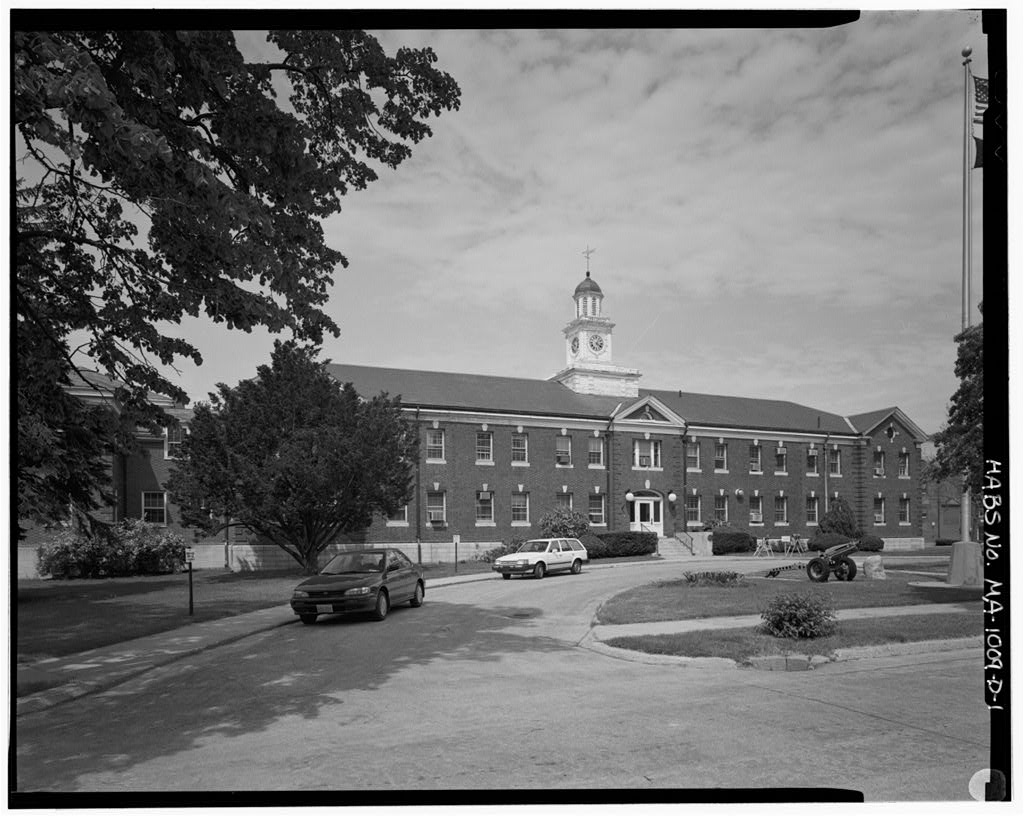
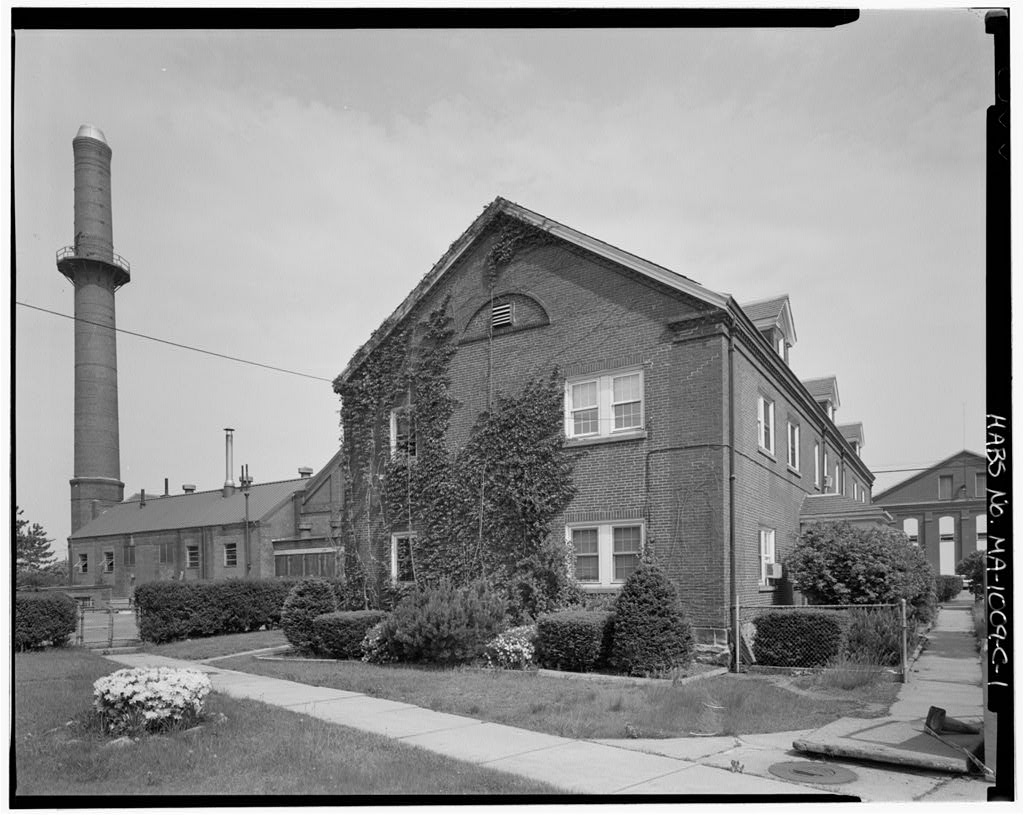
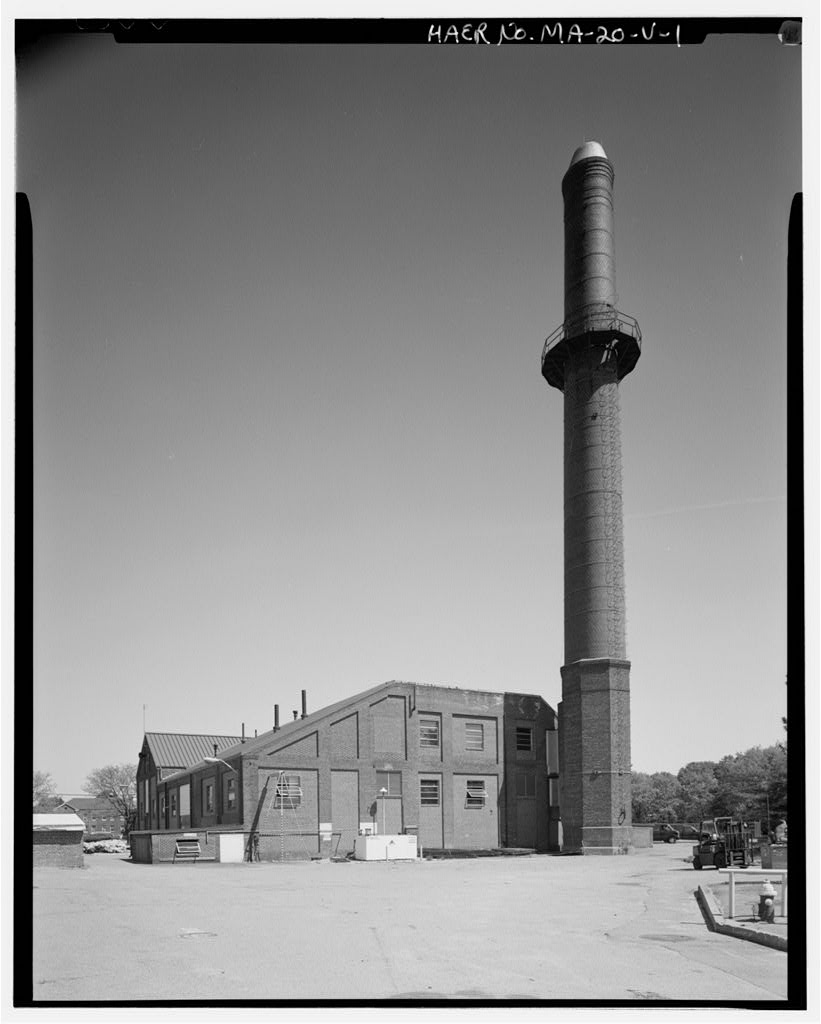
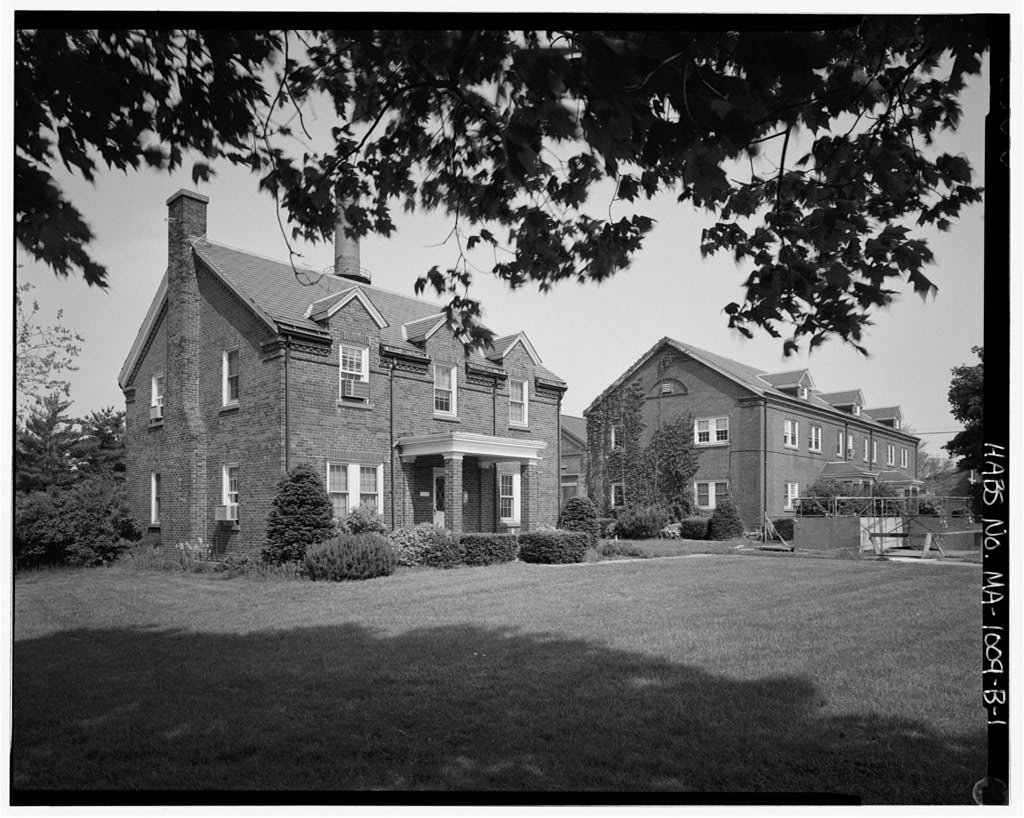
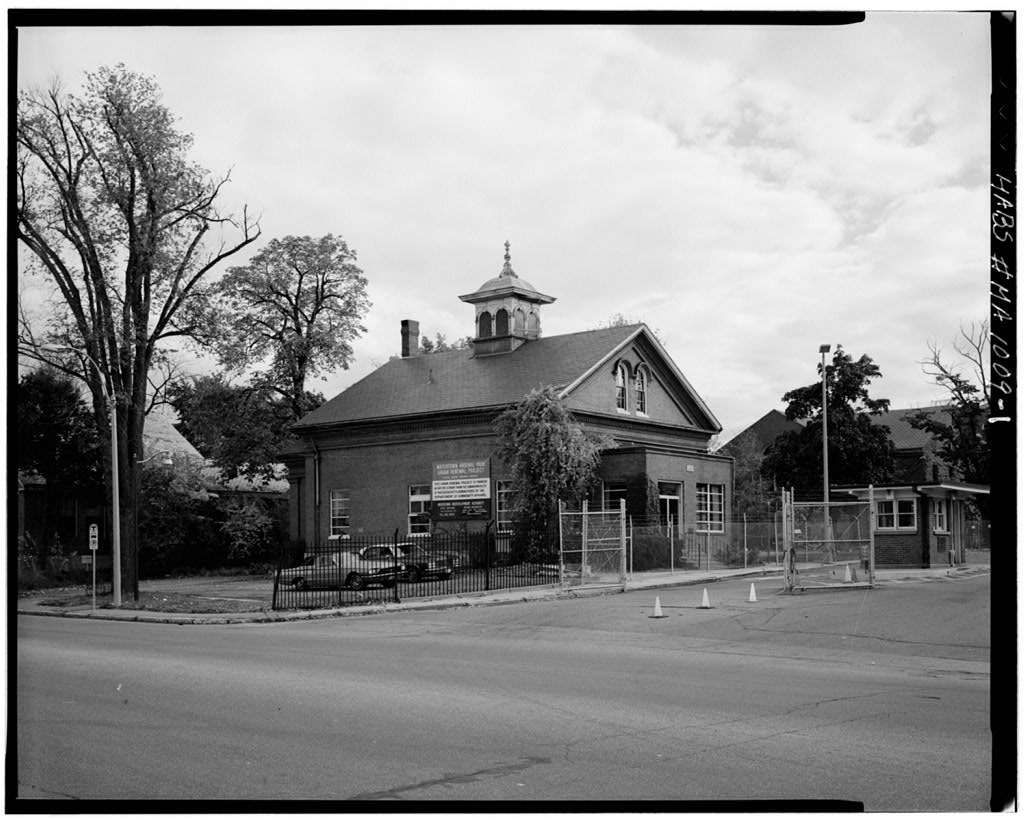
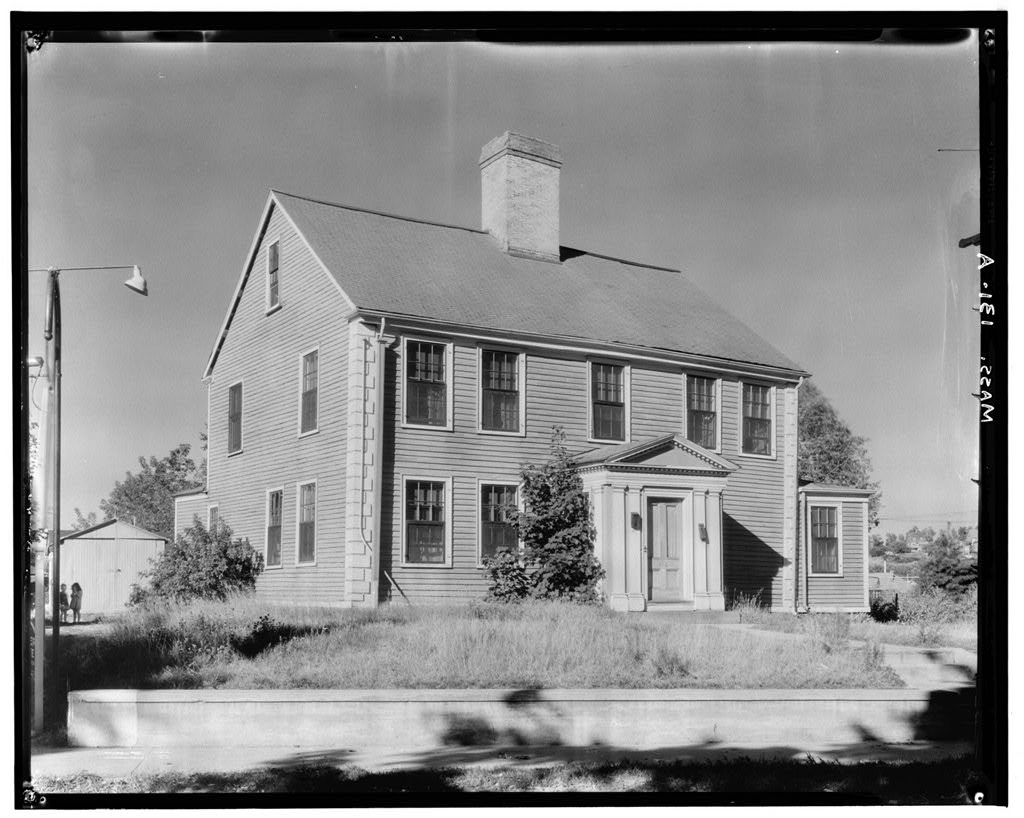
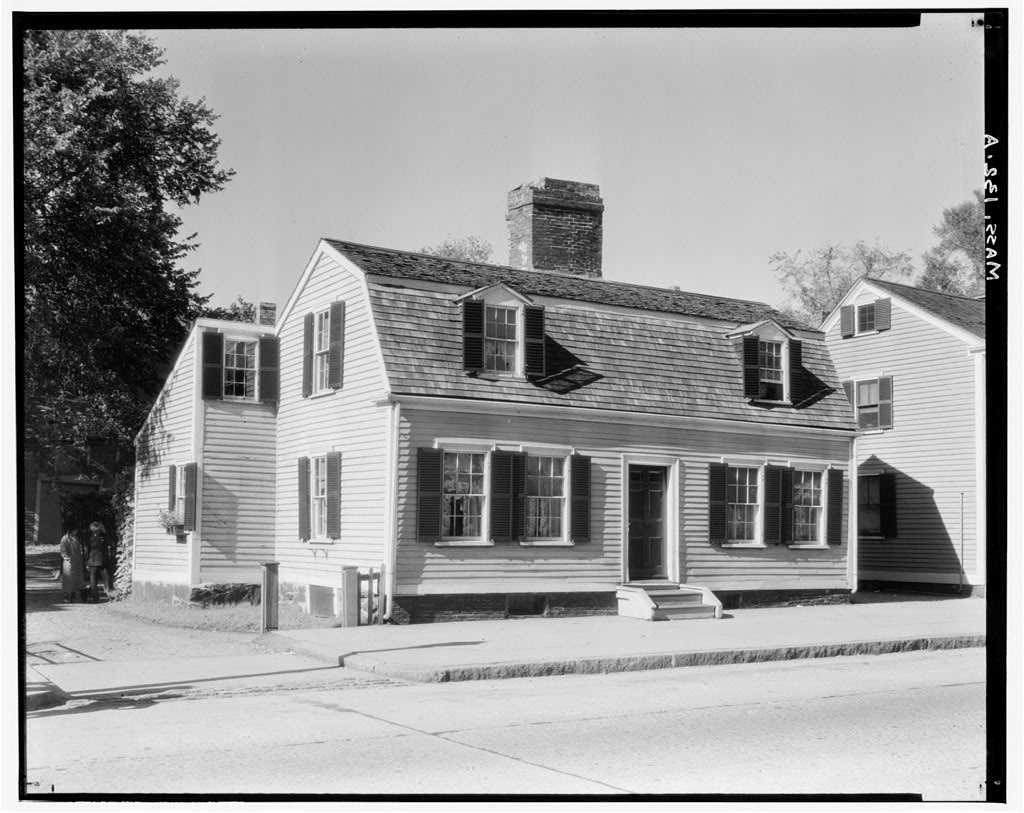
This documentation was undertaken in accordance with Section 106 of the National Historic Preservation Act of as amended, prior to base realignment and closure. Virginia H. Adams assisted by Andrew Winters The Public Archaeology Laboratory, Inc. 387 Lonsdale Avenue Pawtucket, Rhode Island ADDENDUM TO WATERTOWN ARSENAL, BUILDING No. 311 (Erecting Shop) HAER No. MA-2 0-E (Page 2) I. ARCHITECTURAL DESCRIPTION AND MODIFICATIONS Building No. also known historically as the Erecting Shop, is located at the north edge of the present-day AMTL property, directly west of the nineteenth-century gun carriage manufacturing complex. It is surrounded by Thornton Avenue (east), Wooley Avenue (south!, Thompson Avenue (west), and Arsenal Street (north).
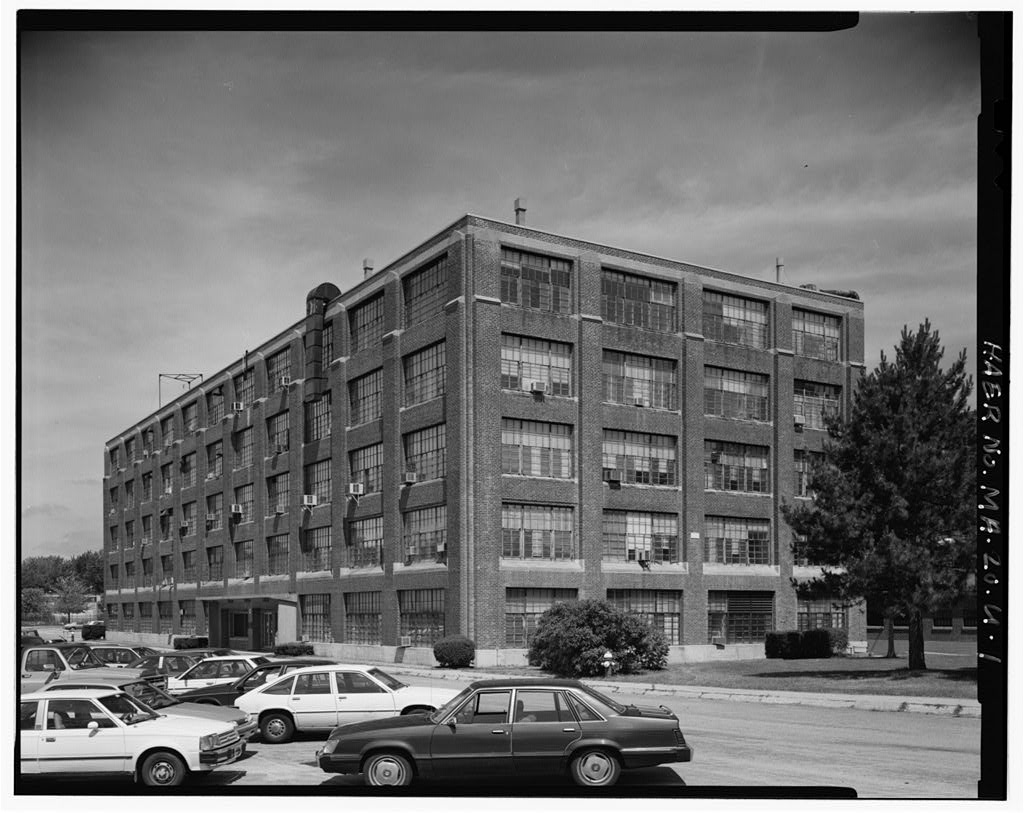
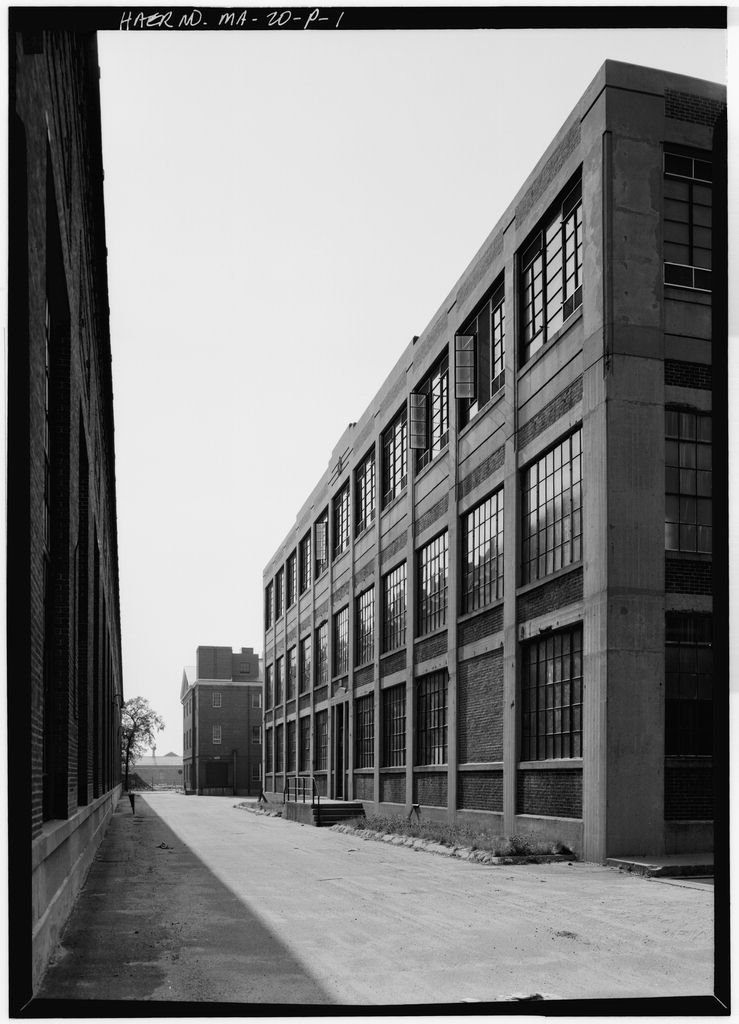
The adjacent landuse consists of a public street (Arsenal Street) to the north, a circulation road and other industriaf buildings to the south, and broad, open paved areas, now used as parking lots, at both the west and east ends. Minor landscaping elements consist of a grass strip between the building and the perimeter fence (north), and a grass sidewalk edging on the south side. Building No. 311 was erected in as a 20-bay-long, 462 ft. by 158 ft. structure. It was intended principally for the erection of carnages for 16-in. seacoast guns. In it was doubled in size with a 24-bay west addition that matched the original design and reused original cornice trim. It is the largest building and among the least altered structures within the AMTL site. Building No.
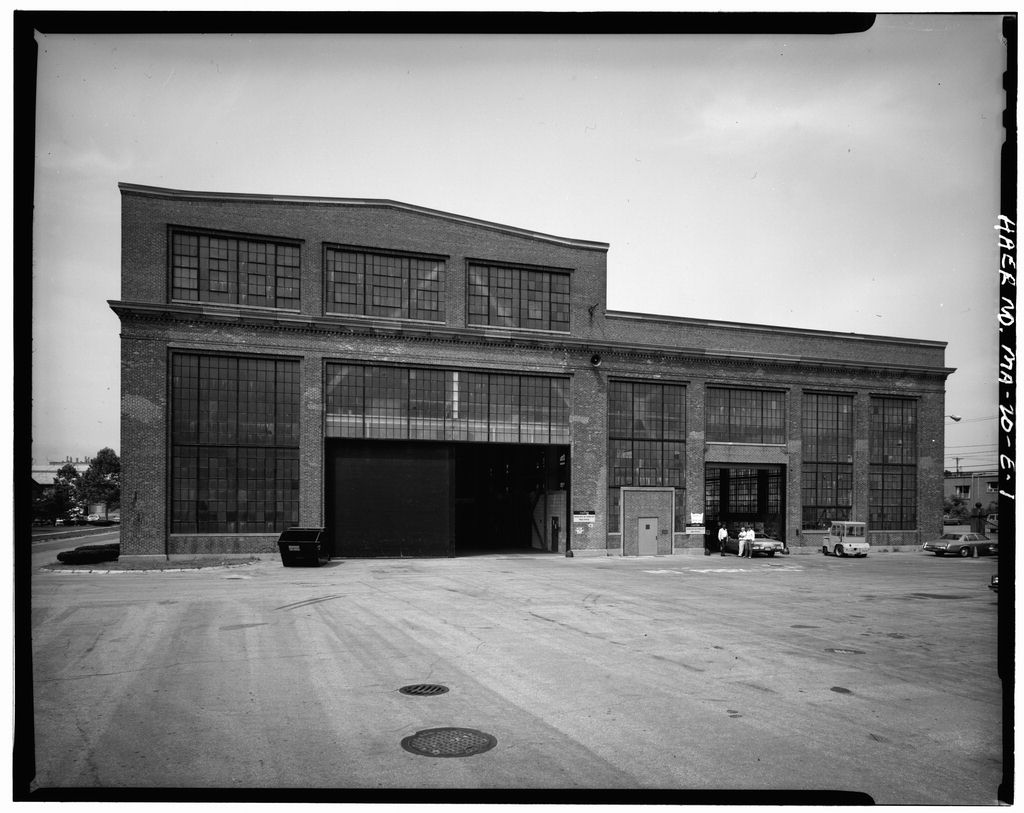
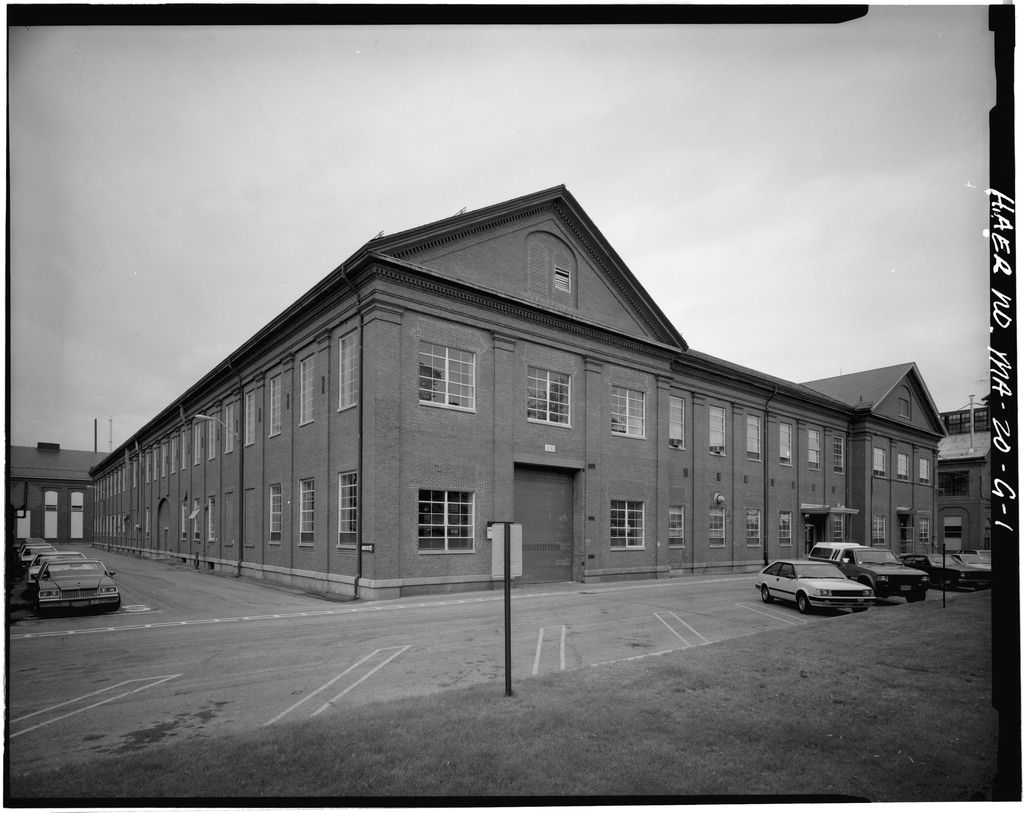
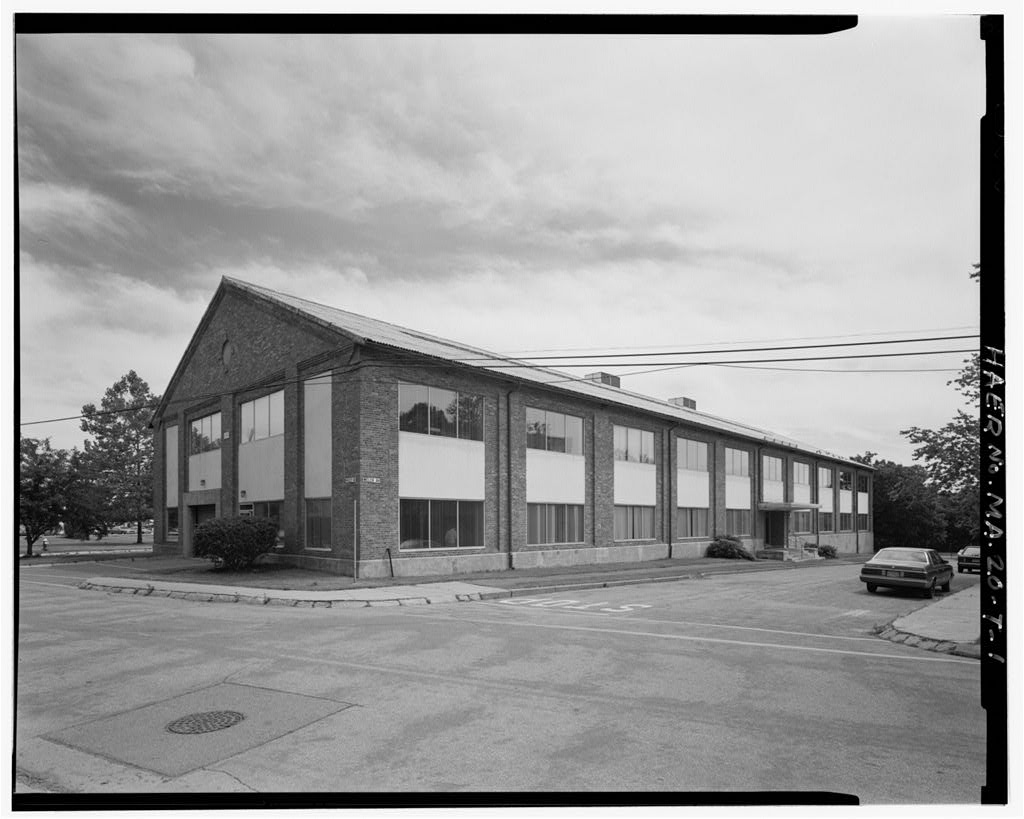
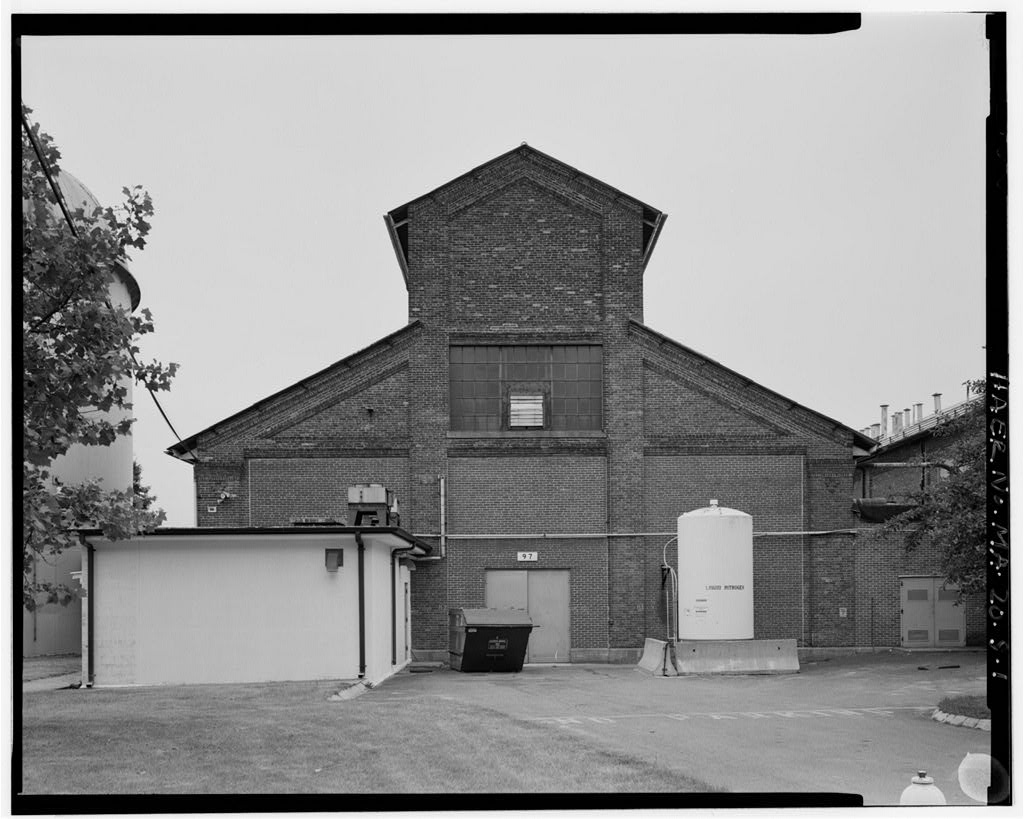
311 is a rectangular, high-bay structure, oriented west-east, with a total length of 924 ft. and width of 158 ft. Rising from a foundation of reinforced concrete, the pier and spandrel walls are constructed of a steel frame bays) faced in common-bond-laid, red brick with cast-stone trim. The flat roof is a riveted steel Warren truss sheathed in tar and gravel over precast gypsum- concrete panel decking. The building is composed of two similar and parallel sections of different height. The taller, southern half (3 bays wide) has two tiers of windows to accomodate huge rail cranes, while the lower, northern half (4 bays wide), terminates above the first level of windows.
An entablature composed of a brick stringcourse, brick dentil course and cast-stone cornice above the first level of windows is located on the west and east ends and continues one-bay on the north and south elevations, it is repeated in one bay near the center of each of the long elevations, indicating the original west end of the building. The roof line parapets are flat on the north section and low-gabled on the south section, with cast-stone coping. The exterior brickwork and cast-stone was repointed and repaired about Expanses of multi-light steel sash windows with hoppers fill the bays between the piers. They have cast-stone lug sills and a surround of one brick course. Slight variations exist between the and windows, the former being lights and the latter lights.
The original entrances consisted of several various sized doorways for pedestrians, gun carriages, and railroad cars. The smaller had wood-and-glass-panel doors and the larger had vertical rolling doors. In changes were made to some of the doorway openings and most doers were replaced. The east end elevation retains its large opening in the south-central bay of the north section. A double pedestrian door in the north section left (southernmost) bay has been rebuilt with modern steel and glass. In the south section, a pedestrian door originally located in the central bay has been eliminated and the bay has been incorporated into a widening of the main large opening in the north bay of the south section.
The west end elevation is largely as constructed in It consists of two large openings in the southermost bay of the north section and the northernmost bay of the south section. A third, slightly smaller doorway occupies another of the north section bays. Secondary pedestrian entrances are located along the south elevation near the central bay marking the joint of the two periods of construction and in the second bay east of the west end. The former retains its original surround, although the door has been replaced. The latter retains its original flush wood door with a glass upper panel leading to the x-ray facility. ADDENDUM TO WATERTOWN ARSENAL, BUILDING No. 311 (Erecting Shop) HAER No. MA-2 0-E (Page 3) The interior of Building No.
311 is essentially a single open space, divided along the east-west center line by column lines of steel I-beams at the structural bay spacing. The section has a double row, 25 ft. apart, and the 1 942 section has a single line. The interior surfaces are painted brick walls, concrete floor, and exposed roof trusses. Interior partitioned off structures are constructed of wood or concrete block. In the arrrangement of the original portion of the building had long, narrow, enclosed structures running west-east near the center that housed a tool room, storage, and office at the east end, and a locker room, washroom, and toilet at the west end. The southern section had (west to east): a vertical boring mill, a platen floor at the center, and two large, circular erecting pits for 16-in.
disappearing gun carriages at the east end. The northern section contained (west to east) a planer, a platen floor, and one slightly smaller erecting pit for 14-in. gun carriages. The southern section was equipped with Shaw overhead rail cranes, one with a 225-ton capacity. Both the north and south section had a set of standard gauge railroad tracks that ran from the east end westward approximately two-thirds the length of the building, where two additional sets ran perpendicular (north-south) to the main tracks. The initial equipment arrangement in the west extension included (west to east) an x-ray room and an x-ray facility, two large erecting pits, a 14-in. planer, platen floors up to 48 ft. by 150 ft.
in dimension, an radial drill, a Niles boring mill, a Mesta boring mill, and an spindle mill. Two sets of standard gauge railroad tracks extended from the west end eastward into the building approximately 100 feet. At the present time, several original platens and the x-ray structures remain in the west extension. The heavy equipment has been removed, the erecting pits have been filled in, and some of the railroad tracks have been dismantled. Several recent modular buildings include a composites and ceramics machine shop and a hut built for use of the National Aeronautics and Space Agency.
Extant cranes include; five Shaw cranes from 5- to 160-tons installed in five P & H cranes from 45 to 85-tons installed in and a 6-ton Conco x-ray crane erected in The mechanical systems included steam radiator heat supplied by the main power plant, piped water tied to the town of Watertown's supply, and electricity, which was introduced to the Arsenal industrial buildings about the time Building No. 311 was constructed. These systems have been upgraded at least several times since the when the west extension built.
Watertown Arsenal was established in principally as a depot for the storage, repair, and issue of small arms, ordnance, and supplies for the U.S. Army, and, secondarily, for the manufacture of small arms cartridges. The original construction consisted of a regularly arranged quadrangle of similar brick buildings located east of the present-day AMTL property. By the the construction of wooden field, siege, and seacoast gun carriages and their limbers and caissons, along with work in metallurgy and the development of cast iron guns, had begun, and in the second half of the nineteenth century, gun carriage manufacturing developed as a major mission of Watertown Arsenal.
In the a new national seacoast defense program was established which included provisions to enhance fortifications and update armaments. New carriage designs for field and seige breechloading steel guns, as well as the fabrication of barbette and disappearing carriages for 6-inch to 16-inch seacoast guns, was initiated. The Department of War selected Watertown Arsenal as the Army's gun carriage manufacturing plant in a counterpart to the Army gun factory at Watervliet Arsenal, ADDENDUM TO WATERTOWN ARSENAL, BUILDING No. 311 (Erecting Shop) HAER No. MA-20-E (Page 4) New York (designated in Appropriations from Congress for this new mission allowed a significant expansion and improvement of Watertown Arsenal for production of these larger, predominantly steel carriages.
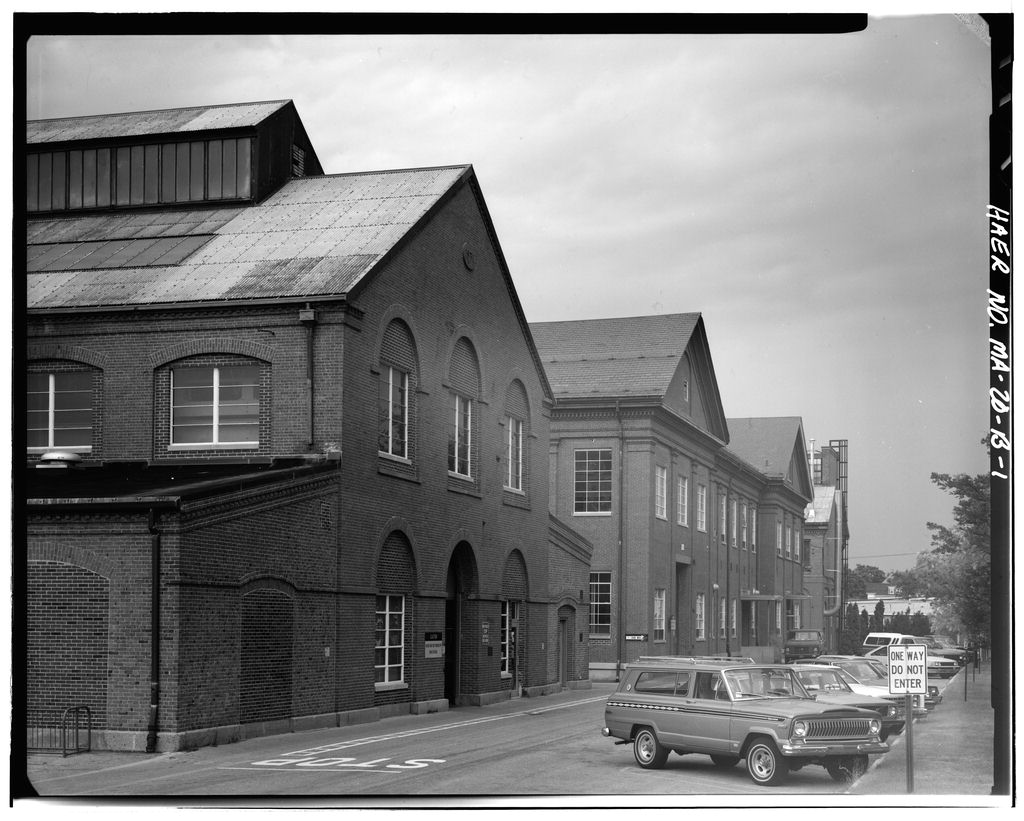
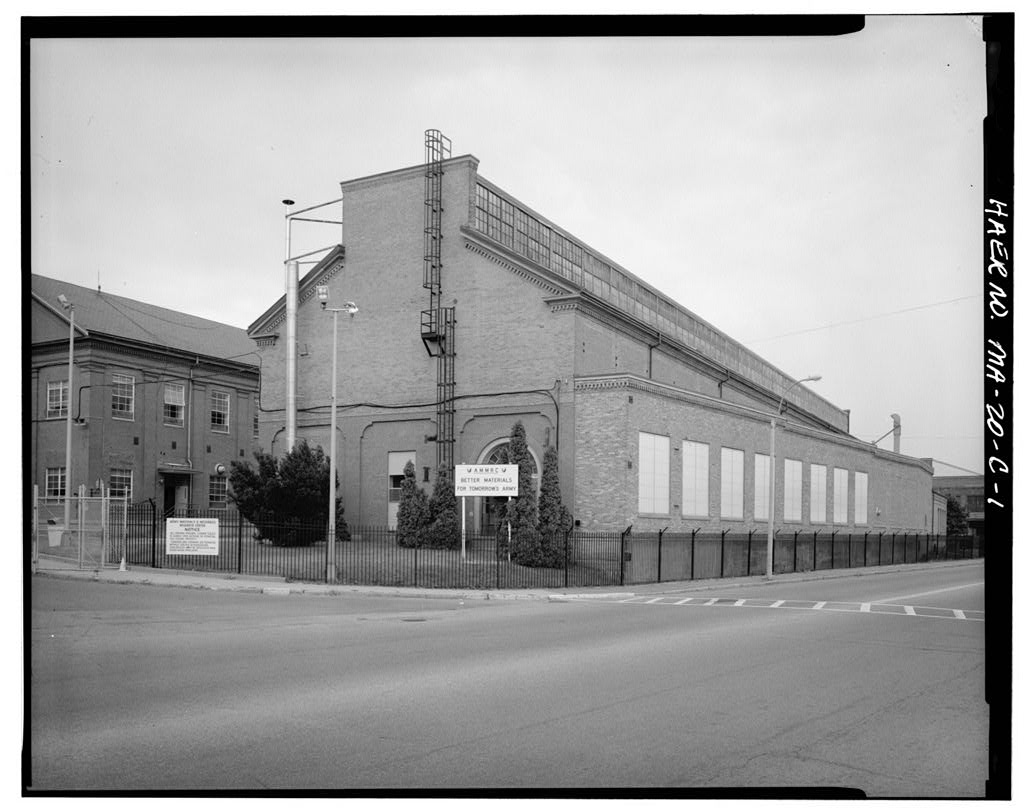
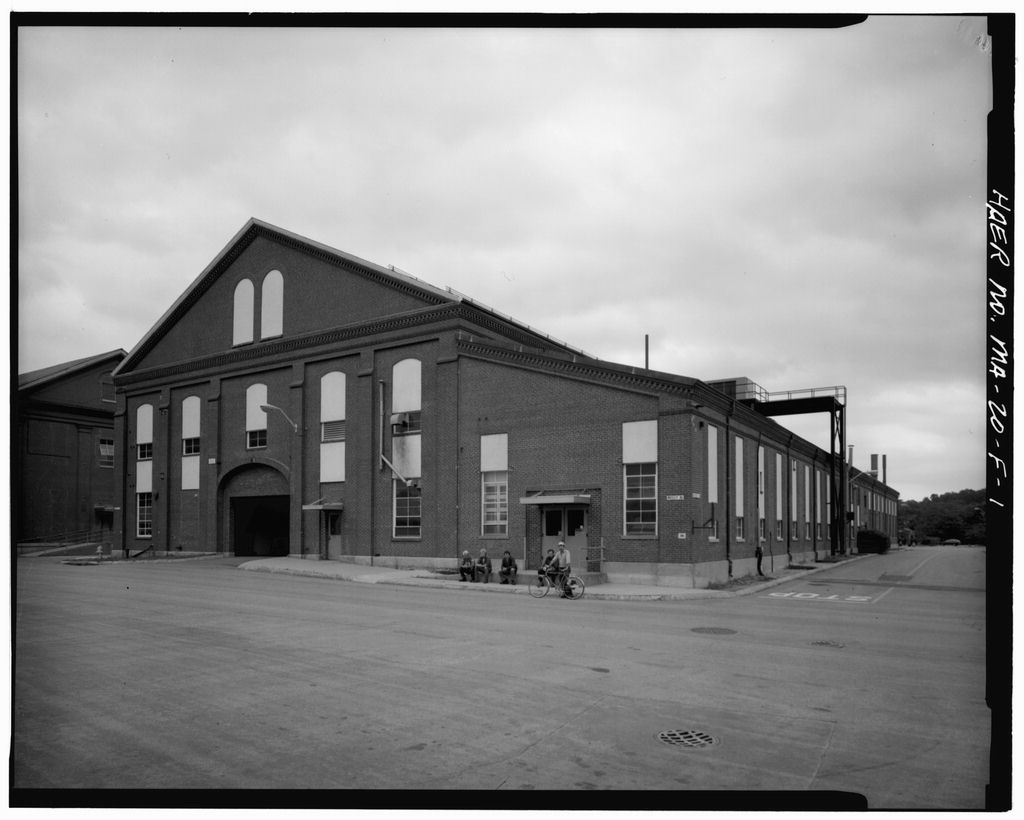
By the gun carriage manufacturing complex consisted of: the east timber store house Building No. the West Timber Storehouse, converted to a foundry in and a maintenance shop in Building No. 37; HAER No. MA-20-D); a Carriage and Machine Shop Building No. HAER No. MA-20-G); a forge/smith shop Building No. 43; HAER No. MA-20- C); an Erecting Shop, converted to a mchine shop in Building No. HAER No. MA-20- F); and a Gun Carriage Storehouse, converted to a machine shop for armor-piercing projectiles in Building No. 36; HAER No. MA-20-A).
The volume of anticipated construction for World War I and the massive scale of the larger guns and carriages, especially the seacoast guns, necessitated construction of the new Erecting Shop in Its construction was part of an extensive building campaign in which the Arsenal nearly tripled in size. Building No. 311 was among those contracted to Monks & Johnson, a Boston architectural firm noted for their industrial designs.1 The scheme for Building No. like that of other buildings constructed at this time in Watertown Arsenal, used traditional brick building materials and minimal classically-inspired ornamentation along with large windows, to maximize natural lighting.
New steel construction technology and the massive scale dictated by the increased size of gun carriages and the machine tools for their production, however, introduced a more immense scale building type with greater expanses of fenestration than had previously been achieved. Building No. 311 was one of the largest to be built at that time and contained some of the biggest machine tools at the Arsenal.2 Building No. 311 received parts for disappearing, barbette, and railway carriages for guns up to 16- in. in caliber from the nearby forge, foundry, and machine shops, to which it was linked by rail. As had earlier been the case, carriage assembly consisted of numerous parts that were individually fabricated and not interchangeable.
While the materials and methods of production of gun carriages changed, manufacturing at the Watertown Arsenal has always been characterized by small quantity and variety of products, assembled from many specialized parts, rather than large scale mass production. Building No. the earlier Erecting Shop, was converted to a machine shop in support of the new assembly activities. Rail lines also connected directly with the Boston & Maine Railroad commercial line immediately north across Arsenal Street, facilitating the receipt of raw materials and the shipment of finished products.3 Within Building No. overhead rail cranes allowed the lifting and movement of heavy parts for assembly, and the railroad tracks transported both parts and finished railway mounts and carriages.
Actual assembly took place at the circular erecting pits for disappearing and barbette carriages, and on the rail tracks for railway carriages. The steel platen floors, comprised of individually adjustable sections, allowed the capability for rapid set up and calibration of heavy machines for lines of production. In addition to the 16-in. seacoast gun carriages, the Arsenal's principle gun carriage products during World War I were those for 3-in. anti-aircraft guns, 14-in. railway guns, howitzers, and 12-in. mortars.4 In additional machine tools, relocated from other buildings, were installed in the north section and a portion of the center bays to consolidate machine work.
One of the notable accomplishments of Watertown Arsenal during the period following World War I was the development of autofrettage, or cold working, of steel guns. First experimented with in the nineteenth century, this process was ADDENDUM TO WATERTOWN ARSENAL, BUILDING No. 311 (Erecting Shop) HAER No. MA-20-E (Page 5) applied to cannon manufacture at Watertown Arsenal- under the direction of Brigadier General T. C. Dickson after World War I. The process enabled guns to be formed and strengthened in a single piece. Hydraulic pressure created exterior tension and interior bore compression, thus pre-stressing, lightening, and fortifying the gun. Cold working of guns was introduced into the south bay of Building No.
311 in In a 500 pound and a pound induction crucible furnace was added, allowing experimental centrifugal casting of guns to occur simultaneously with cold working. Centrifugal casting produced a more uniform gun at a faster speed and was later used at a mass production level elsewhere in the Arsenal during World War II. This equipment was removed in in order to relieve congestion.5 Another Watertown Arsenal achievement put to service in Building No. 311 during this period was the use of welded steel for gun mounts and carriages. Following a period of pioneering experimentation, the first sucessful all-welded gun carriage was completed in Welding eventually replaced steel castings, reducing the overall weight of the gun mount.8 In an assessment of the status of U.S.
Army arsenals and their preparedness found that nearly 85 percent of the equipment at Watertown Arsenal was over eighteen years old, some dating back to the nineteenth century. However, the Seacoast Carriage Assembly Shop was considered to be excellently suited for the purpose and to contain some of the most modern, efficient, and exact, as well as largest, machine tools in the arsenal group.7 Nevertheless, U.S. Army preparations for World War II production included construction of a large west extension to Building No. doubling its size. The design, which mirrored the original structure, was carried out by the Boston architectural firm, Coolidge, Shepley, Bulfinch & Abbott.
The functions installed in the new section were also essentially similar, with the addition of a one-million-volt X-ray machine located at the west end. Watertown Arsenal had been a leader in the development of radiography as a nondestructive testing technique for metals since the Headed by Dr. H. H. Lester, Arsenal teams demonstrated that radiography used to examine occasional samples of foundry output could economically and technologically improve production, in place of visual inspection of completed articles. By World War II, the technique was widely used in commercial industry and, in Building No.
was used in monitoring the quality of welds and gun carriage parts, as well as in general materials research and testing.8 Watertown Arsenal served primarily as a pilot plant for the ordnance industry during the World War II period, but continued to utilize its highly trained workforce and excellently equipped plant for production of ordnance items, including gun carriages. In the decades following World War II, production at Watertown Arsenal dropped and much of the installation was placed on standby status. Building No. however, sustained its central role in Watertown Arsenal ongoing activities as a pilot plant. In the late and weapons development at the Arsenal included the world's first atomic artillery piece, the Atomic Cannon.
It was completed in and was capable of travelling 35 miles per hour, mounted on a platform carried between two truck tractors. The Skysweeper, an individually controlled anti-aircraft gun was introduced in and was the most compact and effective of its type ever produced in the United States. Both guns were erected in Building No. Other developments during this period were the construction of the 800-ton, 92-in. Cyclotron Magnet for Harvard University, comprised of the largest concentrated mass components ever machined at Watertown Arsenal.9 In Building No. 311 received a 3-miilion electron volt X-ray, built by High Voltage Engineering of Cambridge, Massachusetts. Since the Building No.
311 has housed X-ray and relatively small machine tool activities associated with the materials research and testing mission of the Arsenal. With the closure of the historic Watertown Arsenal in and the establishment of the Army Materials and Mechanics Research Center, now AMTL, Building No. 311 has also served as a shipping and receiving area. ADDENDUM TO WATERTOWN ARSENAL, BUILDING No. 311 (Erecting Shop) HAER No. MA-2 0-E (Page 6) III. ENDNOTES 1. Dickson, 2. Burns and Bahr, This report constitutes the documentation previously submitted to the Library of Congress for HAER No. MA-20, Watertown Arsenal. Dobbs, 45. 3. Burns and Bahr, 4. Dickson, Dobbs, 46. Burns and Bahr, 5. Dobbs, 45, Dickson, 6. Dobbs, 52. 7. "The Arsenals in Action." 8. Dobbs, 9. Dobbs, IV.
BIBLIOGRAPHY AMTL, Facilities Engineering, Watertown, Massachusetts. Architectural and engineering plans and drawings. AMTL, Office of Public Affairs, Watertown, Massachusetts. Foster Notebooks, files, and historic photographs century to Army Corps of Engineers, New England Division, Waltham, Massachusetts. Photographs (5 volumes, to Bahr, B. "Building No. Erecting Shop, HABS/HAER Inventory Card." Washington, Historic American Buildings Survey/Historic American Engineering Record, National Park Service, U.S. Department of the Interior, June Burns, Lib by Baylies and Betsey Bahr. Historic American Buildings Survey of the United States Army Materials and Mechanics Research Center, Watertown. Massachusetts.
Washington, Historic American Buildings Survey/Historic American Engineering Record, National Park Service, U.S. Department of the Interior, Summer Dickson, Tracy C. "History of Watertown Arsenal, Watertown, Massachusetts." Unpublished typescript, Office of Public Affairs, AMTL. Dickson, Tracy C. "Cold Working and Centrifugal Casting of Steel Tubes." Cleveland Engineering. V. 12, May 29, ADDENDUM TO WATERTOWN ARSENAL, BUILDING No. 311 (Erecting Shop) HAER No. MA-2 0-E (Page 7) Dobbs, Judy. A History of the Watertown Arsenal 1 Watertown, Massachusetts: Army Materials and Mechanics Research Center, E.G. & G. Idaho, Inc. USATHAMA (U.S. Army Toxic and Hazardous Materials Agency) Preliminary Assessment/Site Inspection for the Army Materials Technology Laboratory.
Idaho Falls, Idaho: Idaho National Engineering Laboratory, March "The Arsenals in Action." American Machinist, February 8, For further sources, consult Burns and Bahr, previously submitted to the Library of Congress as HABS/HAER documentation for Watertown Arsenal, HAER No. MA-20. ADDENDUM TO WATERTOWN ARSENAL, BUILDING No. 311 (Erecting Shop) HAER No. MA-20-E (Page 8)
Source: E. G. & G.. USATHAMA report. ADDENDUM TO WATERTOWN ARSENAL, BUILDING No. 311 (Erecting Shop) HAER No. MA-2 0-E (Page 9) AMMRC BUILDING SURVEY FLOOR PLAN o> c LU 3 9>
 Block
Block