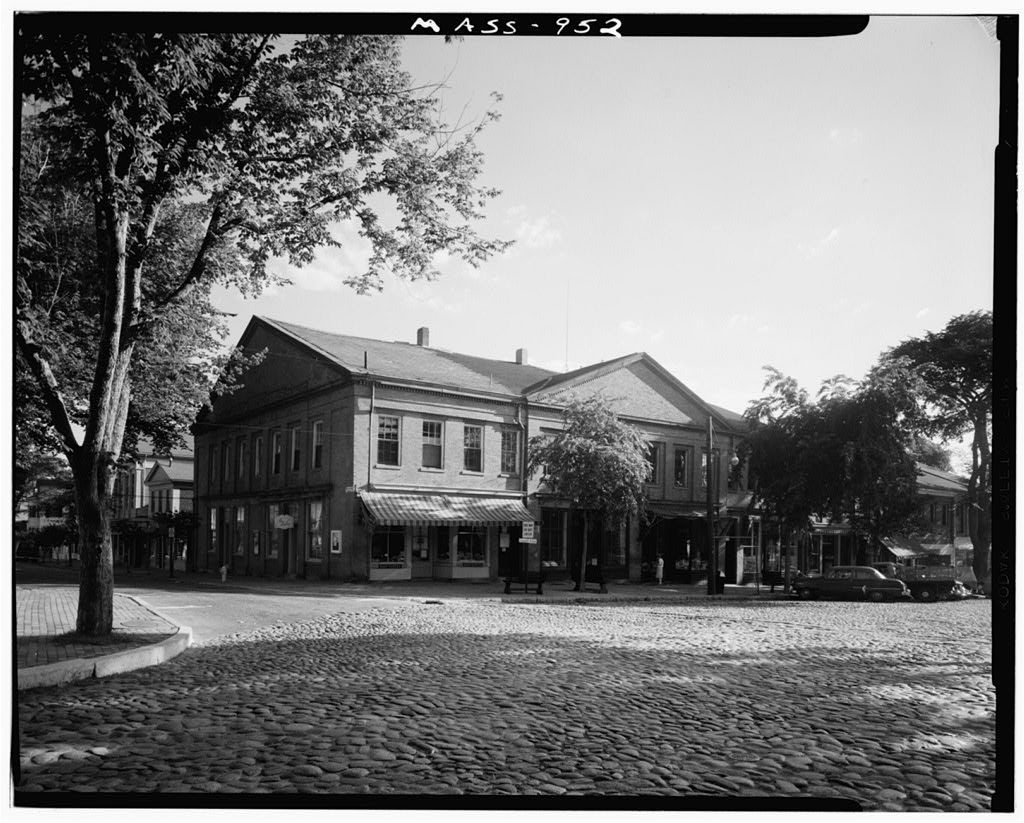
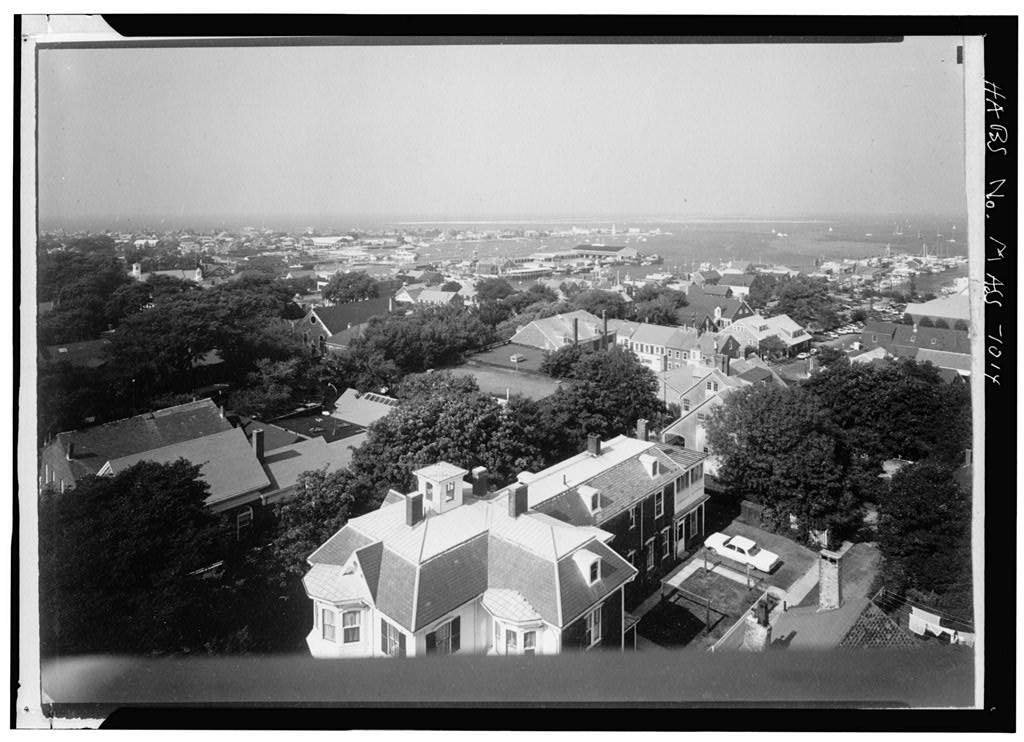
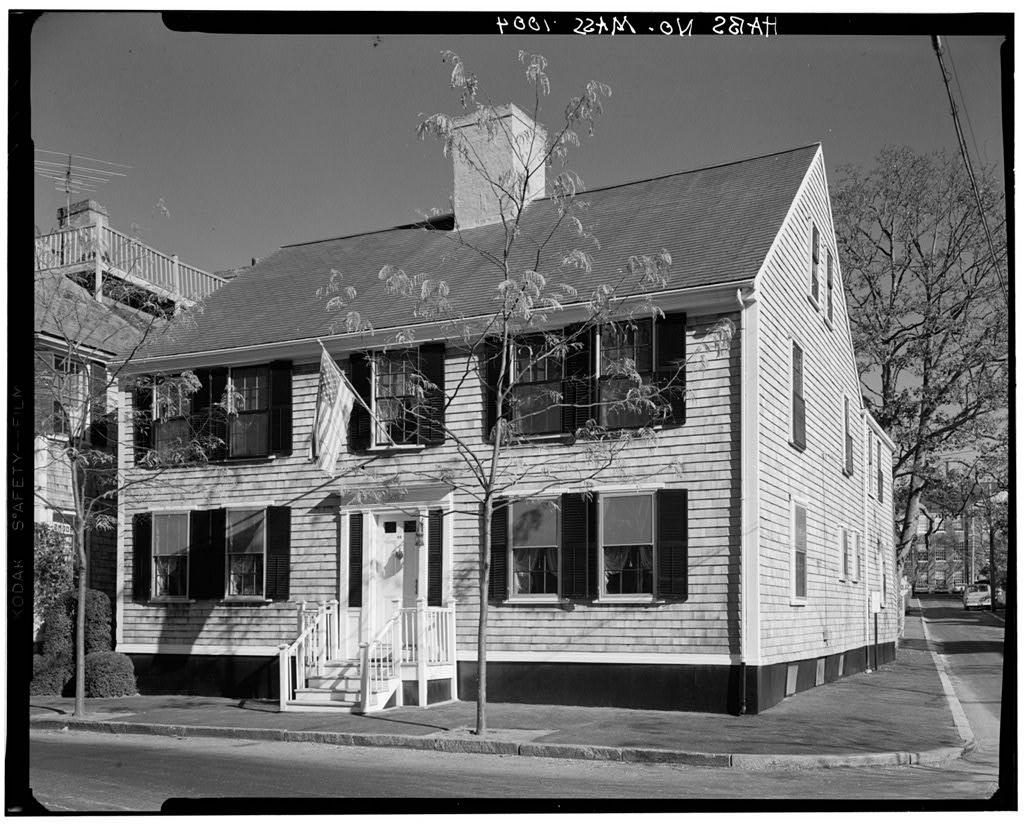
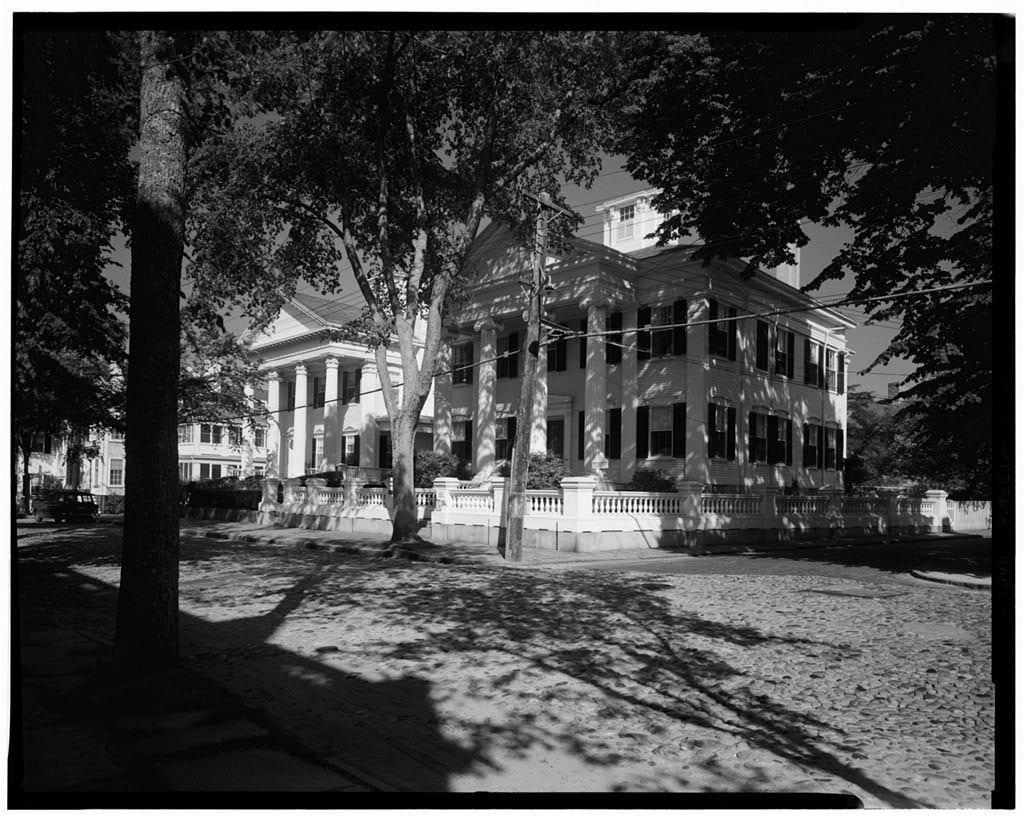
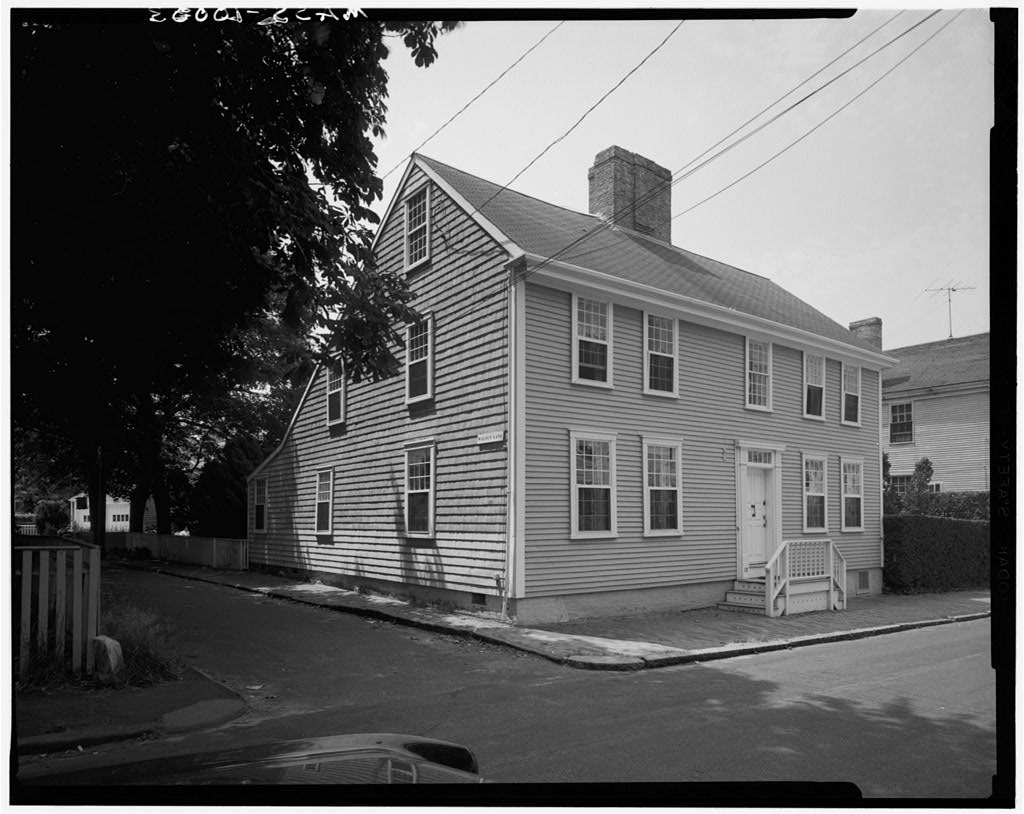
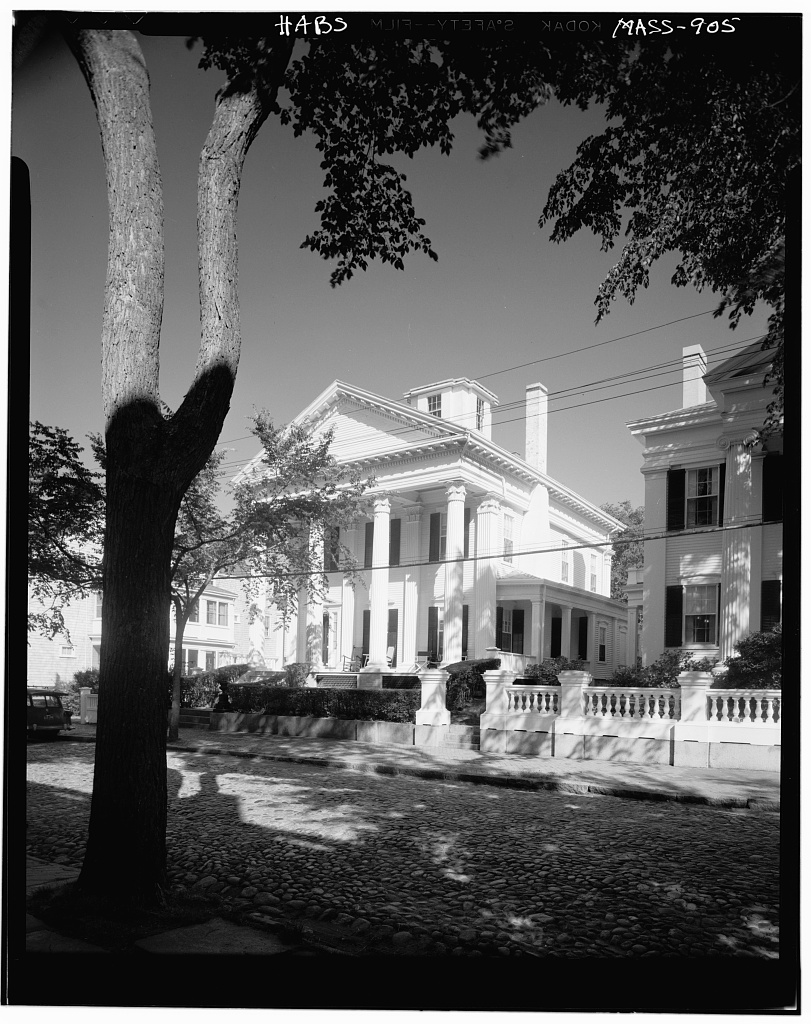
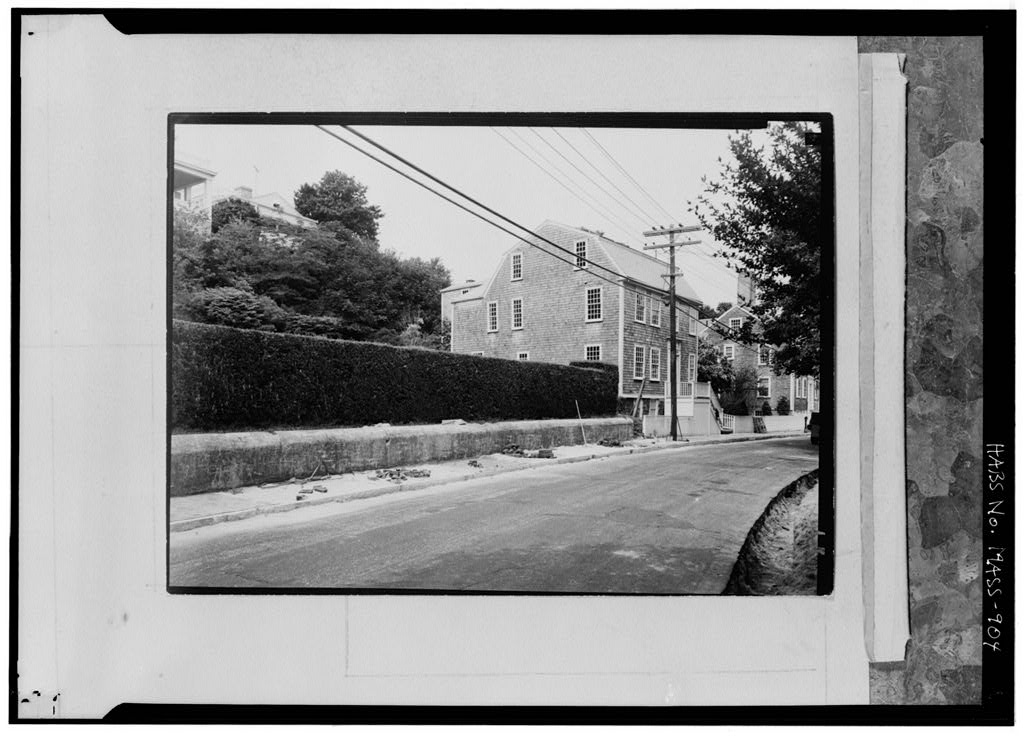
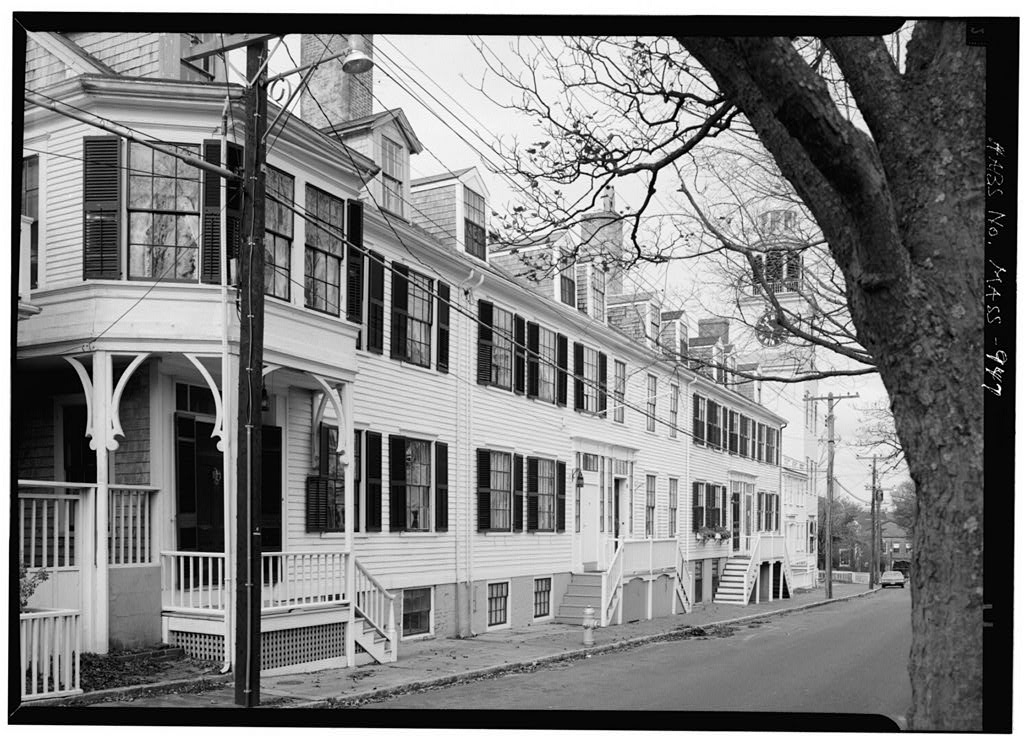
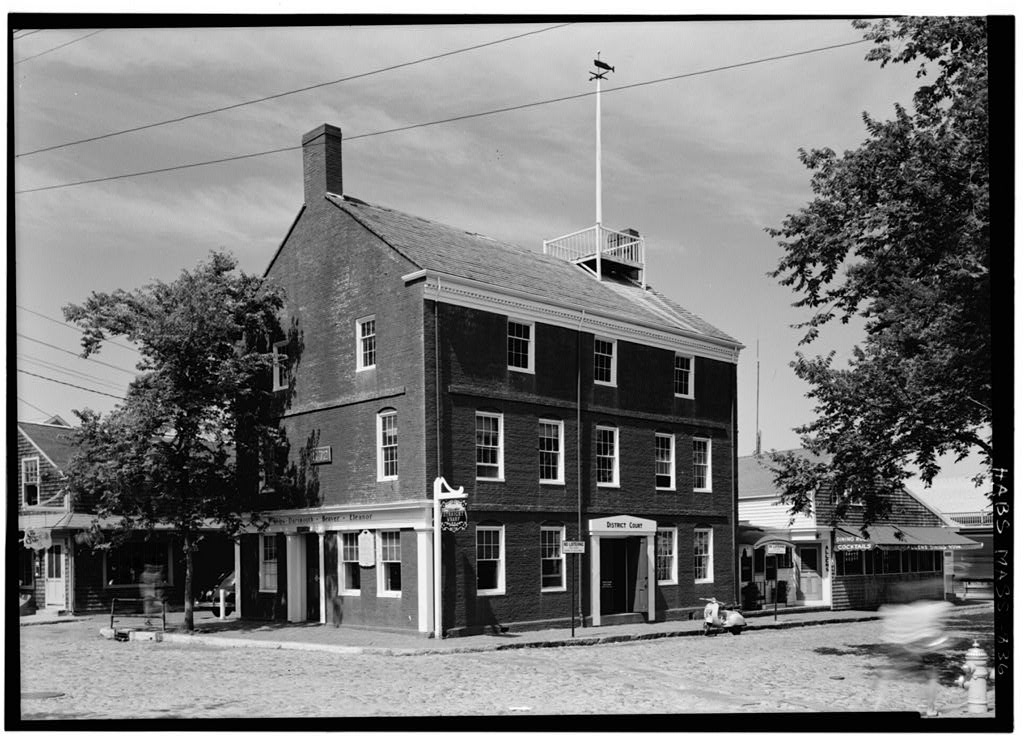
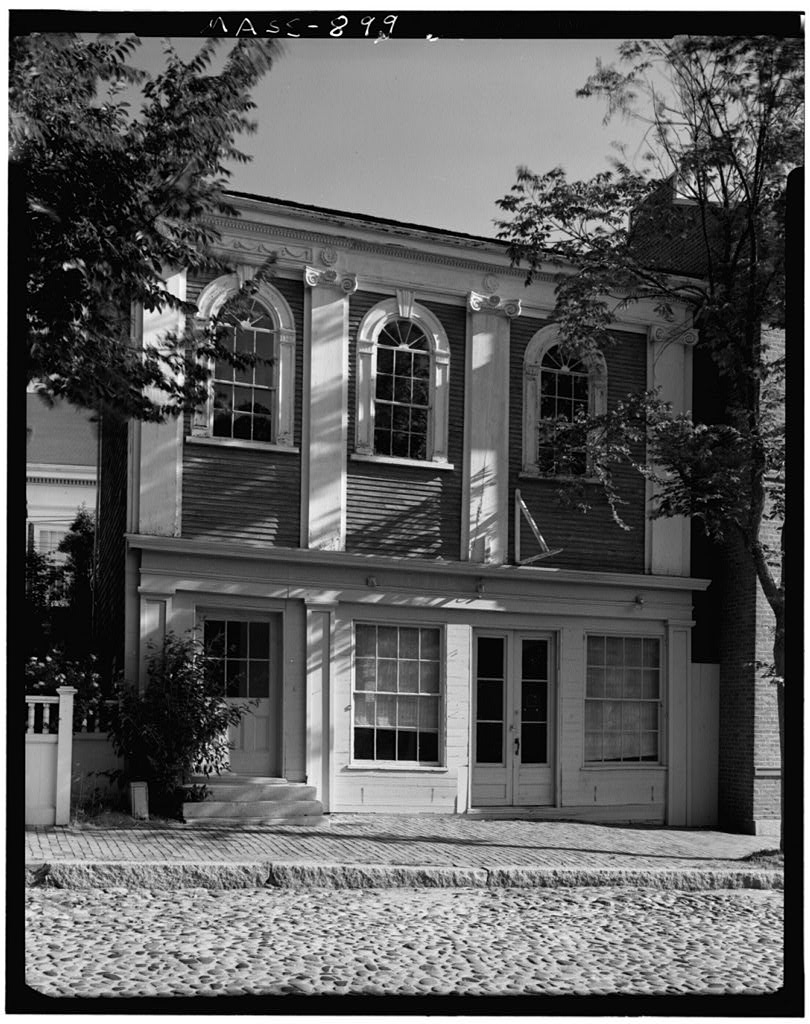
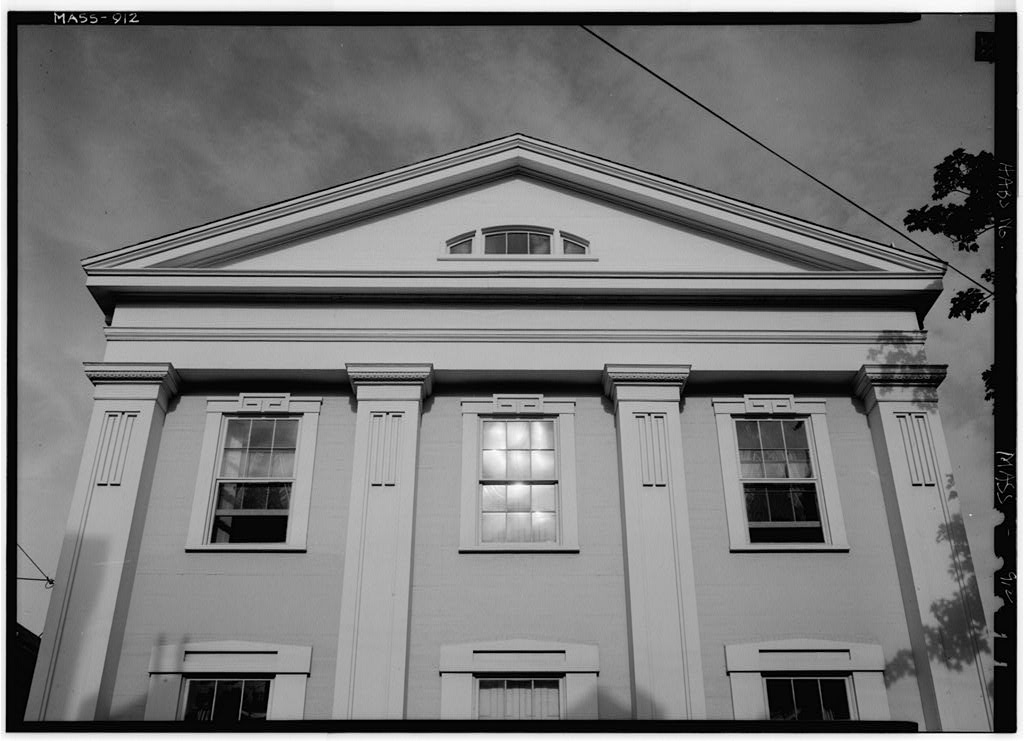
Brick commercial buildings built soon after the fire along the new alignment for Main Street. PART I. HISTORICAL INFORMATION A. Physical History: 1. Original and subsequent owners: In according to a drawing made that year by William H. Gardner, the occupants of buildings on the north side of the business section of Main Street were as follows: Starting at Centre Street: Phoenix Bank; Wilson furniture; John Brock's dwelling; Frederick Cobb, dry goods; Winslow Wittemore, furs; Cromwell Barnard, tailor; A. T. Allen, tailor.
Crossing Federal Street and continuing down Main: Manufacturers and Mechanics Bank; Easton & Sanford, watch makers and jewelers; John Whittemore, hatter; William Hadwen's office; and at corner of South Water Streets stood the Zenas Coffin Building with Thomas Coleman's sail-loft and Thomas A. Gardner, hardware. Since the fire of the ownership of the buildings has changed many times and continues to do so. 2. Date of erection: Immediately after 3. Architect: Not known. 4. Original plans, construction, etc.: Many wooden buildings of all shapes and sizes were built here originally. An idea as to their appearance may be gained by studying the drawing "Old Nantucket" made in by William H. Gardner which is at the Atheneum and reproduced in Ninety-Five Percent Perfect by Everett U.
Crosby, page COMMERCIAL BUILDINGS NORTH SIDE OF MAIN STREET HABS No. MASS-952 (Page 2) In the early Main Street was a very busy place with a customs house, post-office and counting houses close by the many shops, two inns, a large hall, three banks and a newspaper, many of them located on this north side. The street was narrower as it neared Centre Street, and changes were made in the lower square after a disastrous fire in 5. Alterations and additions: All of the buildings on the north side of the business section of Main Street were completely destroyed in Rebuilding started im- mediately and the street was widened on this side as it went west to Centre Street.
Although temporary buildings were erected on the south side, three rather imposing brick blocks were built on the north side and remain today. Two of them extend from Centre to Federal Streets and the third from Fed- eral to Union Street Extension, the latter being known as the Valentine Hussey Block. Two separate buildings now stand between Union Street Extension and South Water Street. Historical Events Connected with the Structures: When the site of the town was moved from Sherburne to Wesco, Main Street was a natural way to the harbor and with the con- struction of Straight Wharf in it became a major street, although known as State Street for many years. The following is abstracted from Rambling Through the Streets and Lanes of Nantucket by Edouard A.
Stackpole, "The number of merchants and the variety of goods sold in the brick blocks of Main Street would fill a volume. During the century following the fire, many well known community leaders launched their careers in these stores, but only a few of them have left their names to the various sections. Lewis Wendell, a Prussion, who was shipwrecked here, began a business that became success- ful and for many years one of the rooms over his store was used for 'socials' and known as Wendell's Hall "The corner of Main and Centre . . . was for years known as 'Parker's Corner'. Robert F. Parker was a prominent merchant, active in politics in the Whig Party, Shortly before the national election of the following appeared in Mr.
Parker's advertisement: 'The subscriber, feeling a strong disposition to support the Constitution and the American System, hereby offers for sale a great variety of articles in the grocery, crockery and glass line, which are well suited to anti-Jackson tastes and palates, and which may possibly choke a Jackson man t COMMERCIAL BUILDINGS NORTH SIDE OF MAIN STREET HABS No. MASS-952 (Page 3) if he should chance to be one of the whole-hog kind "On the corner of Federal Street ... in the upper floor, the Grand Army of the Republic had its headquarters, and for a quarter century, on each Memorial Day, the veterans would form their line of march at this corner.
Nantucket was the banner town of the Commonwealth in the Civil War, sending 213 men into the ranks of the Union Army and 126 into the ships of the Navy "In the upper floor at the opposite corner of Main and Federal Streets is the 'John B. Chase Engine Co.' club rooms. This is the only surviving club of several which were active in the days of the volunteer fire companies . . . The room was also used by Editor Arthur Gardner in publishing his 'Nantucket Journal 1 for many years until he suspended publication in "The building on the north side of the lower Square now occupied by the Wannacomet Water Company was originally two separate buildings.
During the Civil War Days the upper floor of the east half was the print-shop of 'The Mirror', the second of two Nantucket newspapers, founded in and consolidated with 'The Inquirer' in On the street floor was the Union News Room, a rival of the Commercial Reading Room succeeded by the Pacific Club, The latter was called the 'House of Lords' and the former the 'House of Commons', which was indicative of the status of men who frequented these popular rooms where newspapers and periodicals were carefully perused." C. Sources of Information: 1. Old Views: Drawing "Old Nantucket" by William H. Gardner, (with names of owners), "View of Fire in Lower Main Street May 10, painting by E. F.
Starbuck, "Main Street and Pacific Bank Before painting, at Nantucket Atheneum, Nantucket, Massachusetts; north side of Main Street after in Nantucket's Changing Prosperity by Everett U. Crosby, two photographs of Main Street, north side, c. view of Lower Square in in 100 Years in Nantucket , Inquirer and Mirror, view of Federal to South Water Streets in in Early Nantucket and Its Whale Houses by H. C. Forman, New York: Hastings House, view of building at east corner of Federal and Main Streets, Inquirer and Mirror calendar, April, view of lower part of north side Main Street in In quirer and Mirror , March 25, 2.
 Block
Block