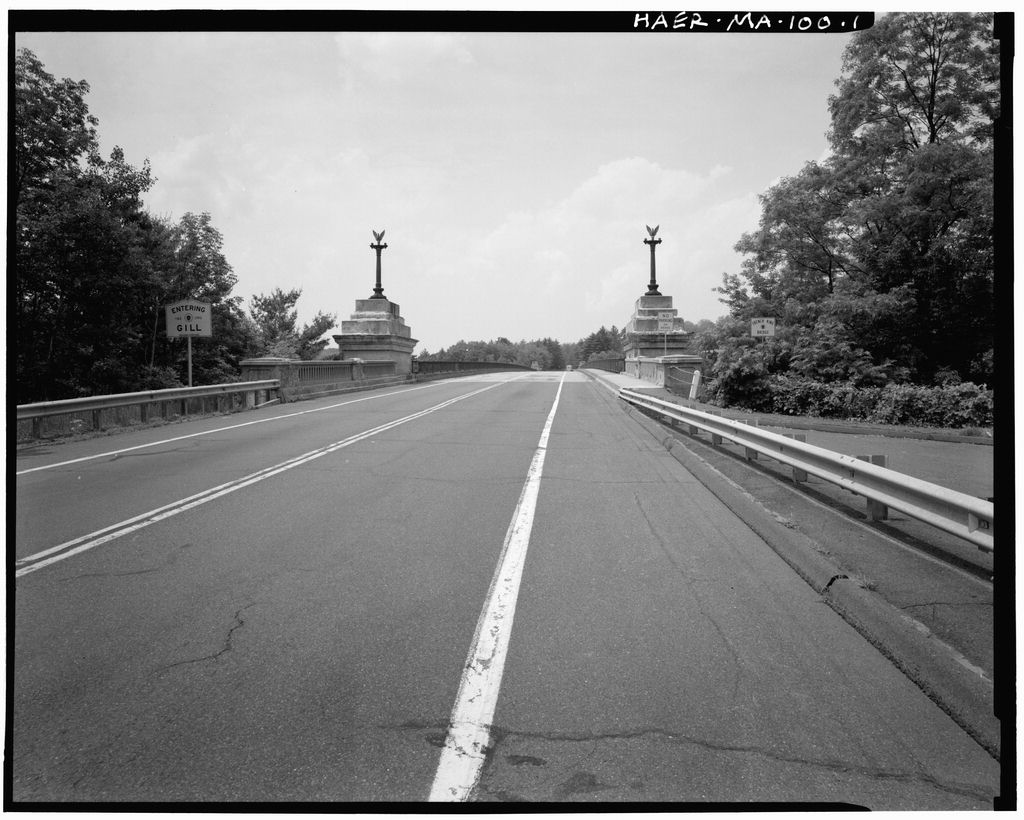
Documentation of the French King Bridge is part of the Massachusetts Historic Bridge Recording Project, conducted during the summer of under the co-sponsorship of HABS/HAER and the Massachusetts Department of Public Works, in cooperation with the Massachusetts Historical Commission. Lola Bennett, HAER Historian, August FRENCH KING BRIDGE HAER No. MA-100 (page 2) Description The French King Bridge rises above the level of the Connecticut River, and spans a narrow gorge just above the Connecticut's confluence with the Millers River. The bridge itself is a 782-foot, riveted steel, three-span continuous spandrel-braced deck arch, resting on two concrete river piers and two concrete abutments.
It has a parabolic lower chord, and a very slightly arched upper chord, which are connected, by a series of verticals and diagonals patterned after the Pratt system. The trusses, spaced 41' apart and divided into thirty-four panels each, are identical and are long between the end pins, and long between the river piers. All truss members are built up of plates and angles, connected with lacing and tie bars. The vertical truss members support plate girder floor beams, on top of which are rolled I-beam stringers and a reinforced concrete deck. The deck carries a 40'-wide roadway and a 6'-wide sidewalk on the north side of the bridge. At the piers, the trusses are fixed to steel shoes by means of huge steel pins.
At the abutment ends of the bridge, the trusses are carried on rollers enclosed in protective steel boxes. Concrete pylons extend upward from the abutments, above the level of the roadway, to form the portals of the bridge. These pylons have decorative Art Deco-style paneling on their outer surfaces, and are stepped at the top. On top of each pylon is an ornamental, Neo- classical, wrought iron electrolier with decorative lanterns on either side, and an eagle on top.
A decorative iron fence runs along both sides of the deck, and is bolted to steel castings set in the concrete of the sidewalks.(See Figure 1 and copies of original plans and historic photos in field file.) The French Kinp Legend The French King Bridge derives its name from a natural landmark, long known as the "French King Rock," located about a quarter-mile upstream from the bridge. Today, only the top of the rock is visible above the surface of the river, but in the mid-nineteenth century, prior to the construction of a dam at Turners Falls, this rock was one of the most conspicuous landmarks in the river, rising over 16' above the surface of the water.
Legend has it that during the French and Indian War a party of Indians led by a French officer came down the river on a scouting expedition, their objective being to find a desirable point to launch an attack. They arrived in the vicinity of the rock as night fell, and made camp on the bank opposite it. The officer, wishing to make note of a fixed location in his report, staged a ceremony christening the rock in honor of the French king, Louis XIV. It is interesting to note that this legend began a chain reaction of "French King" designations in the area, all named after a man who never set foot on American soil.
The first official designation was that of the French King Bridge and the French King Highway, in These were followed, in the by the French King Restaurant, the French King Motor Inn, and the French King Bowling Alley. # FRENCH KING BRIDGE HAER No. MA-100 (page 3) Massachusetts Turnpikes and the Mohawk Trail The highway known today as the Mohawk Trail, of which the French King Highway is part, is a section of State Highway 2 running from the Connecticut River, just east of Greenfield, to Williamstown, on the New York State border in the northwestern corner of Massachusetts.(See Figure 2.) This road traverses a part of the state that is famous for its beautiful scenery and its association with native American Indians.
Geographically, the northwest section of Massachusetts is divided by the Hoosac Mountain Range, with the Hudson Valley to the west, and the Connecticut Valley to the east. It was this mountain range that separated two powerful tribes of Indians prior to the establishment of English settlements, but "the coming together of the Indian tribes in war, and later for the purpose of peaceful alliance, eventually resulted in [a] well defined trail over the barrier."1 Because Indian trails, as a general rule, followed the natural grades of the landscape, they often later became roads for traders and settlers.
In the case of the Mohawk Trail, at least two early roads have been documented that followed on, or near, the course of the old Indian path--the first, a rough foot path, marked out by Elisha Hawley in the second, a road laid out by Samuel Rice in After the close of the Revolutionary War, "to meet the exigencies of Increasing business and population, and the general poverty of the towns and counties,"3 the establishment of privately- owned "turnpikes" became commonplace.(See Figure 3.) Chartered March 8, the Second Massachusetts Turnpike was authorized to build "from the west line of Charlemont, in the county of Hampshire, to the west foot of Hoosuck (sic) Mountain in Adams, in the county of Bershire."4 This route over Hoosac Mountain followed approximately the line of the old Indian trail.
Three years later, the General Court of Massachusetts granted a charter to the proprietors of The Fifth Massachusetts Turnpike, authorizing them to lay out a toll road from Greenfield and Northfield to Leominster. This road, "the most extensive and ambitious project sanctioned by the state,"5 was the first road to open a direct line from east to west across Massachusetts. A few years later, in a group of men from Greenfield chartered The Fourteenth Massachusetts Turnpike, to complete the section of turnpikes from Boston to the Hudson River, essentially by connecting the Fifth Massachusetts Turnpike with the Second Massachusetts Turnpike.
Apparently, however, the promoters ran out of money fairly early in the project, as the road was constructed only as far as Shelburne and never completed.6 Eventually, the other turnpike corporations dissolved, and the roads were turned over to the counties as free roads. Although these roads were seldom repaired, and journeys on them were long and often fraught with peril, they served their intended purpose through the nineteenth century. Shortly after the tum-of-the-century and the advent of the automobile, the inadequacies of the old roads for motorized vehicles became evident, and the Massachusetts Highway Commission made plans to improve all the state's roads, including the section of highway from Greenfield to North Adams.
Work was begun in September of and completed in November of at a cost of At the opening ceremonies, October 24, the highway was officially dedicated as "The Mohawk Trail," after the Mohawk Indians of that region. FRENCH KING BRIDGE HAER No. MA-100 (page 4) The Erving-Greenfield Cutoff Other smaller sections of highway throughout the state were improved in the ensuing years, but political and economic events precluded the planning of projects on such a large scale as the Mohawk Trail project. In the early the Massachusetts Department of Public Works was formed under Governor Calvin Coolidge's administration. Among their first priorities was the elimination of dangerous sections of highway throughout the state, the section of road between Erving and Greenfield being one of them.
This circuitous section of highway, which wound its way through the villages of Millers Falls and Turners Falls in Montague, had become seriously inadequate for the needs of an increasing volume of heavier and faster vehicles. A state highway engineer of the described this seven-mile section of road as follows: The old highway, beginning a little east of Millers Falls and proceeding west, is on a steep grade with a right angle turn part way down the hill where there is a blind grade crossing of the Central Vermont Railroad. A few hundred feet beyond is a second right angle turn with a narrow bridge only 15 feet wide, over Millers River, leading into the village of Millers Falls, with a third right angle turn and a 9 per cent grade leading out of the village.
Beyond this point, the alignment and grade of the road is reasonably good until we reach the village of Turners Falls, where the road descends on a 7 per cent grade with a sharp turn at the foot of the grade, and a few hundred feet beyond a right angle turn with a sharp descent, another right angle turn, then over the canal on a narrow bridge with a railroad crossing just beyond, thence over the Connecticut River on the old suspension bridge with a roadway only 18 feet wide, at the end of which is a very dangerous right angle turn and a long steep grade uphill into Greenfield."*(See Figure 4.) Department of Public Works engineers studied a number of plans to eliminate these hazards, most of them aimed at using as much of the existing highway as possible, but eventually each proposal was determined to be unsuitable for one reason or another.
Ultimately, it became clear that the only sensible plan was to eliminate the entire route through Millers Falls and Turners Falls, and build a new section of highway between Erving and Greenfield. The major obstacle in this plan was bridging the Connecticut River at a point above Turners Falls, a less-than-ideal location because of the steep, 150-foot banks on either side of the river. After looking at several plans, the engineers decided to cross the river with a bridge at the height of the hills on either side, about 135 feet above the water.
When completed, the entire project would include the construction of about six miles of new state highway, a highway grade separation, a bridge over the Central Vermont Railroad and the construction of a large steel arch bridge over the Connecticut River.9 The Erving-Greenfield cutoff project was one of a considerable number of highway projects undertaken by the state in the early Most of these projects, including the Erving-Greenfield cutoff, received funding under the FRENCH KING BRIDGE HAER No. MA-100 (page 5) Federal Emergency Relief and Construction Act of which provided public works jobs for the unemployed.
Additional funding was provided by Chapter 122 of the Acts of Massachusetts, which increased the gasoline tax and provided "a program for the acceleration of state highway and building construction, in order to alleviate the present unemployment emergency."10 Under this act, the Department of Public Works launched a major road-building program throughout the state, constructing over 585 miles of new highway and reconstructing 383 miles of old highway, between and 1933.u During the summer of the contracts for the Erving-Greenfield cutoff were awarded to Kelleher Corporation of Montague, Massachusetts (for the western section, from Greenfield to the Connecticut River) and to Lawton Construction Company of Providence, Rhode Island (for the eastern section, from the Connecticut River to the road to Millers Falls, just east of the road to Northfield, now Highway Work on these two contracts commenced immediately, and the highway was completed in July of The French King Bridge George E.
Harkness, an engineer at the Massachusetts Department of Public Works in Boston, drew up the plans for the bridge over the Connecticut River. These were completed in August, and later revised in October.(See Figure 5, and copies of plans in field file.) Albert E. Kleinert, Assistant Structural Engineer at the Massachusetts Department of Public Works in stated that in selecting the type of bridge to be erected on the chosen site, there were a number of governing factors: l.The level of the new road was to be carried across the gorge at the height of the surrounding hills, an elevation of about 135 feet above the water. 2.The banks on either side of the river were high and steep, and a road had been built into the east bank at a grade approximately 30 feet above the water level.
3.Rock, suitable for the foundations, was found within a few feet of the surface of the ground. 4.The bottom of the river was uneven and rocky, and the depth of the water varied, being 34 feet at the deepest point. 5.The river was comparatively narrow at this location, and any reduction in the waterway was prohibited because the river was used as a source of hydro-electric power12. "With these conditions in mind," Kleinert said, the endeavor was made to develop a bridge which not only fitted the site, but which could be erected by cantilever construction, since the deep water, rocky river bed, and the swift current discouraged the use of falsework in the river.
The result of our studies is a steel deck structure, continuous over four supports, two of which are abutments placed at the ends of the bridge, high on the banks, and the other two are piers placed at the edges of the river. ...In naming the type of this structure we have used the term "steel continuous spandrel braced arch," because it is a steel spandrel braced arch between the piers, and is continuous to each abutment where it receives vertical support.13 FRENCH KING BRIDGE HAER No. MA-100 (page 6) Construction On September 1, the substructure contract for the abutments, pylons and piers, was awarded to Simpson Brothers of Boston, for and work commenced immediately. Kleinert states that the contractors experienced "no unusual difficulty" in executing their contract.
Nearly all the excavation work was done above the level of the water, and involved the removal of only a few feet of earth. The pouring of the concrete and placing of reinforcing steel occurred simultaneously on both sides of the river. "With exceptional speed and efficiency," the contractor completed the project in January of 1932.u Bids for the superstructure were opened October 27, McClintic- Marshall Construction Company, of Pittsburgh, Pennsylvania, received the contract on November 10, being the low bidder at Under the direction of Reynolds, foreman for the McClintic-Marshall Company, work on the superstructure began in April of at the Erving (east) side of the river. The shore spans were built upon falsework, made up of some steel members from the Gill end of the bridge.
After the steel at the piers had been placed, the erection proceeded by cantilevering out over the river, with the ends of the trusses tied down at the abutments.(See Figures The individual steel members were moved into place by means of a derrick with a 75-foot boom attached. This derrick, carried on a wheeled framework, ran along a track laid on a plank platform on top of the stringers. Trucks, hauling the steel from the freight yard at the Boston & Maine station at Mount Hermon, drove right out onto the bridge to the derrick, at which point the steel was unloaded and placed into position in the bridge, "thereby eliminating all storage and rehandling at the site of the work."15 Construction proceeded steadily, two panels at a time.
The local communities, of course, observed all of this with great anticipation. On May 4, the Greenfield newspaper reported: The new bridge at the French King rapids is attracting the attention of local people and many Northfield people are making trips to view the erection of the steel now going on. The work is being done on the Erving side of the river and steel has now been erected to a point where it is expected the pier will be reached Wednesday. The bridge, which is of cantilever construction will be built out on the Erving side to the middle of the river which will probably take until June 1, according to Henry Hazzard, the engineer in charge. Work will then be begun on the Gill side and when the two sides have been built out to the middle of the river they will be joined.
This will be the climax and the moment of greatest interest in the process of erecting the bridge. The work is to be completed before Sept. 15 but with favorable conditions it may be finished sooner. Thirty skilled steel workers are now at work on the bridge and riveting began on Monday.16 FRENCH KING BRIDGE HAER No. MA-100 (page 7) By the end of May, the contractors had completed the cantilever on the Erving side of the river, and moved their equipment to the opposite side, to begin the second half of the erection. The Gill side of the bridge was constructed during the month of June, and went fairly steadily, until the end of the month when a rash of accidents occurred.
While the company took every possible precaution, Including hiring a lifeguard, who stayed in a boat below the bridge, the workers on the bridge were in almost constant danger. The newspaper reported that one worker crushed his hand, several were injured by falling rivets, and one riveter, Charles Spat, fell 115 feet to his death when his wrench slipped. ^7 Despite injured workers and delays on account of rain, however, the construction progressed, and on the afternoon of July 7, the two halves of the bridge were joined in the middle, when the last chord on the arch on the downstream side was bolted into place,(See Figure 9.) This, of course, was the most difficult phase of construction, as the two cantilevers had to meet precisely.
The newspaper described this engineering feat as follows: One of the most astounding feats of the construction of the French King bridge over the Connecticut river, yet one so ordinary that the engineers failed to let the general public in on the secret, was the movement Thursday of tons of steel a space of five inches. When the engineers set out to erect the largest and highest bridge in the Massachusetts highway system, they planned the Erving half to rest solidly from the beginning on its stone abutment. The Gill half, just completed, had a calculated deficiency of five inches in length after the two middle panels were in place.
At the base of this span were placed powerful hydraulic jacks and the weight and balance of the tons of steel jutting 230 feet out over the river were so nicely arranged that by operating the jacks the end of the span could be swung up or down, forward or back, so to make the union with the Erving side exact. The calculations were proven exact Thursday, when engineers from Boston and many other places saw the bridge joined and the final sections of steel riveted into place. This operation is not unusual in bridge building but the scale of the present undertaking attracted the interest of many bridge builders and structural steel men.18(See Appendix A.) In mid-July, shortly before the steel work was completed, the concrete work on the deck, curbs and sidewalk was begun.
This part of the construction had been contracted to the Ward Construction Company, who sub-contracted to the Bassett Construction Company of Needham. The newspaper described this final phase of construction as follows: Forms have already been made and laid for a portion of the roadway across the bridge. A force of men is at present polishing the pylons at the eastern entrance of the bridge. It has been decided to erect a bronze pole of about 15 feet high on each of these FRENCH KING BRIDGE HAER No. MA-100 (page 8) pylons, on top of which will be a large bronze eagle and at each side of the eagle will be a lantern of the revolutionary period which will be lighted with electricity.
The fences will be of cast iron, four feet in height and the posts of the fence will be of cast iron.19(See Figures 10 and 10a.) On July 21, the first 115 feet of the deck on the Erving side of the bridge was poured.20 Forms for the concrete were made of plywood, in sections 4 feet wide and 115 feet long, constructed so they would fit between the stringers. Five panels, or 115 feet, of the deck were poured at one time, and the pourings alternated from one end of the bridge to the other.21 Despite a few minor setbacks, due to heavy rainfall and lack of forms for the concrete, the contractors completed the concrete work on August The fence was then erected on both sides of the deck.
Finally, the steel superstructure was painted, the roadway was paved with asphalt, and the construction of the French King Bridge was complete.(See Figures 11 and Bridge Dedication and Celebration During the construction of the bridge, residents of surrounding communities formed a committee to plan a gala celebration in honor of its opening. There was no doubt that the festivities would be well-attended. As the bridge neared completion, people came from all over to witness the engineering marvel for themselves, and the Greenfield newpaper carried reports of increasing numbers of visitors at the bridge: (August 29)--Sunday was the banner day for visitors at the French King bridge.
The number of people visiting the bridge was the greatest since the bridge was started and it is estimated that over people visited at either end of the bridge.23 (September 6)--One of the largest crowds ever counted since the new French King bridge was started visited the bridge on Sunday and Monday. It was estimated that a trifle over people viewed the structure, coming in cars representing the various states in the Union.24 (September 12)--A check was made on Sunday of cars visiting the French King bridge which showed that from 11 o'clock in the forenoon until 5 o'clock in the evening there were over cars per hour that passed over the bridge.
More than half of that number parked their cars and walked out on the bridge and viewed the scenery both up and down the river.25 On the afternoon of September 10, with much fanfare, the French King Bridge was officially dedicated and opened to traffic.(See Appendix B.) A throng of people lined the bridge and overflowed to the river banks and fields below. "For more than two miles on either side of the bridge, solidly parked automobiles lined the highway."26 Numerous state, county and local officials, including Governor Joseph B. Ely, attended the ceremonies, A FRENCH KING BRIDGE HAER No. MA-100 (page 9) concert by the Greenfield military band was followed with speeches by Governor Ely and Frank E. Lyman, Commissioner of the Department of Public Works.
The highlight of the day was a mile-long parade of highway transportation progress, which included: a yoke of steers and a cart, a covered wagon, a stage coach, a "one-hoss shay", a horse-drawn freight wagon, bicycles of all kinds, automobiles of all kinds, road builder's equipment, and road maintenance equipment.(See Figure After the parade, there were outboard motor races on the river, and airplane maneuvers over the bridge by the National Guard, The profound effect this new bridge and section of highway would have on travelers in Massachusetts evoked the following lines, penned by local historian John A.
Taggart, who had written an historical paper for the souvenir program: This is a period which has seen wonderful development in transportation; so much so that there is no longer an isolated country or an isolated community. The automobile and the airship have penetrated the former unexplored wilds of the earth. The balloon has searched the mysterious heights of the stratosphere, and the submarine has visited the watery depths of "Davy Jones' locker." Who dares say that the wildest dreams of Jules Verne may not yet come true. The earth is girdled with steel rails and modern highways beckon where the legions of Caesar, Alexander and Napolean once struggled through mire or over rock strewn heights. We consider with pride the splendid highway system of Massachusetts.
Today we dedicate a magnificent addition to the justly famous Mohawk Trail system. The imposing structure of steel and concrete which here spans the Connecticut river is a noble monument to man's skill and ingenuity. The miles of newly constructed highway which approach the bridge from west and east open up a territory rich in history and replete with views which delight the eyes.
Let us feel assured that coming generations will appreciate that we have builded not for ourselves alone, but also for those who shall people this fair valley after the builders have passed to that bourne from whence no traveler returns.27 The bridge was given a first place award (see Appendix C.) as the most beautiful steel bridge in its class for by the American Institute of Steel Construction, and bears a plaque inscribed as follows: American Institute of Steel Construction Annual Award of Merit Most Beautiful Steel Bridge Class B FRENCH KING BRIDGE HAER No. MA-100 (page 10) Simuson Brothers Corporation The Simpson Brothers company, under the proprietorship of G.
Fred and James Simpson, was first listed in Boston directories in Their advertisements stated that the company did asphalt paving, including, "Streets, Street Crossings, Carriage Ways, Side Walks and Private Walks, Floors in Breweries, Stables, Basements and Laundries of Private Dwellings, Warehouses, Mills, Rinks and Manufactories of every description."28 The advertisements indicate that at that time, asphalt was a new building material in the United States, as it had to be imported from Europe. Business must have been good during the early years, however, because the company was incorporated in By the early the company, still under the management of G. Fred Simpson, had expanded its operation to include concrete construction and concrete manufacturing.
At some unknown point, presumably between and the company changed hands, and Charles F. Knowlton was elected president. A advertisement said that they were "general contractors and builders," specializing in "reinforced concrete construction. "29(See Figure During the late and the the company was mainly involved in road construction. The company continued to be listed in directories through McClintic-Marshall Construction Company Howard Hale McClintic was born at Lewistown, Pennsylvania, April 9, His father, Robert Hofferd McClintic, was in the furniture and undertaking business. Howard McClintic received his early education in the public schools and went on to study civil engineering at Lehigh University.
After his graduation in McClintic was employed for a short time by a Pittsburgh engineering firm, and subsequently was engaged by the Shiffler Bridge Company of that same city. When the American Bridge Company took over the Shiffler Company in McClintic, along with college classmate Charles Donnell Marshall, went into business for themselves.
With the financial backing of Andrew and Richard Mellon, the two men purchased an old steel plant in Pottstown, Pennsylvania, and began to operate under the name of McClintic-Marshall Construction Company, and "ultimately built it into one of the nation's largest Independent steel fabricating firms."30 The company's most well-known projects included: the lock gates for the Panama Canal; the George Washington Bridge over the Hudson River; the Golden Gate Bridge at San Francisco; the Ambassador Bridge at Detroit, Michigan; Salmon Tower and the New York Central Railroad Building in New York; the Civic Opera House and Merchandise Mart of Chicago; and the steel plant for the Tata Iron and Steel Co.
of British India.31 By the company was valued at and had plants at Rankin, Lancaster, Carnegie and Pottstown, Pennsylvania, and at Chicago, Buffalo and Los Angeles." That year, Howard McClintic retired, and the business was acquired by the Bethlehem Steel Company for although the company retained its name and some of its directors.33 Several years later, McClintic died in Pittsburgh, on August 5, 1938.(See Figure FRENCH KING BRIDGE HAER No. MA-100 (page 11) Conclusion Since Its construction in the only major repair on the bridge has been a deck replacement in Today, the French King Bridge is in need of a coat of paint, as well as extensive repairs to the wrought-iron railings, the concrete pylons and walkways, and the deck.
After several years of concerted public pressure, the bridge is finally going to be repaired. The legislature has recently passed a bill to increase the gasoline tax, in order to fund a number of public works projects, including the rehabilitation of the French King Bridge. The French King Bridge is significant as one of four known steel deck arch bridges in Massachusetts, and one of the longest spans in the state. It is of engineering interest as an unusual development of the uncommon three- span, "cantilever arch" bridge type, in that definite reactions were jacked into the steelwork at the conclusion of its construction, making the bridge structurally continuous across four supports.
The bridge fabricator, McClintic-Marshall Company of Pittsburgh, was a very significant bridge- building firm in the early to mid-nineteenth century. The French King Bridge was the crucial link in the establishment of a safe and efficient highway across northern Massachusetts in the and is a reminder of the great strides being made in transportation technology during that period. FRENCH KING BRIDGE HAER No. MA-100 (page 12) CO o m ^ i so 0) h* o r-l u - c o bO u C JC I-I bO u 3 o JS 0-> o to c 0) u l-l Ei< .-( 1-i 0) o X u iw O M-t O P 5 O 0) H f-l > <D & i-t 4J i-l U O 0) < > u 0 . U t-t *H <D se 1-1 3 t>0 ?J ITS i jfc^JJAA^ij^ AAA^A'A A A "A'A1 A'AWA' A'A-A^A-A^'A-A-A-A'A-^^ *' A'*: A7'~ * A'A A:A ^ ^f FRENCH KING BRIDGE HAER No.
MA-100 (page 14) bO C o X (A - W rH C 1-1 - 3 O O en 3 *-> ^* u (D W W J X cy o w 3 w J= M O 03 to X w re o s w o o 1-1 a u rt to u o CO QJ I-i 60 FRENCH KING BRIDGE HAER No. MA-100 (page 15) i-l O 9- o JJ 3 bO O C _ _i o o a> z: UJ ^ c Q> w 4> l-O ui~ O UJ' 2 o w bD c M o S M tOrO rt CM 2 a v < JJ C O o c O o o w C *J e 1-1 pfl i-t o # o 3: c *- <d o u, c fc U- CO Cfl CM i-i ig uJ4i C CO (1) 3 u A <_> tn 0 DC Q 5 a a; o ca -u cs ro u w o o w c 3 O H 4-> h O 2 0) 0) W FRENCH KING BRIDGE HAER No. MA-100 (page 16) o> 01 bOJ* T3 U. u I* CQ t> bO*H c i~4 f-i .O V. 3 CU x: <4-i o c o Q> H u Lu c cu <W E O u M c to o a *M O) i-> o CO > w a> 4-) .-< 4-> a; a) tn Vi 3 o x: U-i o C w a w r-f rt CM S iu 0 in >. a> w u Oi 3 u bO K t- 3 ln 0 o FRENCH KING BRIDGE HAER No. MA-100 (page 17) Figure 6.
Photo of French King Bridge construction, Harry V. Fay, photographer. (Collection of Dr. Ward M. Hunting, New Salem, Massachusetts.) FRENCH KING BRIDGE HAER No. MA-100 (page 18) Figure 7. Historic photo of French King Bridge construction, (Photo courtesy of The Greenfield Recorder. Greenfield, Massachusetts.) FRENCH KING BRIDGE HAER No. MA-100 (page 19) Figure 8. Photo of French King Bridge construction, Harry W. Fay. photographer. (Collection of Dr. Ward M. Hunting. New Salem, Massachusetts.) FRENCH KING BRIDGE HAER No. MA-100 (page 20) Figure 9. Photo of French King Bridge construction, Harry W. Fay, photographer. (Collection of Dr. Ward M. Hunting, New Salem, Massachusetts.) FRENCH KING BRIDGE HAER No.
MA-100 (page 21) c-i 01 C tn 0 ^ iH H >iO O.S o O e T-l f-l X> W 3 u CM e 4> M-l e O 4J 3 ti Xt C qj 0) e <1) P &C i-i o H (X i-l 0) CQ Q bO to C 4J *H U ^ 0) W X 3 o -c c 0 o CO 14 tn u tn cfl u 33 0 tw n-i 0 c 14 N r-l w o, 01 a-> u 3 o O *-H o ^ 1' G) M 3 CtU tn FRENCH KING BRIDGE HAER No. MA-100 (page 22) LANUDM 10 hi AD^PTED = TO EUCTftOUEiO -\ X} TWO EUECTROUER Figure 10a. Detail of plan for French King 3Bridge *** "* (Courtesy of Massachusetts Department of Public Works.) FRENCH KING BRIDGE HAER No. MA-100 (page 23) Figure 11. View of completed French King Bridge, looking east from Gill abutment, (Photo courtesy of The Greenfield Recorder. Greenfield, Massachusetts.) FRENCH KING BRIDGE HAER No.
MA-100 (page 24) 111i: rOMI'LETEl) FRENCH KINCJ liUIIX;I The pracrful sweep f Hie new slrurlure that carries Itnulr 2 *er li. t.t \< u-ll li--.MwM in thK phnto-rnph taken from jiM ul.i-rr tiur j-in, the l.u -. - - < Figure 12. View of completed French King Bridge, looking north from Millers Falls, (Photo courtesy of Th, Crp.nfield Recorder, Greenfield, Massachusetts.) FRENCH KING BRIDGE HAER No. HA-100 (page 25) CO u V) CD JJ l u E 0) QJ W U 3 O- x: 0J o en to V) - VS c CO o s: r-4 4-1 - CO . e rapher U XI OJ w Sale o z- c U c3 b? C o H u CO o u. -1- O) a> >. 60 CO c^ ^ ^ ~ CO u o U0 C U-i -< o ^ c X o u *-< c AJ cu o 1-1 OJ UH ( 1 f 1 o o r"i -( 0) l-i U b0 u. FRENCH KING BRIDGE HAER No.
MA-100 (page 26) c o *H U o a u o u CO v< (D * X JJ a) o -H u vt ca o c o O Q) a- -* E T3 CO >-, B o u it ; t ' > ' .' .** * to 0) . *** o CO co ti K r f . a o (- UJ c v ^ CO <: 1J C w i! 4 /. .-2 . a ^ o 4-* 1J a> w E o :i.;U. fZ' ',- -. %i co O C/5 3 !-4 o H CO J ; *, i.. \ '. or c ' .21 SO CO a W UJ 2 O H U 6 O as H o Q . l H to ^ O o CO CM > D UJ * * -* > CO O < D CD ca fa h- C-U< i 5 <r * V 'u- > CO to UJ a O O O " w 3 ' a: CO Q _J < < a u S 5 i * C ^ CO. D a> u ;; UJ CO > B DO ; w- r _ . . ;" ,. c UJ fir.'* c: t\ c 1 O % ? -! 3r '" ;.* c *"" ? V LC < -** a V i'-C'f.'.'n ; i Q c: 1 S 0 CO FRENCH KING BRIDGE HAER No. MA-100 (page 27) Figure 15. Portrait of Howard H. McClintic. (The National Cyclopaedia of American Biography. FRENCH KING BRIDGE HAER No.
MA-100 (page 28) mif c o Astounding Feat of Constnicttpjft^CPcrformed H iJ o ;GilI -Half of7Striitfure;3hft'i&ti;^ 3 Hydraulic Jacks and Weighf^hcl Balance So )-j u ^fcely Arrangrf C o m \* Eiact>- Work Now-^ing RuB\ed>- Comple- u tion Due Sept. 1st iw o CO a u ^ (A < c w CD CD Q CO u o '*/ .. c ^ c u <D r-t lu u S-i nj o O o f-< X CD u " y * >* 1 V 'Ji u 0) o > rH a: u -tint Imr etertf W Track Kifti trUt* to u 1-1 (T3 i-i 0) a CO a yetOM'A crtiaanrtBat tbe.liddivsb w r -fall* to Jri lbt I ^tbe'ft QJ 2 I^WWwiiiH 3 ton. punned &riar * 1H i"'l V on ttr<topr FRENCH KING BRIDGE HAER No. MA-100 (page 29)
On the Occasion of the Dedication of the French King Bridge C o H Saturday, Sept. 10, at 2 P. M. u U CO > 0) r-l 0) U c CO c o 1-1 iJ ca o 1-1 -o a> a CN 0) . 1 cQ 1-1 X ca o t 1 1 bD u UJ c 0) E l'UOCKAM: - < .n Ol o a To 2 P. M. Sro.i'-- S''i.i* Manrti-tal! Scene Gnl Scouts Drum corps, Green- c 0) u Druid concert by the Greenfield LI\IIIL" lli" i . Hi>' niirii am! j fit'lti: bicycle section, four hieh 01 CO milnarj band: (On the bridge). Lipci.. S~ 'ii- Of r:i!i lf1 Uov j wheels: six safeties: auto section, 2 To 3 P. M. S"ou:s. Ci.'il oi the Farm \ loir ancients; 12 moderns. iir.Vli 'M.i:> P Smith" Amrncan Legion junior lit? and Ep?iil:inc program ton the bridsei: Cif'-nfi-l I Woman * club: F.ailv tlrniii corps, Amherst; Iransporta- Fratd: E Lyrnan.
commissioner of S:n;:i!C Sr.-o JI 1 Unriiulr Cum* tr n section: Stake Sid? Aulo Truck. U public wot k iiumi" r >i' f:-tre!l Eros.. Millers Freight Jovph i.1 Ely, governor of the Hut ' - C*ti!iain . Sin P;ek-up Van. B. flz M- T. Co.. Hnigis. B commonwealth. 1 tuo , 1 tit nets Falls: Rcliisriatov Truck. O jrho" ' li i!-.! Yo. r v: u ;io4r. M. v.in-c: c r. p v. H-r : r. ir;.l.i::i: J G. Turnbull. Greenfield: Tank Parade Cf luehv.in tranr.pni tn- Yokr C- ? :* iv.o i '.-'i: e n- s 'II.IC': and Trailer. S C of N. Y.. p:o-icss: American LCKiou T K I:.. i ;< : U vil n p" i \ < -.- C'-tcrnfi-kl: Cv?ilnnd Passenger B drum and biuzlc cot p;. Greenfield. c il v.v Oil M" |'f:inon nuv Short Line Bus Inc.: Road CO L Massachusetts National school I.-- r-ii Ii J Wf-iJ- ; nmidiMs Equipment. Kelleher Bros.
u 1 00 Ruai;i: Ornn*;e Howitzer co^tipam. J .!i \ A' ' "t ni li"' . 'TinnviK Falls: Road Maintenance M:t'v.*chus?tts National pu:\rd: A"- Mr ana Mr- M'i: i.i' II 'Mini'i i 1 ti|inpinc;U. Mass. Highway Dept. uo tcmo'jilcs with county and town of- Nrjilifi'M ni |c * C.ili :h N:o- ficials ( i.t on lirv- ' 4 To I'. M. M.nut? Tapioca band. Orange: cHud- ' Mi Dl.Cliiul" G: r -i). Inii.pn Travels Scene. Greenfield In-!: jti r.i- Nm tinV id Out hoard motor races on the rivsr Dsy Scorns. Oliver Coivlcs; Indian heir! Ph : im ' -d:a-Mi fni'.fhtu'; near the down stream side c Trav;'s Millers. Falls heicit: -A.-t^t-. A F T\: i. 1. M r f hiid^c. > i*!'.:i; Hunters and Trappers Secnc. : S: an bride I>n:vd-'i-n. Airplane maneuvers in the air Ncrthfisld Farms Eoy Scouts; Early | dtn\Mi l -itr h' p c.ir:.
Oln :r Cow Irs. iljr bridge by planes of Mass. o Traders Scene, Millers Falls Boy I I National Guard. to C o m /J /1 /;i cuts of THE DAILY RECORDER-GAZETTE "FRANKLIN COL'NTY'S ONLY DAILY NEWSPAPER" FRENCH KING BRIDGE HAER No. MA-100 (page 30) FRENCH KING BRIDGE DEDICATION -- SAT., SEPT. 10, many another matter of history we Historical Paper Prepared are obliged to depend on legend for the answer. An immense boulder situated in by John A. Taggart, Historian the middle of Connecticut river about one fourth mile above the new French King bridge has been known as "French King reck" Location of New French King Bridge One of His- since before the memory of living men.
It was no doubt brought to torical Interest Many Interesting Anecdotes its present resting place by the southward movement of a glacier in Bridge Statistics the far distant ice-age. Its dimen- sions have never been accurately de- termined, but in early days, before From the dawn of history man- led from the home of the "Pocum- the dam at Turners Falls raised the kind has been concerned wuh prob- tucks" in this fair valley, over the level of the river waters, the rock lems of travel and transportation.
western mountain to the home of stood over 16 feet above the surface It has been truly said that "The the war-like "Mohawks' in what wo of the water and was one of the menus and methods cf travel and now know as the ""Mohawk valley." most conspicuous objects in the tianspoitation are a prerequisite of This trail was made use of by ths whole length of the river. civilization." early whites as foot path, bridle Some idea of its. weight, and We shall do well today to consider path and post road, over which powers of resistance to pressure may- sonic of the ptobleins which con- toiled the patient ox and the sweat- be had when it is realised that dur- cerned those who fust peopled this ing stage horses until we of the ing the lifetime of those who have part of our fair Connecticut valley.
ptcsent generation are enabled been familiar with its history, the 11 om the settled and nomad tribes throueh tne combined efforts and rock has withstood the annual of red men to the fust white men instrumentalities of towns, counties movements of ice which the spring who made use of Us land and water and the Massachusetts department freshets have brought to bear upon facilities as arteries of travel and of public works to see that ancient it', as well as the tremendous pres- liansportation. pathway covered by a modern high- sure of many log Jambs and has not Before the coming of white men. way which closely follows the orig- been moved from its fo:mer position this noble river around and above inal tiatl and perpetuates its name even the fractional part of an inch.
which we arc gathered today offeied The Mohawk trail enabling all to The the quickest and easiest passapc-way enjoy Mi** beautiful and inspiring between the homes of the northern views which n passag; ever it makes During the French and Indian tribes and the great salt waters on possible war. a party of French and Indians the south, hence it was the main Our f oi c fa inns saw the passing came down the Connecticut river on no.th and south navel route or the nail *hv bi idle path and a scouting expedition, their object through what is now western Mas- pack tie rait path and faith- being to spy out the most desirabie sachusetts. lit) c\ and the po i toad with its point to launch an attack at n later In due time a few son!* tine IIL'"* >li.i\' :ifl s;:iee vouch. time.
The party was under the with pioneering instincts left the abn " .inr-M J the- cia of command of a French officer. They somewhat inhospitable shores of the Strain *. lnujiii*. tlic railroads reached the vicinity of the rock as Atlantic watcis on the east and and *f.im*:i:p' rrua" at fits; but the shades of night appeared. Ee- fated forth westward through the cwn:iia:;> drvrlcp'*U as we sec them ing of no mind to attempt the pas- imbiokcti forest seeking a place to tod-^v sage of the rapids just below the fo.inci new homes. T.i*" crnri alinns nf this period rock in the dark, they made camp The fertile open meadows BIOHIJ hair -rn thf routine ol the hicvcle. on the western bank opposite it.
the broad river which \vc now lenon tlir en: th- auioinc'jiie and The rock being the most conspic- as "'The Connecticut" wcie a *>: re- lie .itr '.: p \\ * In r n!*o the uous object which had attracted his ticle which gladdened the hearts of pV- :- >' .1 li;Cr "T the notice, the officer wished to m?iit:on the lioinc seekers. Thofc !f\el tiac.j in- wii:rh o'ir** (kitted the CN- it in his report and fix it as sonic- had annually been burned over c*. p.i*i*r i : 11 <- ; - . mid nir.cd thing which might be referred to in the red men until not a vc-siasc of thr i' "iMtio i i>! 'ira-ti and elec- the future, hence he stnp.ca a cere- fo:c3iaticn remained, and heic tric::-, a*. in * ntoinr m:\ict of ixater mony by lighting nn altar fire on its had cultivated their corn and to- ci.il: top.
sorinkled it with the water of bacco receiving abundant ic: nf \\" ' '.! ' fifi-:.- t "\i* m ftoic loi the river and christened it rie-ici fioai the itch alluvial soil iis t i r r! li ii'.i.n ::il:<in c King in honor cf his sovereign. The uric lands ready to cultivate with- i'' i*. ii Tur l:ip ol truth of this was vouched oul the labor of first cleanup un- Ur 0-- ; TI. t ne i I'c n rf ro.mng for by the la!e Solomon and broken forest and here settlements c:n i r.i"-i bi.: wi m.i\ po:nl with also the late Caleb While; two of were marie nrirt- tr< f- 'in-ri^**. rims far made the last in this vicinity of the o!d The problem of transportation in lliv. n!o:r:tirit' .or-rd piciccjut- rivermen. who icgn'cd the witcr was a sencus one to those rai:> M'f i I t.\ i.
/.I'.if n with many talcs cf the activil?es sc:t!ers. The river allorded a qu;cic Thr |nrt:^u'ir of (lie writer upon and along Connecticut river and convenient facility for nsith is lo cur cirn'-iliiitc of the history dining their )rn*?mbrrnic and south travel, but to the priti:mi'r I" tr:ii;n:y arijiccnt Not only did the early days see and west It was quite another m.-it'cr to w it *.
"A :)l juinn he known and steady though slow advance in land For Generations the Indians find spnkP:i rf hnni Maine to California facilities for transportation, but the selected and adootcd what to them and the Canadas to the Gulf river as well was made more u=cful seemed the most feasible trails hi as thr 'French Km: bridge on the by the building of bridges, dams a'l directions and these trails tnc Mohawk Trail route" and canals. early settlers first mad- u*c of Tie Wlir.irr nine the name French It may not be inappropriate at best known and most famous of Km- and to a hat was the name this time to rmotc from an historical those old trails was early known a . enc:!"* Tjxie arc several leccnds paper by Mr. Charles V/.
Hnsclion the "Mohawk" from the fact that it pertaining to the matter and like of Turners Falls. "For over 200 FRENCH KING BRIDGE HAER No. MA-100 (page 31) KING BRIDGE DEDICATION -- SAT., SEPT. 10, years the Connecticul river was the or seriously Injured by ice freshets bridge which we dedicate today, we main artery of travel and transpor- before this dam of was built." see the old 'east side" stage road tation between the towns nnd cities Thus was closed the colorful over which passed the Hartford to of the ccast and nearly nil the ter- chapter in which the old locks and Brattleboro stages In the long ago. i ritory embraced by Its watershed In canals played their parts in river The "west side" route was through : vtrniont. New Hampshire and west- navigation in this vicinity.
j ern Massachusetts." .The present concrete dam at Tur- Greenfield, Bernardston and Guil- I Naturally, the first assistance to ners Falls bemg much higher than ford. vt. i navigation upon the waters of the Its predecessor, raised the level or On the level tract just westerly of . Connecticut river were the estab- the river to a point well above the mouth of Millers river, stood the lishment of canals and locks in or- French King rock, submerging all famous Durkee tavern which dis- der that the vanous natural falls traces of the old canal and leaves pensed cheer to river boatmen, log and rapids might be safely passed only a small portion of the French drivers, and the large traflic of the by flat boats so called For each King rock above water. stage road.
At this hospitable in- cr.nal n dam must be provided to Now let us turn from the river stitution the stage changed horses furnish the necessary water to oper- and note briefly some of the im- coming and going, the drivers of the ate the locks Record* show that provements in land facilities for ox and horse drawn freight trains Hie dam. locks ami canal nt Wind- travel and transportation in this "put up" for the night as did many jar Lor::* wcic built in Those vicinity. a horseman and foot-sore wayfarer. nt South l!ad!e> weic built and As time went on it was evident Its first landlord Is unknown, but its rtpened In l~9i The Tumcis Falls that fords nnd ferries could not second was Thomas Durkee.
He locks and canals were opened lor properly accommodate the require- was landlord for several years and business in and those at Bel- ments of east nnd west land trans- his mantle fell upon the shouldeis lows Falls in portation and bridges were built nt of his son Jeremiah who had a Ion*; T.ieic was also a canal with one various points in this vicinity. and successful career as owner and lock at "Ficnch Kins rapids" It One of the first to stian the Con- manager, conducting the affairs of bejan at French Kins rock and necticut river was ni what is now the tavern in a manner which made ended at a point Just below the Montague City, It was situated it known afar.
mouth of Millars river where the near the site of the present covered But the world moves on, the dam to furnish water for the lock bridge. It was n crude aflair of inarch of progress may rot be was located The canal was located wooden arches The flooring fol- stayed. "One generation cometh and on the Gill side of the river and at lowed the contour of the niches, so another generation passeth away." t* point near where the lately con- that in ciouMiig it. one must need* Our forefathers left us a goodly structed French King: bridge spans pursue an tii and down course. heritage and made possible many of the river, a house was constructed Sometime later 'exact date un- the privileges which we enjoy to- to accommodate the lock tender. known i this br:dpe fell while ft day.
These beautiful, wooded hills That house has sometimes been mis- drove of cat it** 'vcre crossing it which adjoin the highway and takenly called n hotel The hotel Amonc the cattle w-is n mounted bridee which we here dedicate was on the opposite side of the mer hor*eman wiii went riuwn ui'h the looked down upon a scene of great and was for many years known ns cattle and J'r.inre to relate bo'.h activity in the faraway days of The Durkee tavern of which moie horse and man wetc save! though winch we have written. They saw anon. man*, of the cattle were lost much which the present generation Q-otmr. [miller from Mr Hazel- At that r.itS due e- en ns no**., it may only see through the eyes of tons narrative It appears that after was deem*"'!
ap'nepi i-tlr to n-leijfa!'* legend and written history No more the onciun*: of the ennn's at Tin- the oncmn- o* a urn bu-trr The may be seen the dusky warrior and ners Falls and French King rapids. late G**o*r" A*irttp*.\5 c' Mot::-*cu** hi" frail craft of birchen bark. No "For the next forty or fifty years a City told o! the celebration which more may be heard the songs of very prosperous business was car- wr>*i held a: ih** o^rninc of that the old river boatmen ns they ried on. but in when the Con- bridce. I"" tir floated down the river or toiled up- necticut river railroad was built to from tit- hp* r>' his ciainllalhrr. 11\ r- in their cumbersome cifilt*;.
Greenfield, and bcuan the transpoi - late Ehj-.l: Atvo-il a:cl'*d b\ the "white breeze." No taucn of travel anrj merchandise, Tn.*u brirt'" vat reolirrtl t- an- mo.f maybe heard the mellow tonr.s the busmers of the canals rap- o!r:cr c' nir: vibvantiil ron'-tiur- o' the conch horn as it warned the idly cl.mitiishcd. until they did not t;on wlr.cti ci-*- urn |r r'li'i^ ho-'.lrr." at Durkee's tavern to have pay (or their ooeraticn. the last uous to Ur cc:i:-urti-ri P' t*r licsii horses In rcadmeis. No more boat pom*- through the locks In nrcrir. tofi'i brio?** whicii we cl today see the that tune until the old bint' In rn the |v AaiO:i pii-.e-5!iod log driver as he balanred were come to decay as tc \Vr tV. r' O'* ***i!tr"d (m-i ut.-.ir cr.-rpfully.
pcavy in hand upon the their locks nnd dams, and trie canal drawn b' h!f J.-von I. Oil aL*--< liraciietous floating \oz nnd 'shot beds were growing up to brush" C* Giecn'-r ( the rapids" in R spirit o? bravado In the old Lochs and Canal Fro**i tli-" p'. li'r l.\ - o- so'isht courageously for the elti- company's franchise and property man Gilb--: cf Nortlidrlcl it "kev log" in a jamb en French was acquired by outvde interests aDDearx rat lv in *t***a * *- Kill : rock A new comnany. The Turners Falls sis* eel \r hi.hi.ii" a lei'!*" artf"- Tiia^e men of early riavs were tie- company, was organized. That com- mr- ni""f It*, inrii'l'--p'r'-- \o'd cf all pretense, possessed o! a pany wav by act of the legislature, nbi*.
at o' tt" it'" rf ore*- tt-iiit which knew only contempt for r?" eved of the obligation to main- cnt iron b:i*'.ce 1: t tr!at(d danger, and a tenacity of pu-pose tain the old canals for navigation Mr Gilb***: hart Ihr rrM lo-tun* to which enabled them to hold their purposes and empowered to build safe!> eio". in*' partly finished o.\n ainon a race of hard working did maintain a dam for power nur- with tr hea*. I'*, loadrd o\ and sometimes hard fichtin** poses. Mr. Hr.telton states. "This car: lust a moment before u col- men who notwithstanding their few dim was the fourth to be built a*, laosed vices, were possessed of an abund- that since He further With fnrnin*r nf briri*:'"; the ance of thc c homely virtues states "Timcihy M Stoushlon horn j o'-d cart ro.i't*.
were hummed to ar- wr of today may well strive to emu- in and for 90 years n resident l eommedite and horse and o\ late of Riverside, said to me that he j dm-A n I-eirh: w neons In the words of another we miehi seen three dams, either carried out I Passin*; beneath tne French Kir.? add. "Where are ye oh fearless men? FRENCH KING BRIDGE HAER No. MA-100 (page 32) FRENCH KING BRIDGE 1JLUICATION -- SAT., SEPT. 10. Where are ye today? I call, the hills Mohawk Trail system.
The impos- tion It was of the cantilever type, it reply again that ye have passed ing structure of steel and concrete remained such until its two canti- away." which here spans the Connecticut lever sections were joined at the And so let us ring down the cur- river is a noble monument to man's center, when It ceased to be a can- tain on acts and scenes of the past, skill and ingenuity. The miles of tilever and became what is termed and give our attention to the pres- newly constructed highway which "A deck spandrel, braced arch, with ent. This is a period which has approach the bridge from west and supported cantilever ends." seen wonderful development in east open up a territory rich in his- Length of steel construction.
7S3 transportation; so much so that tory and replete with views which feet. there is no longer an isolated coun- delight the eyes. try or an isolated community. The Let us feel assured that comin; Height from floor to mean low automobile and the airship have generations will appreciate that \vc water. 139 feet. penetrated the former unexplored have builded not for ourselves alone. Weight of steel, tons. wilds of the earth. The ballooon has but also for those who shall people searched the mysterious heights of this fair valley after the builders Weight of concrete floor, the stratosphere, and the submarine have passed to that bourne from tons. has visited the watery depths of whence no traveler returns. Weight of bituminous floor finish. "Davy Jones' locker." Who dares 442 tons.
say that the wildest dreams of Jules Statistics Verne may not yet come true. French King bridge has the unique Abutments contain yards of The earth is xirdled with steel distinction of being the only bridge concrete. rails and modem highways beckon of Its particular type in Massachu- Width of roadway. 40 feet. where the legions of Caesar, Alex- setts and FO far as known, the only ander and Napoleon once struggled one in this country. Width of sidewalk, 5 feet. through mire or over rock-strewn Approximate cost of bridge and heiphts. It was designed in the Bridge abutments. We consider with pride the splen- Engineers Department of the Mas- Total cost of the whole cut-off did highway systems of Massachu- sachusetts Department of Public from Millers Falls to Greenfield in- setts.
Today we dedicate a magni- Works. cluding the bridge will be approxi- ficent addition to the justly famous During tiic first period of its erec- mately COMMITTEE CHAIRMEN ON FRENCH KING BRIDGE CELEBRATION General Chairman - J. B. KENNEDY Kluat - - GEORGE \Y. PILLSBURY General Secretary, EDWARD M. AYKU Publicity - - - PAUL C- BELKNAP Reception - - - JOHN \V. UAIC1.S Militia - CAPT. COLL1N H. KILBURN Program - - - ROBERT P. DOLAN Airplane - - GEORGE W. WILCOX Music --- - PERCY C. ROHKKTS Automobile - - EDWARD H. NOLAN Marshal - - - - M YHON STEVENS Receiving Stand, ELWYN L. STREETER Boat CAUL V. L'LUICH Finance - - - STANLEY B. "WOODS For Full Details :mri Pictures of
Be Sure to Head Monday's Daily Recorder-Gazette For extra copies, phone Kecorder-Gazctte office or place your order with your newsboy or newsdealer. FRENCH KING BRIDGE HAER No. MA-100 (page 33) i'li 15? OS' ** : "i *> I Hi W 5 JSeSJ^55 21 111 toW i CM CO Zsttih* iHiayi u 0) X o t-t o a u CM u) <: ^ u CO oo s >- C=3 e ,: 03 ^ 0\ / P. -S /i A | 1^ CS as \^/ ~ * * b-j n cd S 5 ^ E ' C=l esa ' *< s. PS? s &* FRENCH KING BRIDGE HAER No. MA-100 (page 34) ENDNOTES 1. Souvenir of the Mohawk Trail. Massachusetts (Mechanicville, 2. William B. Browne, The Mohawk Trail: Its History and Course (Pittsfield, Mass., 3. Josiah Gilbert Holland, History of Western Massachusetts, vol. 1 (Springfield, A. Acts of Massachusetts. 5. Frederic J. Wood, The Turnpikes of New England (Boston, 6. Ibid, 7.
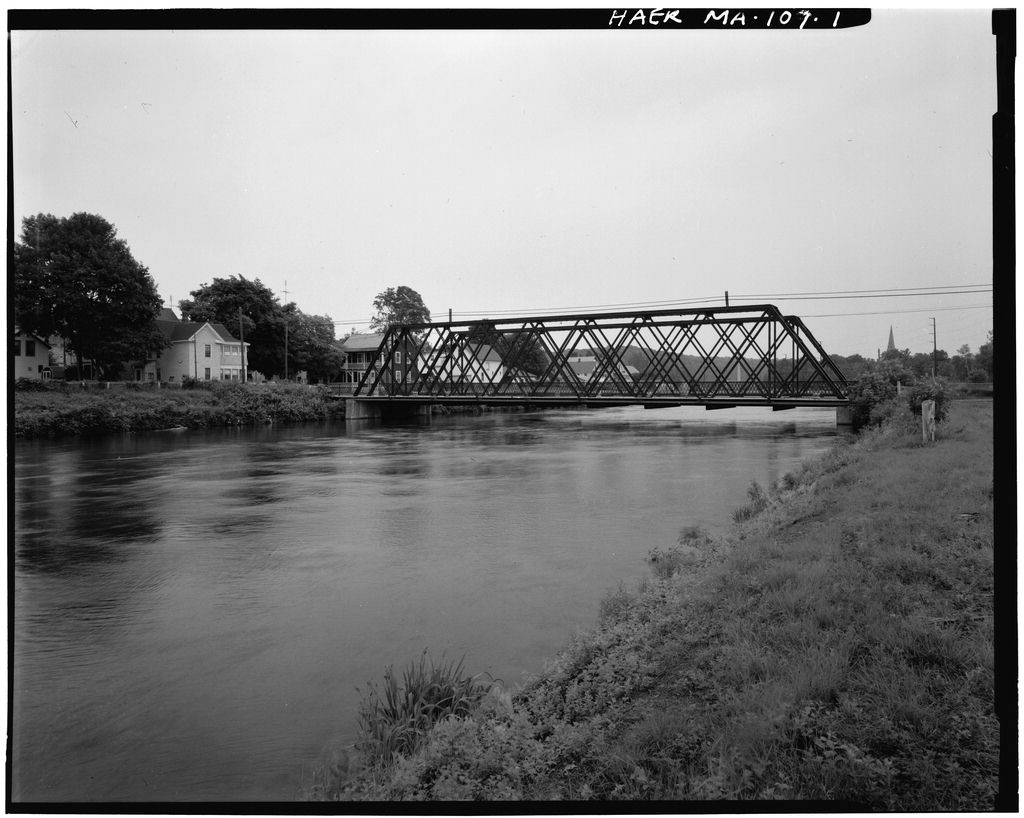
Souvenir of the Mohawk Trail, and Arnnml. Report of the Massachusetts Highway Commission. (Boston, 8. Albert E. Kleinert, "Design and Construction of the French King Bridge On the Mohawk Trail Route Across the Connecticut River, Massachusetts," Journal of the Boston Society of Civil Engineers. June, 9. Annual Report of the Massachusetts Department of Public Works. (Boston, 10. Acts of Massachusetts. 11. Annual Reports of the Massachusetts Department of Public Works. (Boston, 12. For more information on the history of hydro-electric development in the Connecticut River valley, see HAER No. MA-107: Eleventh Street Bridge, Turners Falls. 13. Kleinert, 14. Ibid, 15. Ibid, 16. The Daily Recorder-Gazette. Greenfield, Mass., May 4, 17. Ibid, June 21-July 1, 18. Ibid, July 8, 19.
Ibid, July 13, FRENCH KING BRIDGE HAER No. MA-100 (page 35) 20. Ibid, July 22, 21. Kleinert, 22. Recorder-Gazette. August 20, 23. Ibid, August 29, 24. Ibid, September 6, 25. Ibid, September 12, 26. Ibid, September 12, 27. "Souvenir Program on the Occasion of the Dedication of the French King Bridge," The Daily Recorder-Gazette. September 10, 28. Boston Citv Directories. 29. Boston City Directory. 30. "McClintic, Howard Hale," biographical sketch, in The National Cyclopaedia of American Biography, vol. 29 (New York, 31. Ibid. 32. Ibid. 33. "Bethlehem Enters Pittsburgh," Post-Gazette. Pittsburgh, Pennsylvania, February 7, FRENCH KING BRIDGE HAER No. MA-100 (page 36)
Acts of Massachusetts. Boston, Massachusetts, American Institute of Steel Construction. Prize Bridges New York, Annual Report of the Massachusetts Highway Commission. Boston, Massachusetts, Annual Reports of the Massachusetts Department of Public Works. Boston, Massachusetts, Beers, Atlas of Franklin County. Massachusetts. New York: Beers and Co., "Bethlehem Enters Pittsburgh," Post-Gazette. Pittsburgh, Pennsylvania, February 7, Boston City Directories. Boston, Massachusetts, "Bridge No. E-10-14/G-4-9," Massachusetts Department of Public Works Bridge Section files, Boston. Browne, William B. The Mohawk Trail: Its History and Course. Pittsfield, Massachusetts: Sun Printing Co., Darnell, Victor. A Directory of American Bridge Building Companies. Occasional Publication No. 4.
Washington, DC: The Society for Industrial Archeology, Encyclopedia of Pennsylvania Biography, vol. 26. Erving Historical Society. The History of Erving. Massachusetts. Erving, Massachusetts, The Greenfield Recorder, published under various titles, Greenfield, Massachusetts, Historic photo collection of the construction and dedication of the French King Bridge, Harry W. Fay, New Salem, Mass., photographer. Private collection of Dr. Ward M. Hunting, New Salem, Massachusetts. Holland, Josiah Gilbert. History of Western Massachusetts, vol. I. Springfield, Massachusetts: Samuel Bowles and Co., Kleinert, Albert E., Jr. "Design and Construction of the French King Bridge On the Mohawk Trail Route Across the Connecticut River, Massachusetts," Journal of the Boston Society of Civil Engineers.
June, FRENCH KING BRIDGE HAER No. MA-100 (page 37) "McClintic, Howard Hale," biographical sketch, in The National Cyclopaedia of American Biography, vol. 29. New York: James T. White and Co., Personal interview with Dr. Ward M. Hunting, New Salem, Massachusetts, June 7, Scott, Elsie. "French King Bridge Site Yields Interesting History," Greenfield Recorder. Greenfield, Massachusetts, November 28, Souvenir of the Mohawk Trail. Massachusetts. Mechanicville, New York: Charles W. Hughes, "Souvenir Program on the Occasion of the Dedication of the French King Bridge," The Daily Recorder-Gazette. Greenfield, Massachusetts, September 10, Stoughton, Ralph M. History of Gill. Greenfield, Massachusetts: E.A. Hall and Co., Who Was Who In America, vol. 1, Chicago: A.N. Marquis Co., Wood, Frederic J.
The Turnpikes of New England. Boston: Marshall Jones Company,
 Block
Block