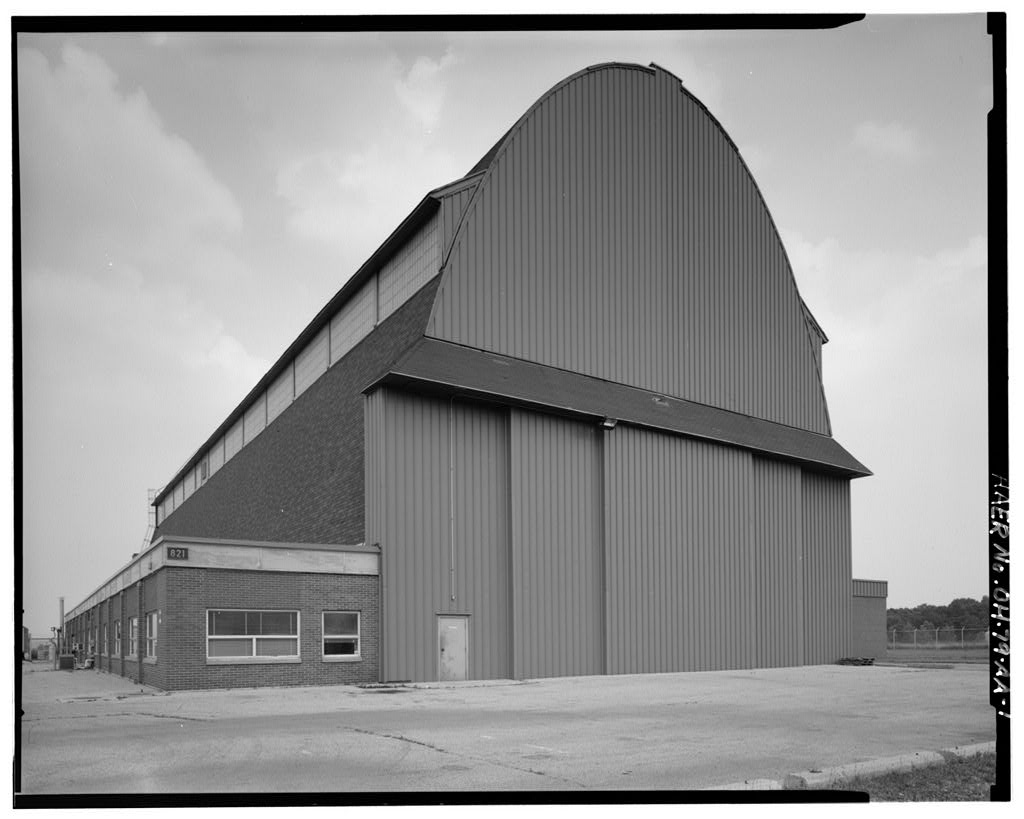
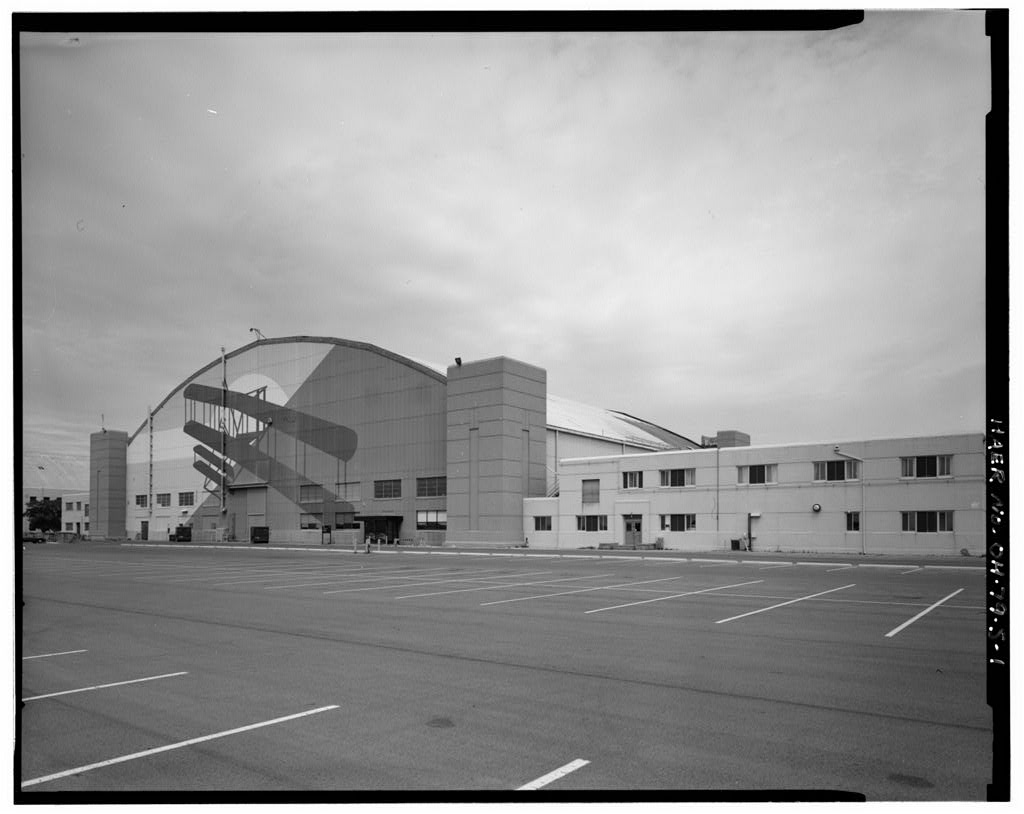
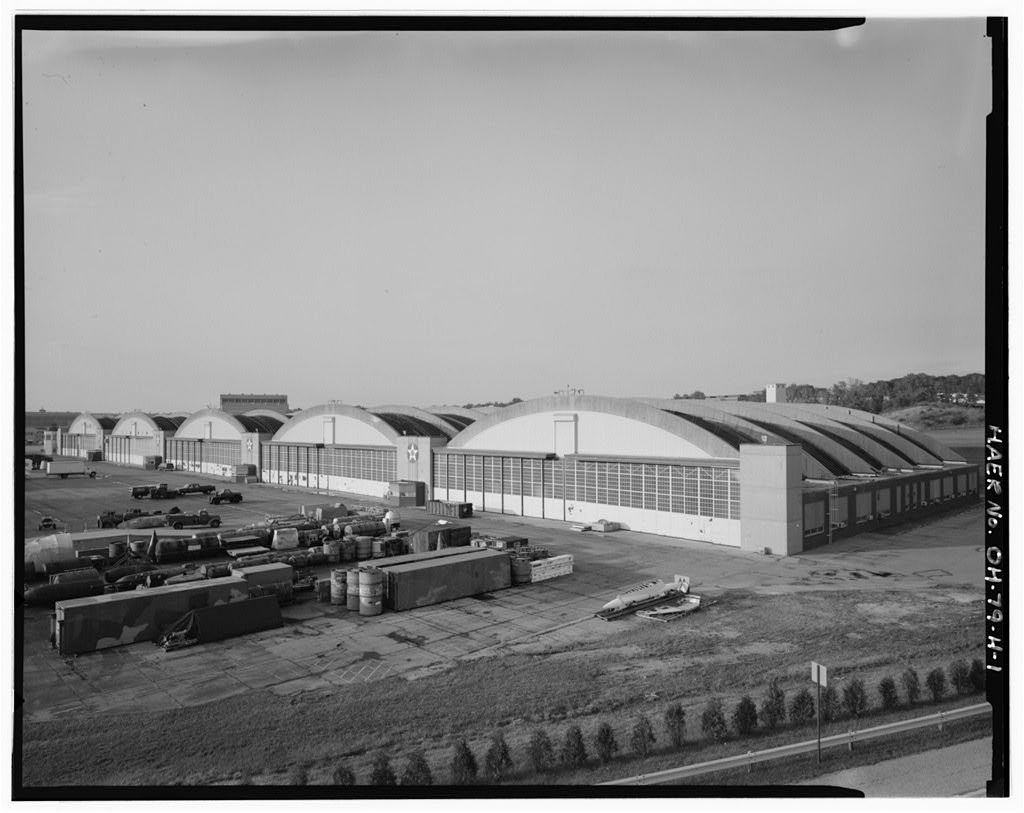
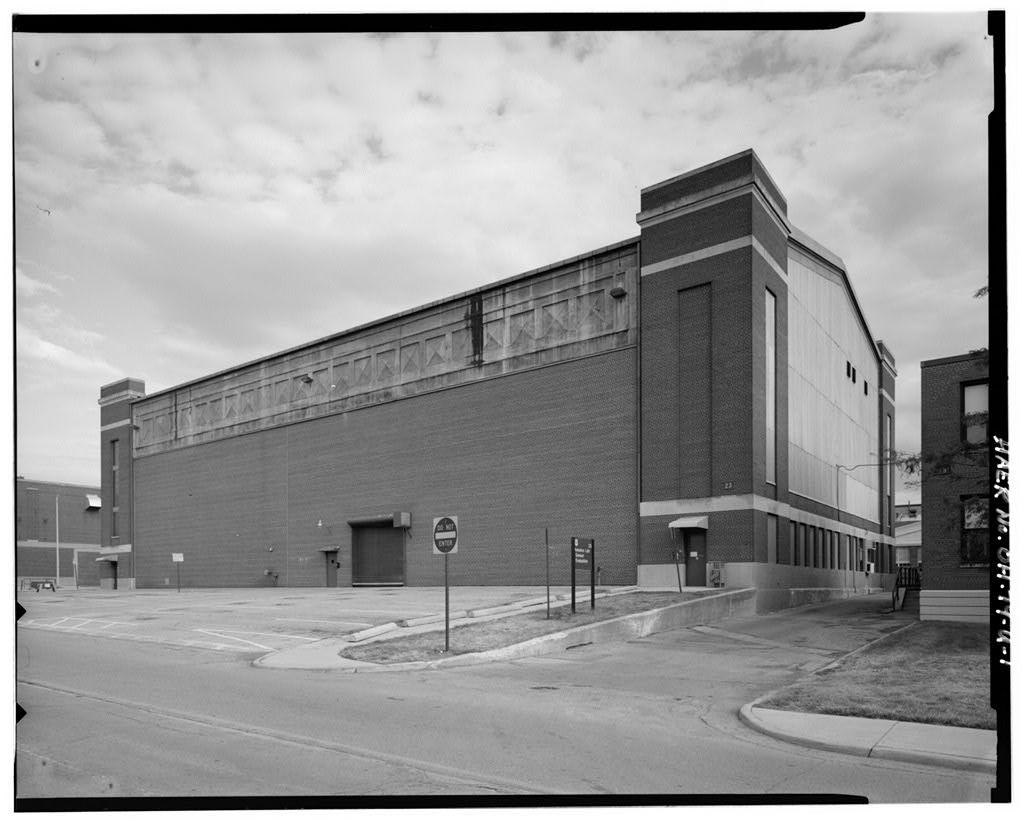
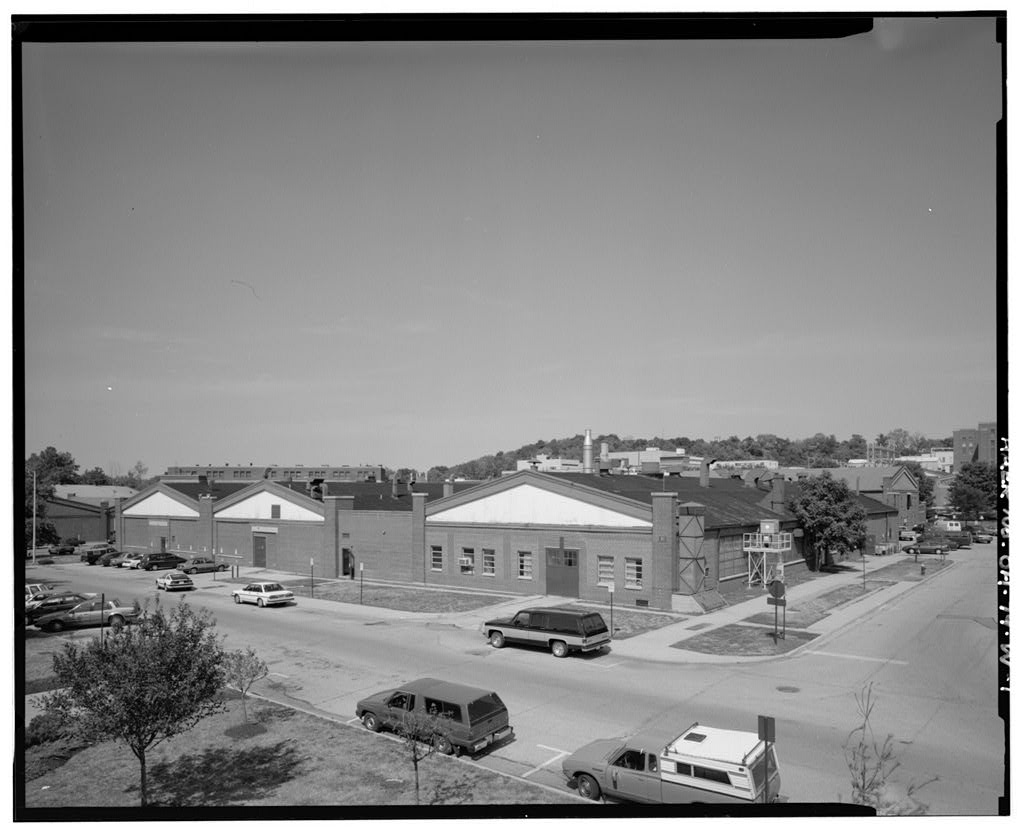
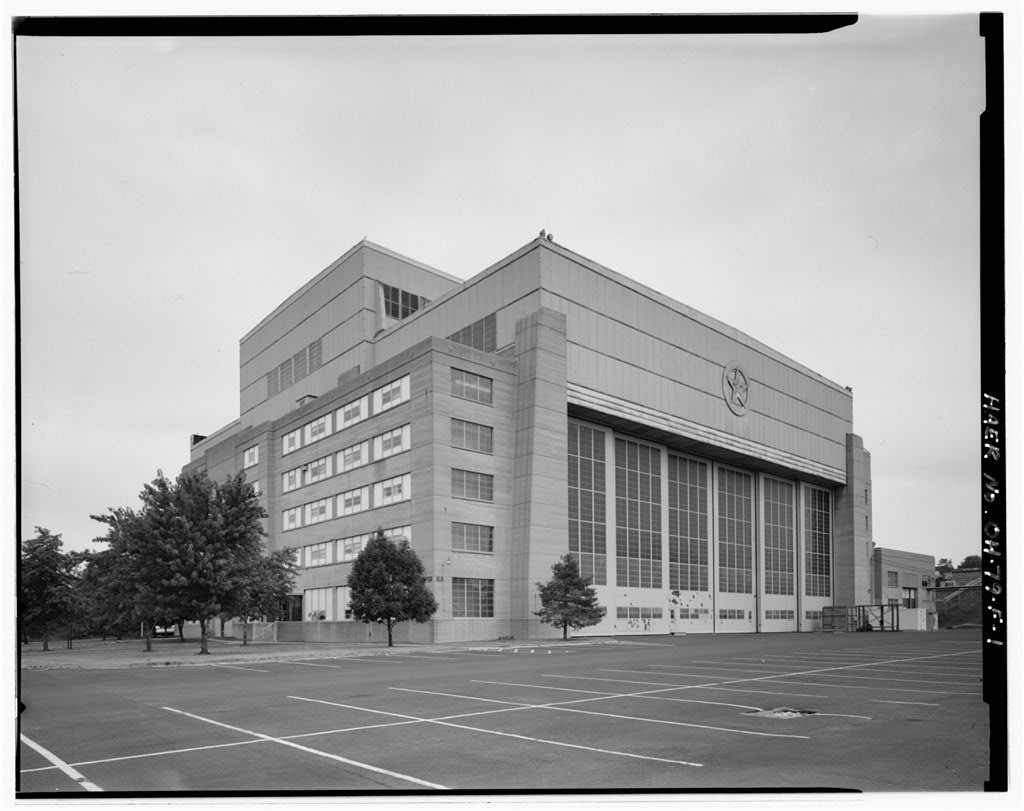
The Radar Test Building (Building is one of the most notable structures on the base, boasting a distinctive design and history. While under construction, its unique appearance brought it the nickname "the Cathedral," although most of its occupants simply refer to it as "the Barn." The building consists of thirteen parabolic arches, reaching 78' high, 200 long and with a span of 80' . Each arch weighs approximately 3% tons, and consists of two segments joined at the apex. Each segment is comprised of nineteen laminations, making them 9%" thick. To minimize radar reflections, the building was originally constructed without metal, even using wooden pegs in place of nails.
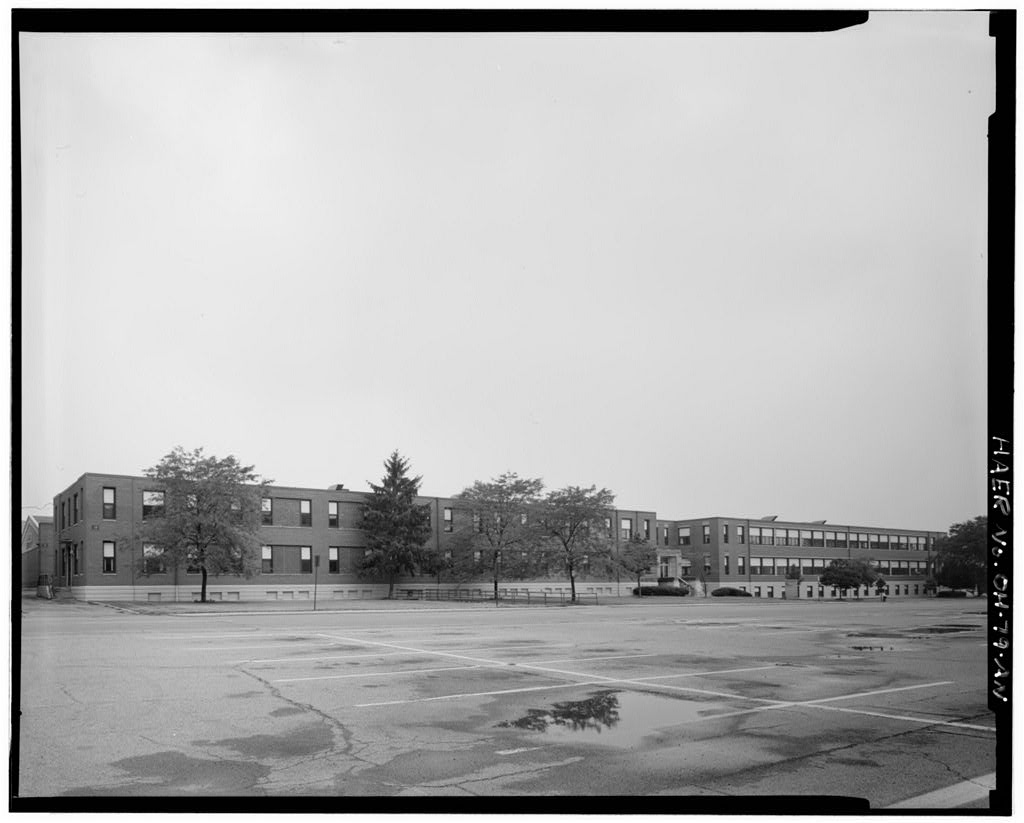
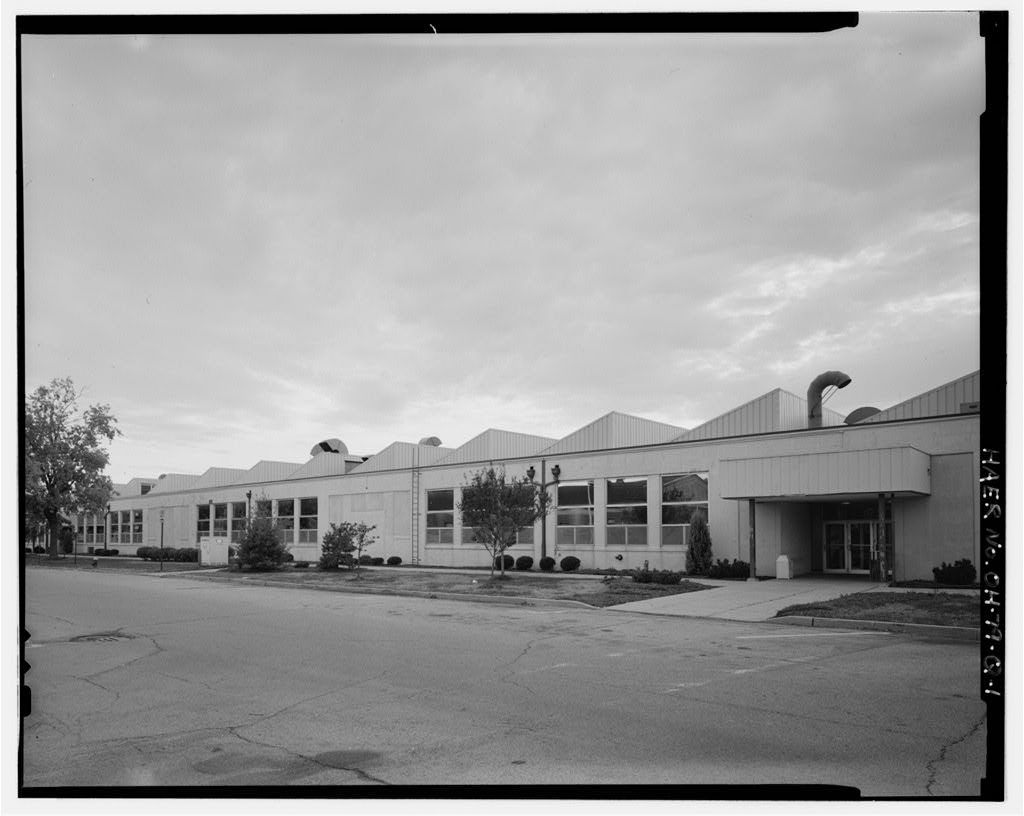
A one-story, brick office structure is attached to the west side of the building and antenna towers were added later for use by the Antenna Division. The interior of Building 821 is mostly a large open area with office spaces at ground level along the west side. HISTORY: Built in as the first radar test facility at Wright-Patterson Air Force Base, Building 821 has been used predominantly for antenna and radar cross section studies throughout its existence. ^fc In the early Bill Bahret, regarded by some as the ^^ "father of radar camouflage," designed and built the Air Force's first anechoic chamber for analyzing radar echo. The chamber stood in the middle of the floor, and radar absorption cones covered most of the interior walls.
Although Bahret and his engineers knew that an object's shape and material had something to do with what showed up on radar, they did not set out to do "stealth" research. In fact, in those early days of radar cross section experimentation, the goal was simply to learn how radar interacted with bodies. By the mid-1950s, the team in Building 821 was beginning to understand the relationship between radar and objects, and the different variables involved; only then did they start to wonder if they could actively reduce a model's radar "signature." Beginning in the late a great deal of the early signature control technology was developed by the Propagation Group (precursor to the Radar Test Laboratory). This also included signature enhancement technology for such applications as decoys.
Moreover, the Laboratory did not work on aircraft exclusively, but experimented on everything from missiles to satellites, and assisted the Army and Navy in designing their vehicles. As a corollary to their work, the Laboratory also developed innovative electronic eguipment and instruments, despite the restrictions of working with crude technology. By the Building 821 had become a mecca for "low observables" technology, attracting many scientists involved in stealth technology. WRIGHT-PATTERSON AIR FORCE BASE, AREA B, BUILDING RADAR TEST BUILDING HAER No.
OH-79-AA (Page 3) Building 821 continued to function as the Radar Test Building until However, for several years before, concerns had been growing which led to the eventual demise of Building role as a radar facility: first, the Wright Aeronautical Laboratories wished to consolidate their operations (Avionics now resides in Buildings 620 and 22, and Signature Technology in Building second, the amount of maintenance needed to sustain the aging building for radar testing was escalating (Building 821 has a history of maintenance problems, including a perpetually leaJcy roof, poor heating, and faulty alarm systems); moreover, Building location just outside the main confines of the base poses security problems, especially for a facility doing highly classified research.
In Logistics Supply took over Building 821 to use for shipping, receiving, and storage. For bibliography, see Wright-Patterson Air Force Base overview report (HAER No. OH-79).
 Block
Block