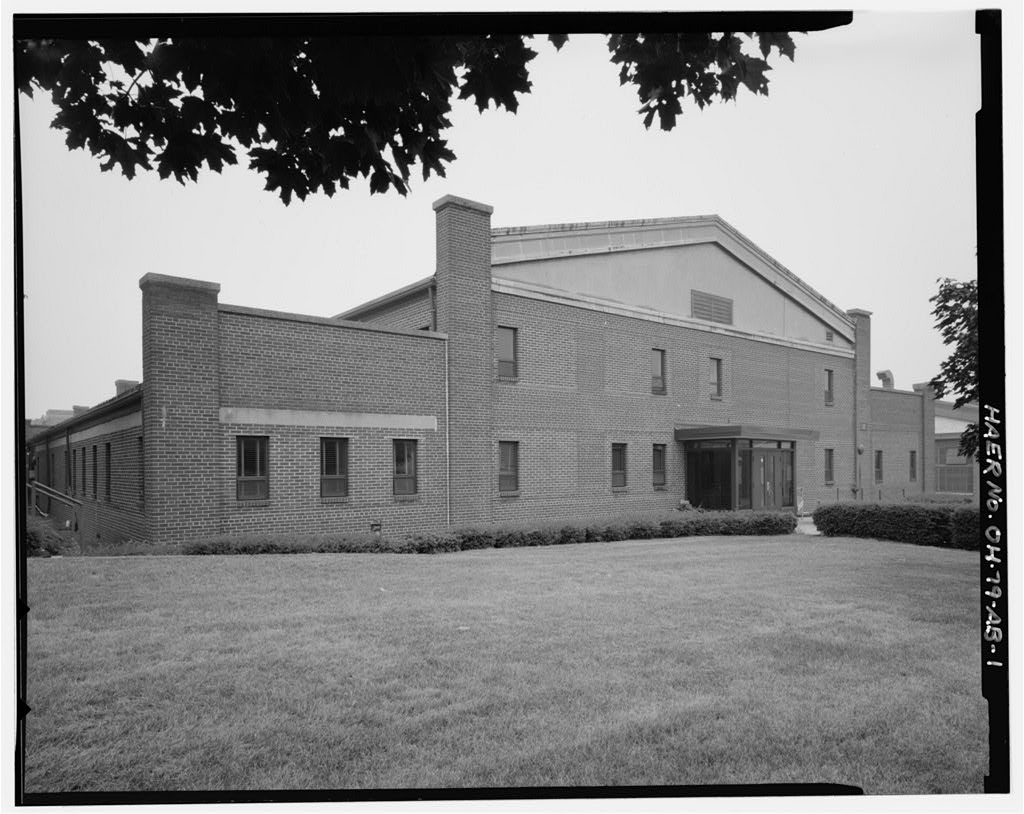
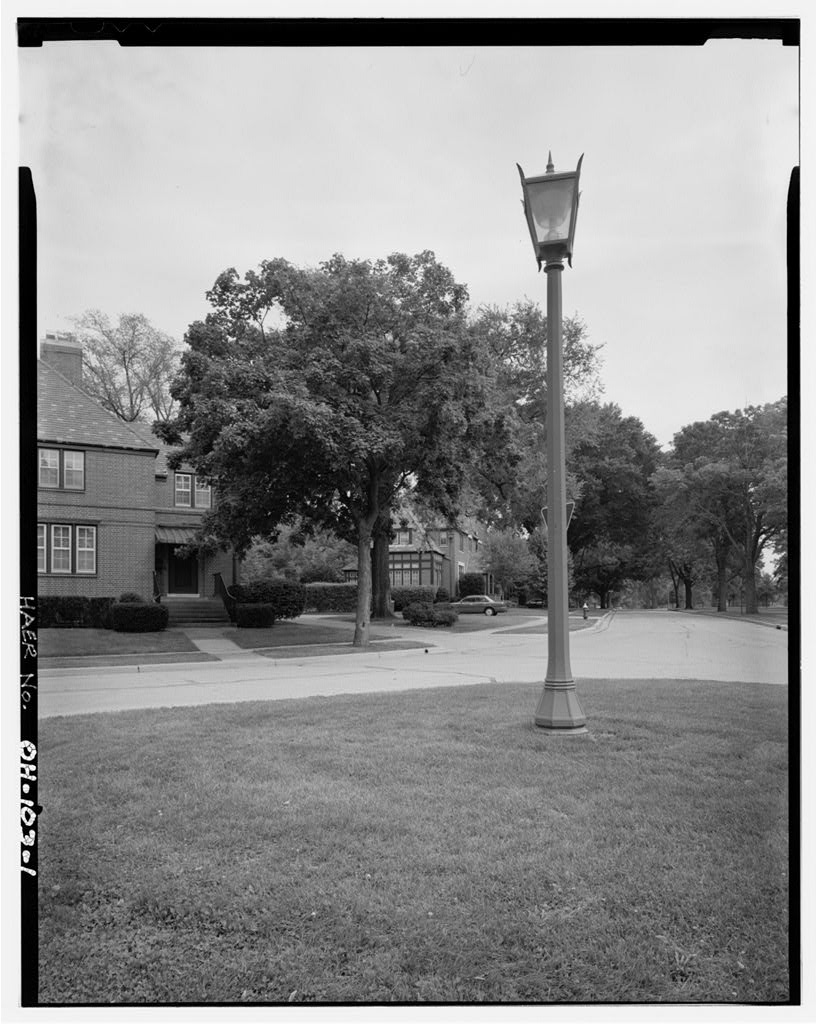
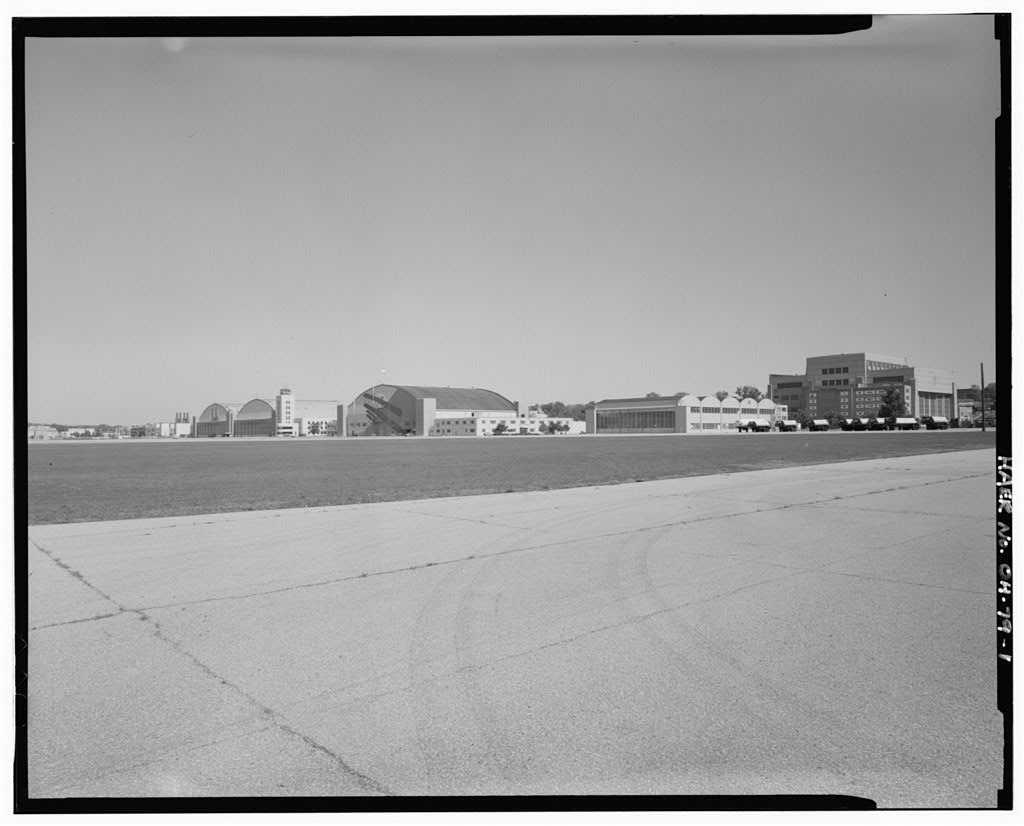
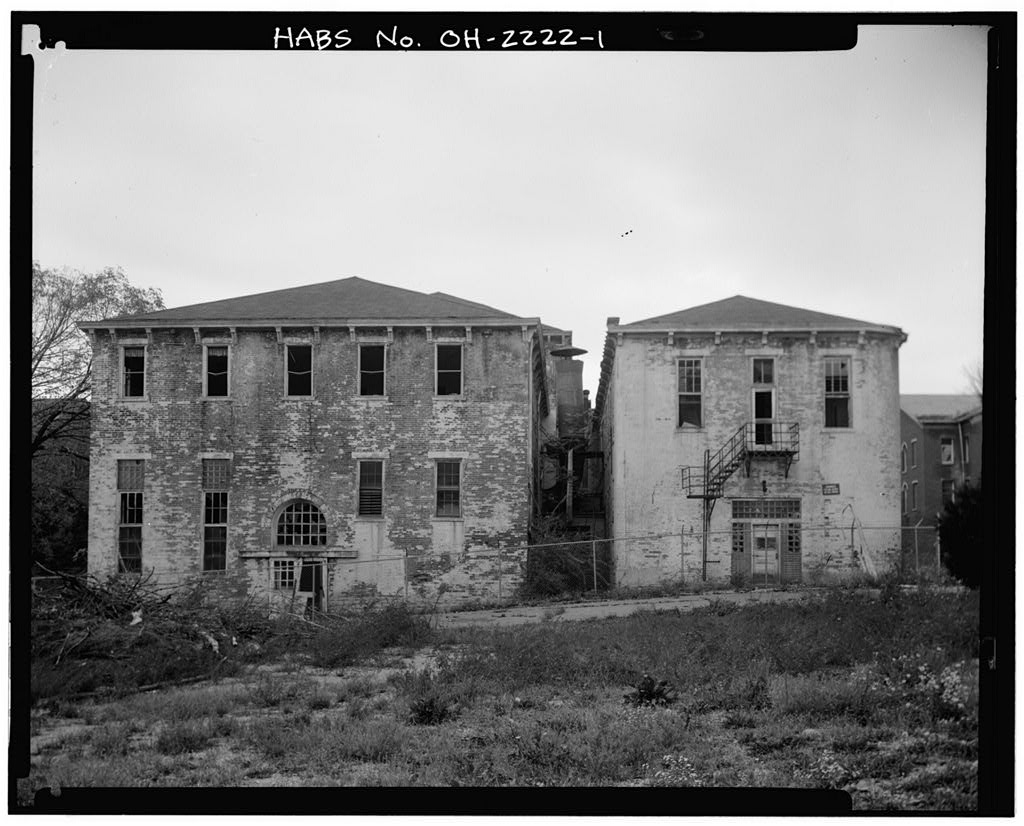
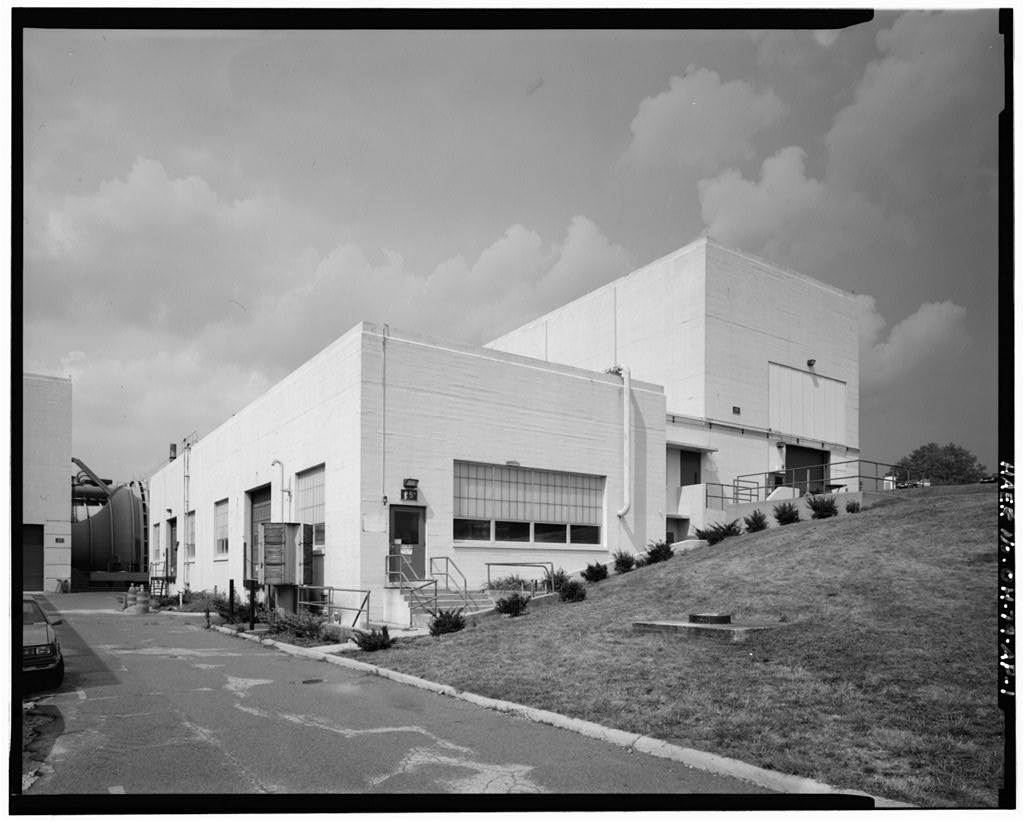
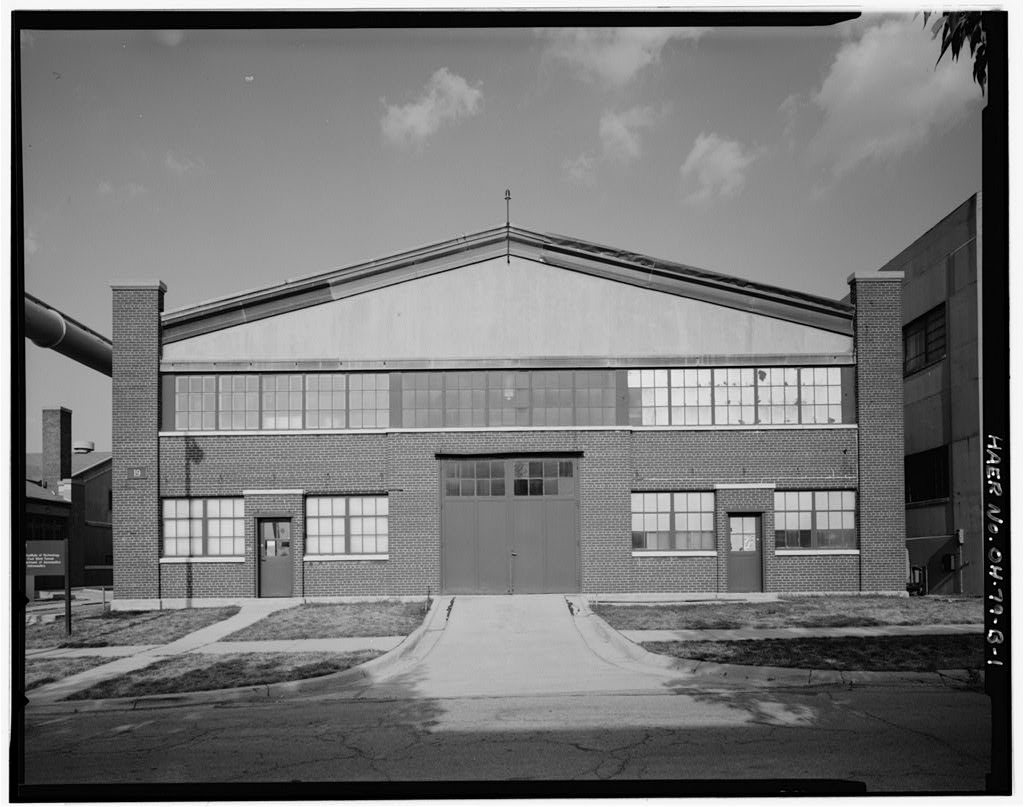
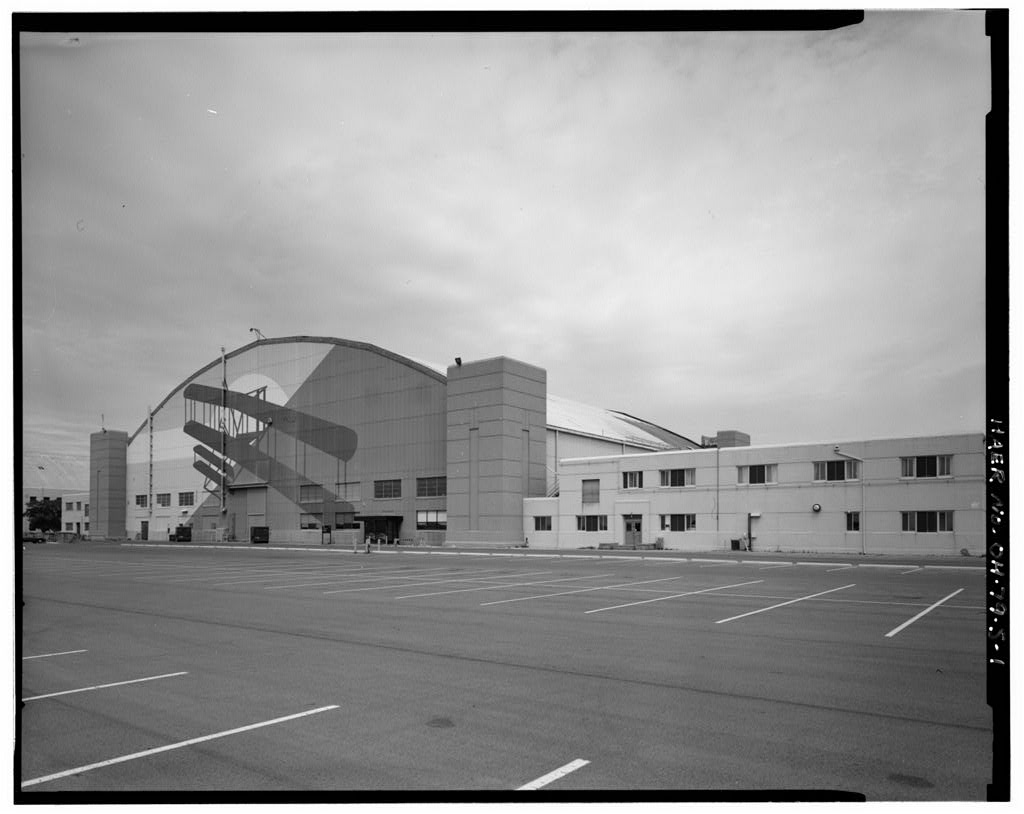
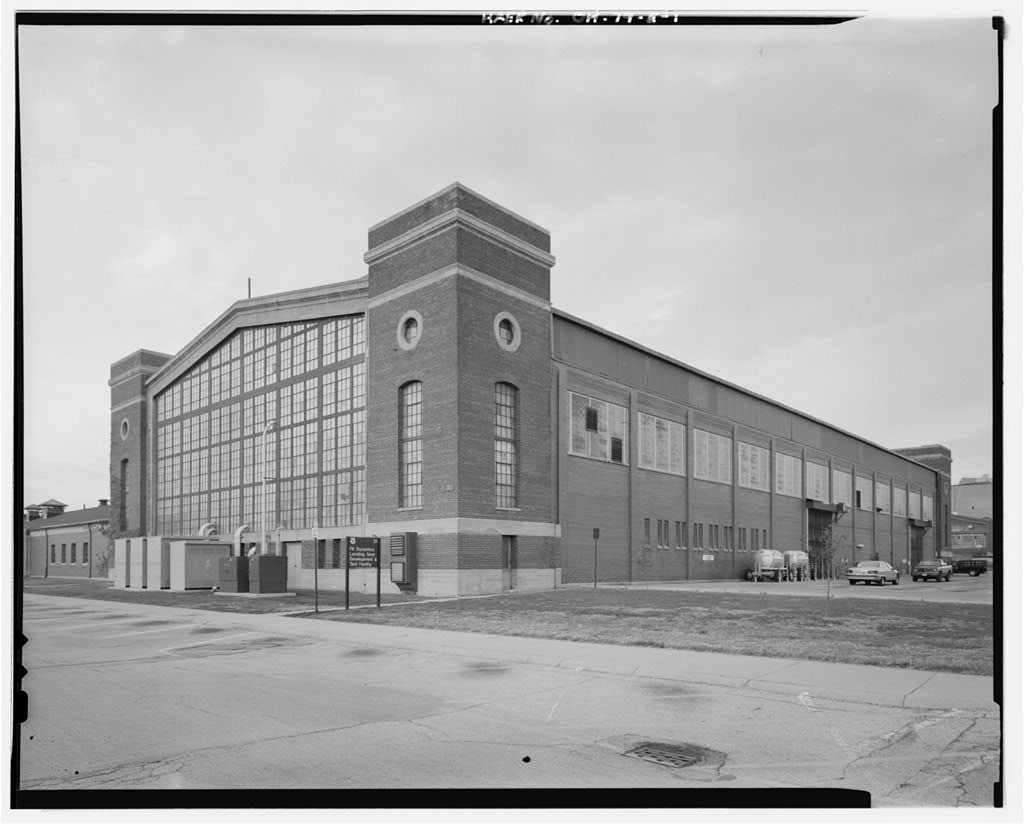
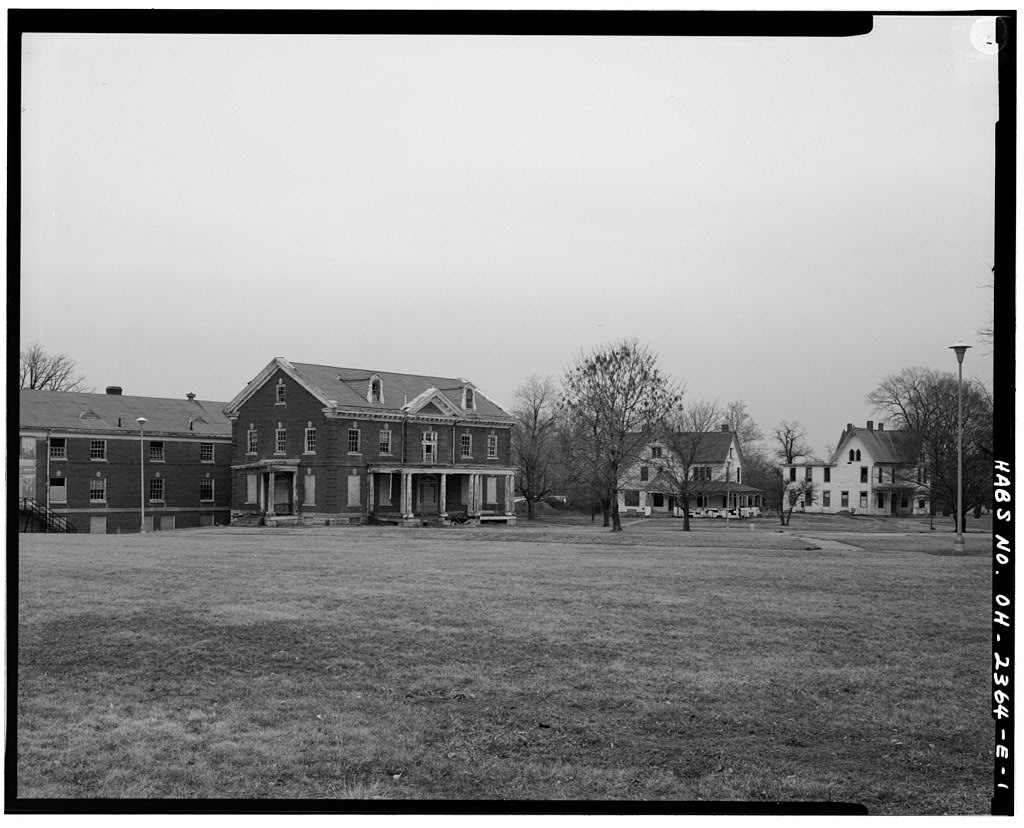
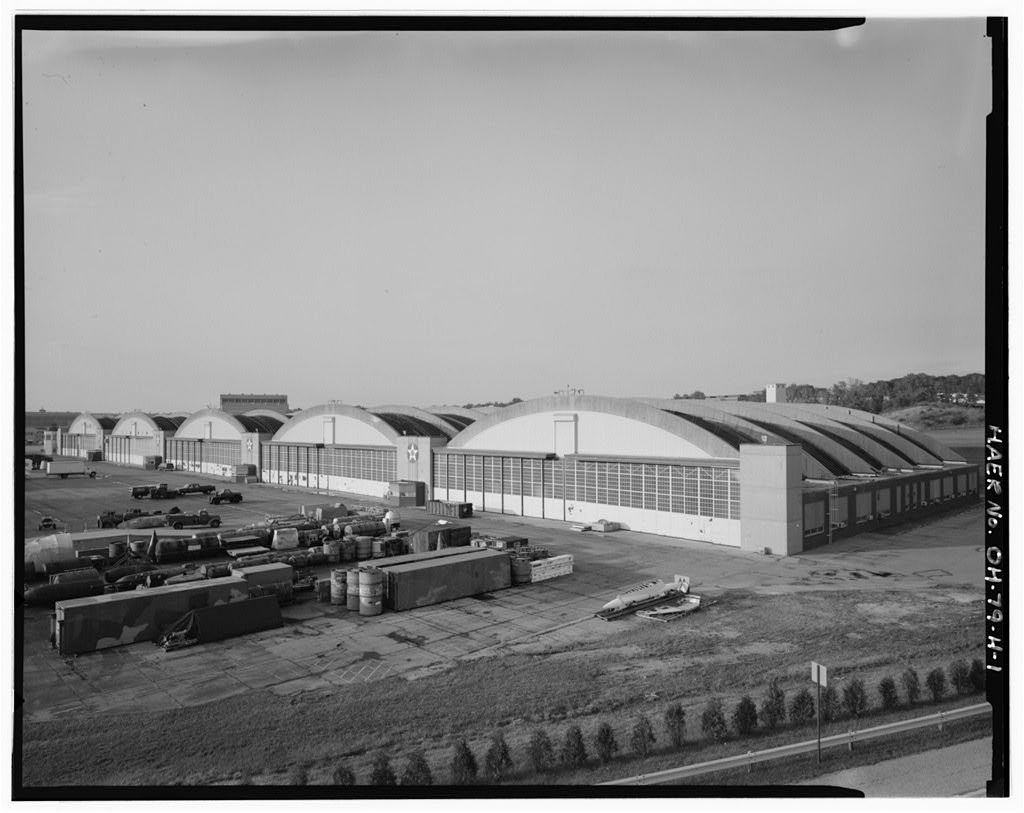
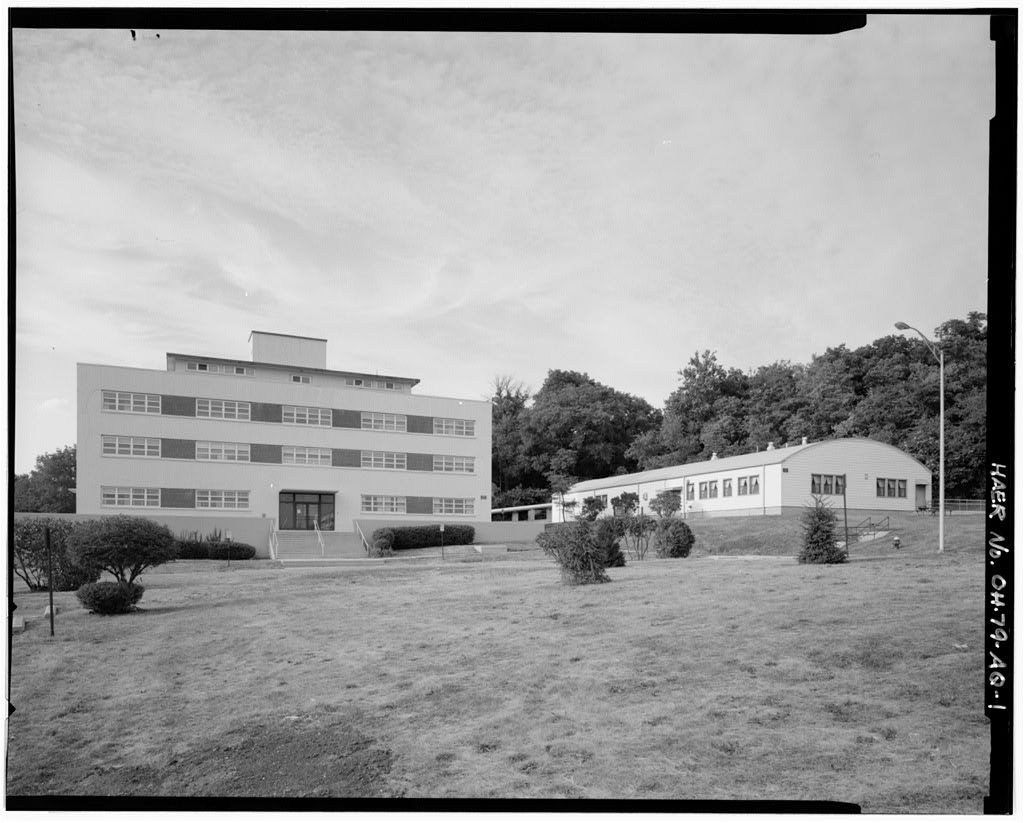
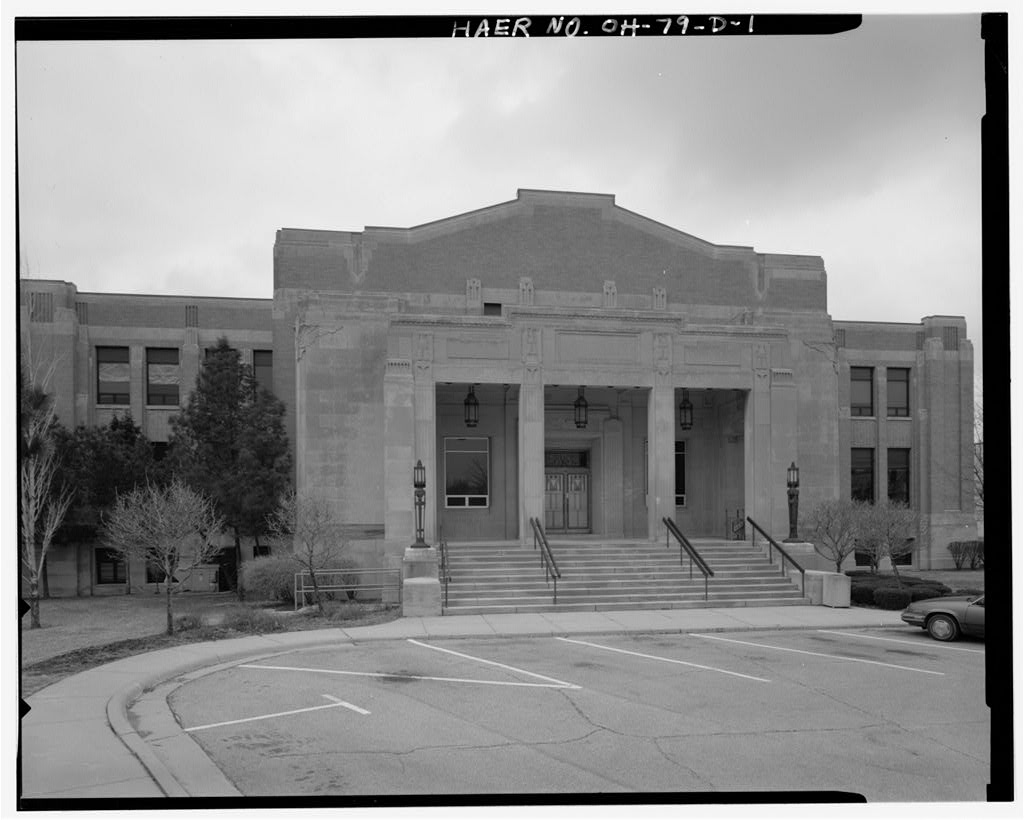
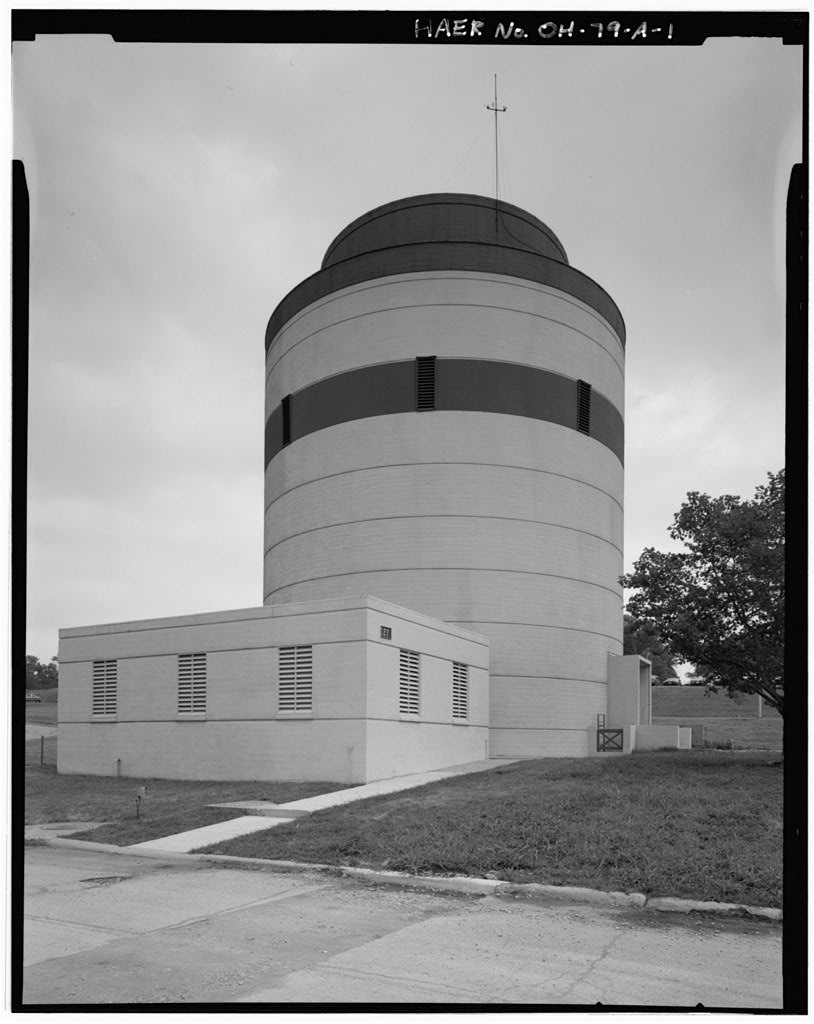
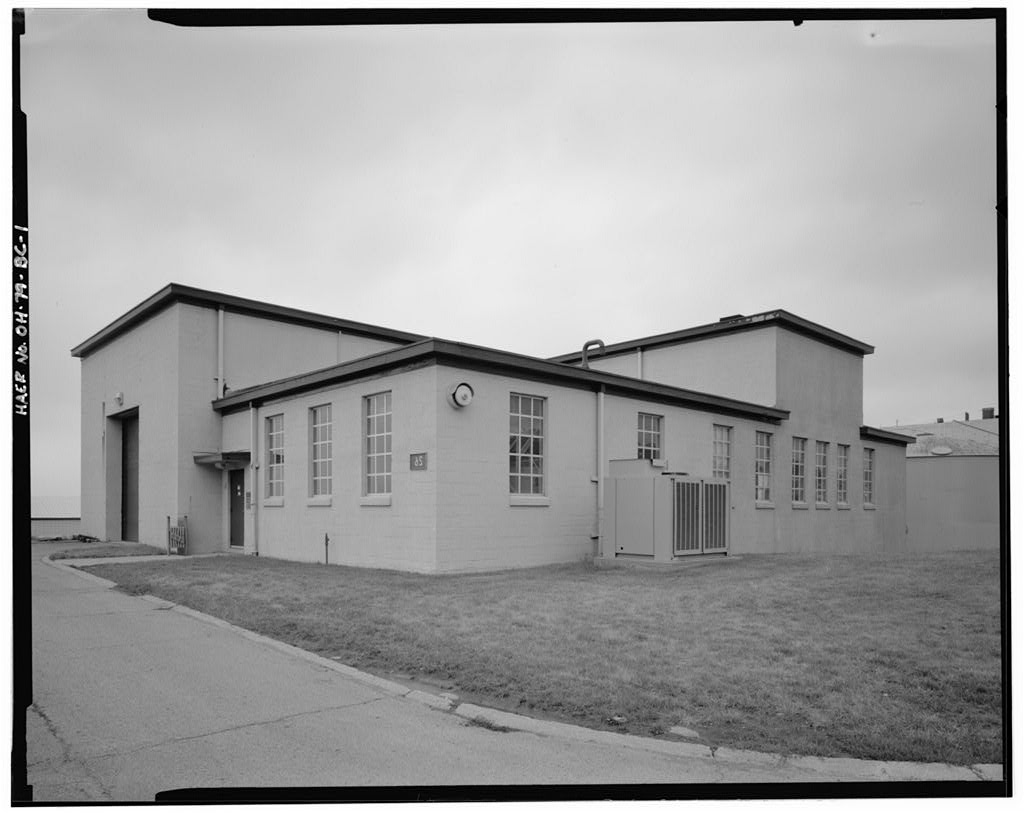
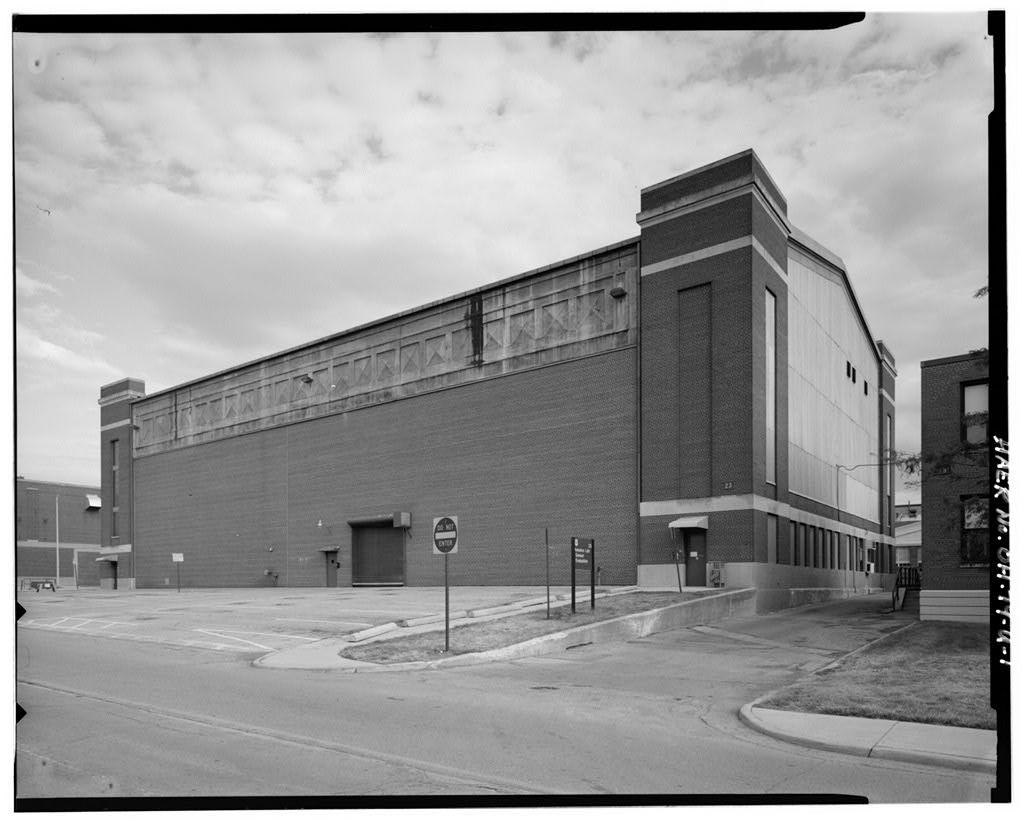
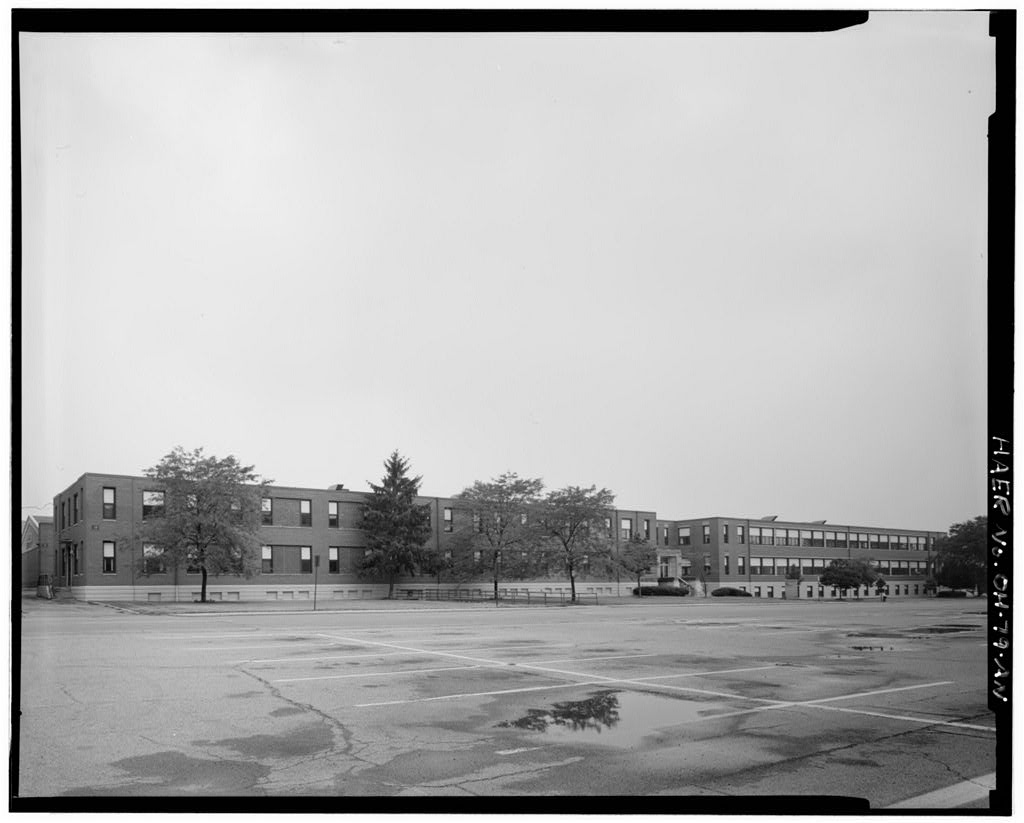
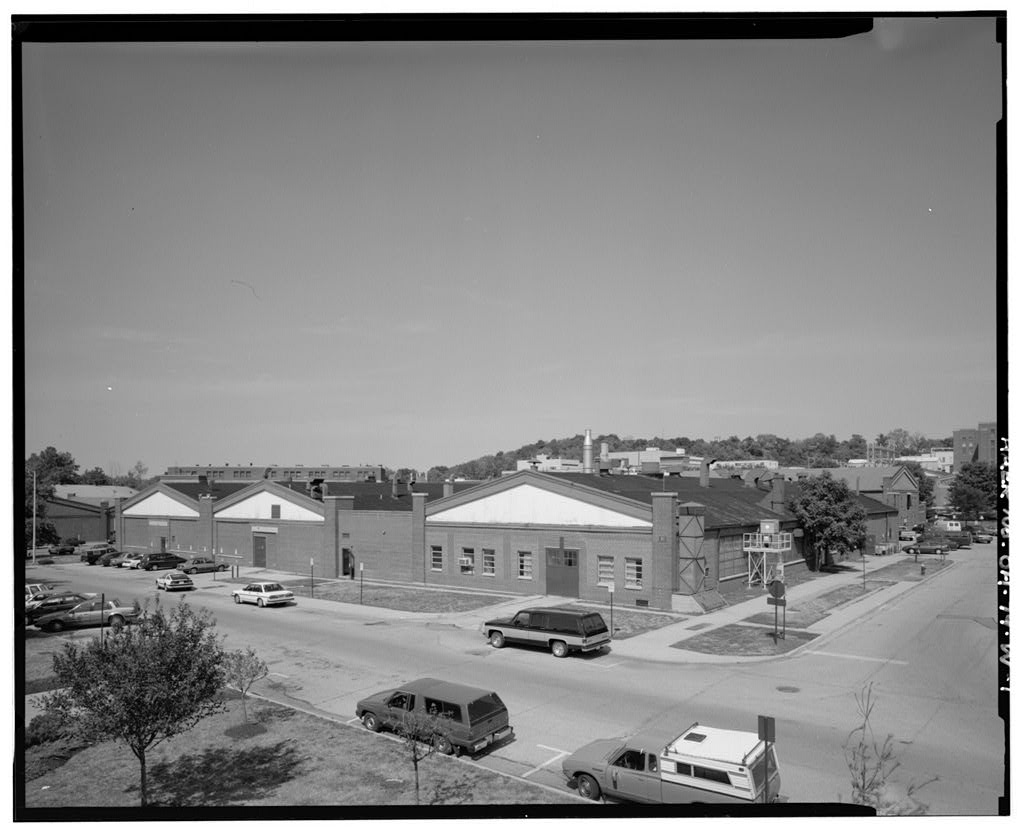
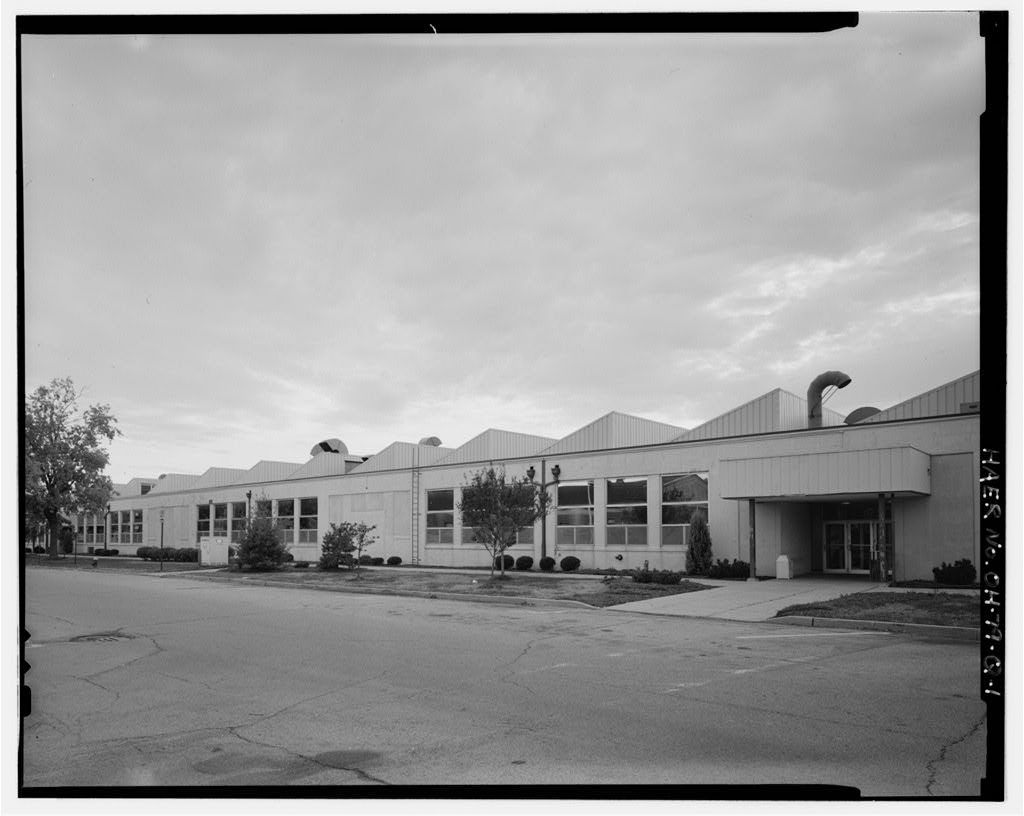
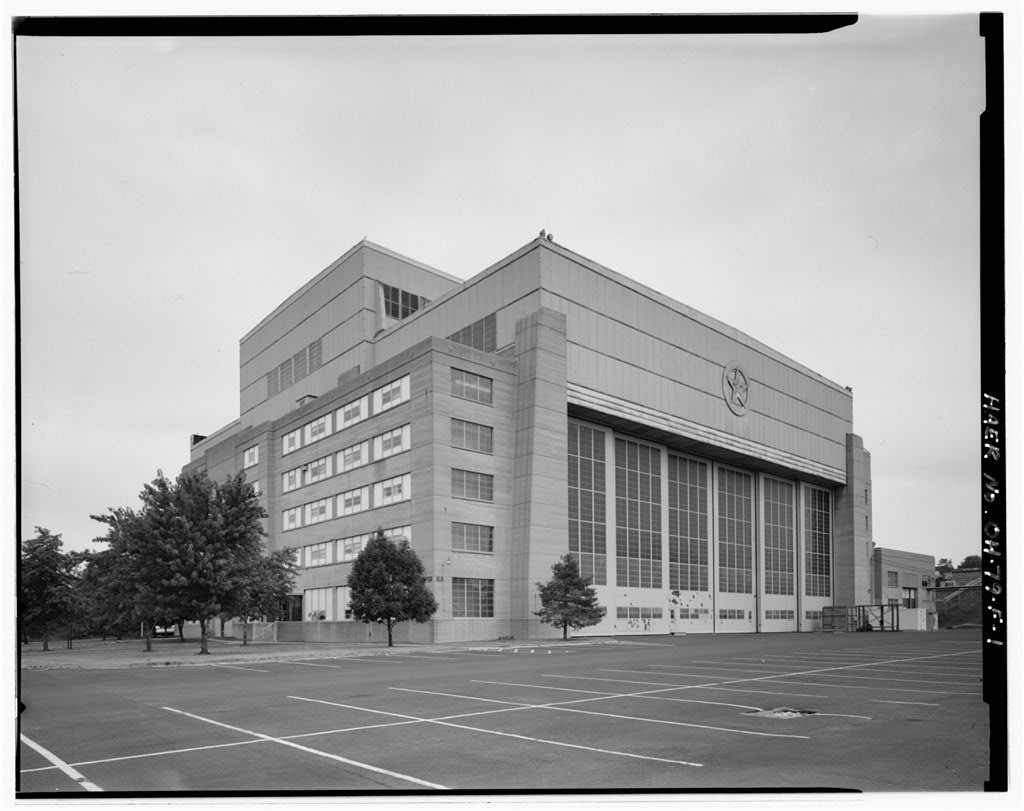
Building 17 is a two-story, six-course American bond brick structure with elements typical of early Wright Field architecture. These include a low-pitched gabled roof, wide copper entablature, and rectangular columns with concrete capitals. The east and west sides of the building, including the west addition, have two courses of corbeled brick at the top, underneath the gutter. The original large windows have been partially bricked up and replaced with smaller, modern windows.
There have also been four major additions to the original building: in a south wing was added, doubling the structure's size and changing the plan from a square to a long rectangle; in a one-story wing was built along most of the west side; in 194 2 a one-story east wing was added; and in the wing was extended the entire length of the building. HISTORY: The Aircraft Radio Laboratory was designed by the Office of the Constructing Quartermaster, the foundation was laid by J.I. Geiger of Dayton, and the superstructure was built by the Danis- Hunt Co., also of Dayton. The building was completed in ^m Signal Corps officers, working in cooperation with Air Corps ^^ officers, operated the Aircraft Radio Laboratory.
In addition to addressing the problems of air-to-air and air-to-surface communication over extended distances, they also developed interphone systems for two-seat (or two-place) and multi-place airplanes. Other radio research produced radio trucks for landing fields, improved airplane antennas, and radio compasses. The radio compass was a particularly beneficial instrument when linked with a gyro compass via a directional (one-way) relay. In such an arrangement, the radio compass tracked a radio signal from the ground, constantly feeding the information to the gyro compass, which kept the airplane on a constant course towards it.
This way, an airplane could be automatically steered in a straight line or through a cross wind to any radio station within sight of an airfield and then to the field itself. This technology represented the most advanced avionics of the age. In the Aircraft Radio Laboratory moved to a new facility (Building 28) , and the Aerial Photographic Reconnaissance Laboratory succeeded the Radio Laboratory in Building 17, remaining there until when it combined with the Electronic Technology Laboratory. For many years a bronze plaque (dedicated in and since removed) at the main north entrance commemorated four laboratory personnel who died in reconnaissance airplane accidents. In the Materials Laboratory obtained Building 17.
The Applications Laboratory and its offices moved in first, and in WRIGHT-PATTERSON AIR FORCE BASE, AREA B, BUILDING 17, AIRCRAFT RADIO LABORATORY HAER No. 9-AB (Page 3) the offices of Materials Central joined them. These remained for twenty years, when the building's laboratories were eliminated in a renovation to convert the building into offices for the Aeronautical Systems Division. Upon completion in the CX SPO (Cargo Aircraft-Experimental System Program Office) , later known as the SPO, established its offices there, remaining until The is a state-of-the-art Short Take-Off and Landing (STOL) cargo aircraft capable of carrying loads of 00 pounds in a cubic foot volume. In the building became temporary office space.
For bibliography, see Wright-Patterson Air Force Base overview report (HAER No. 0H-79-AB).
 Block
Block