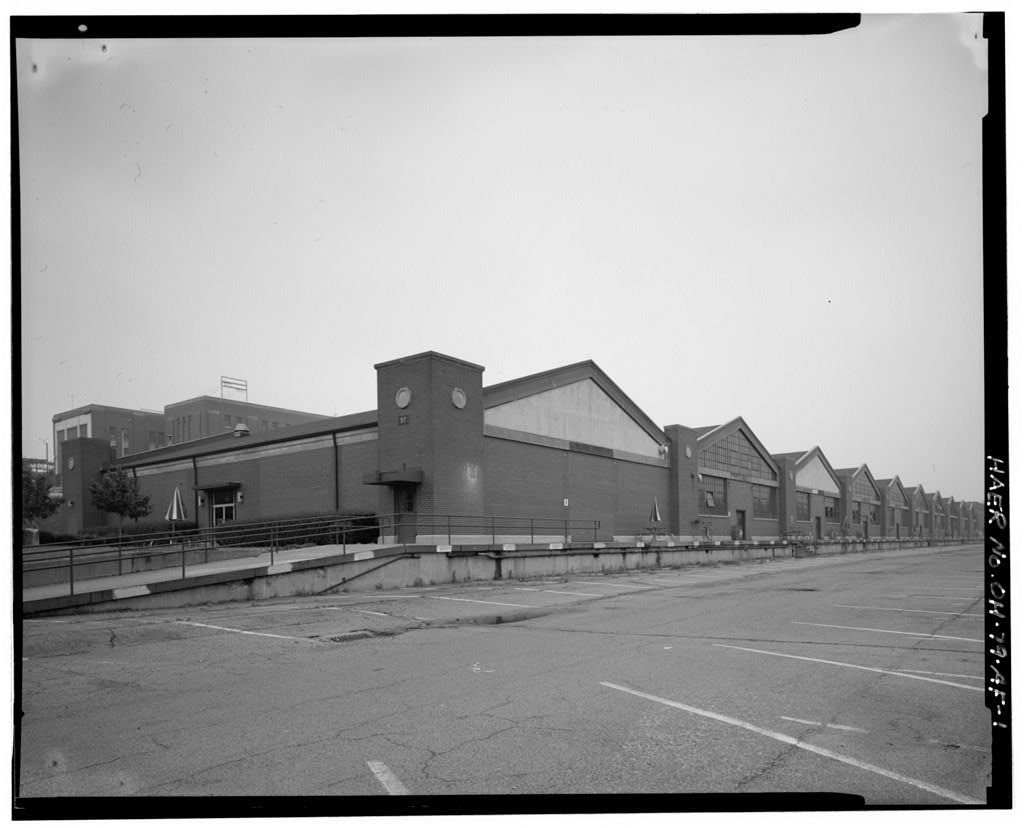
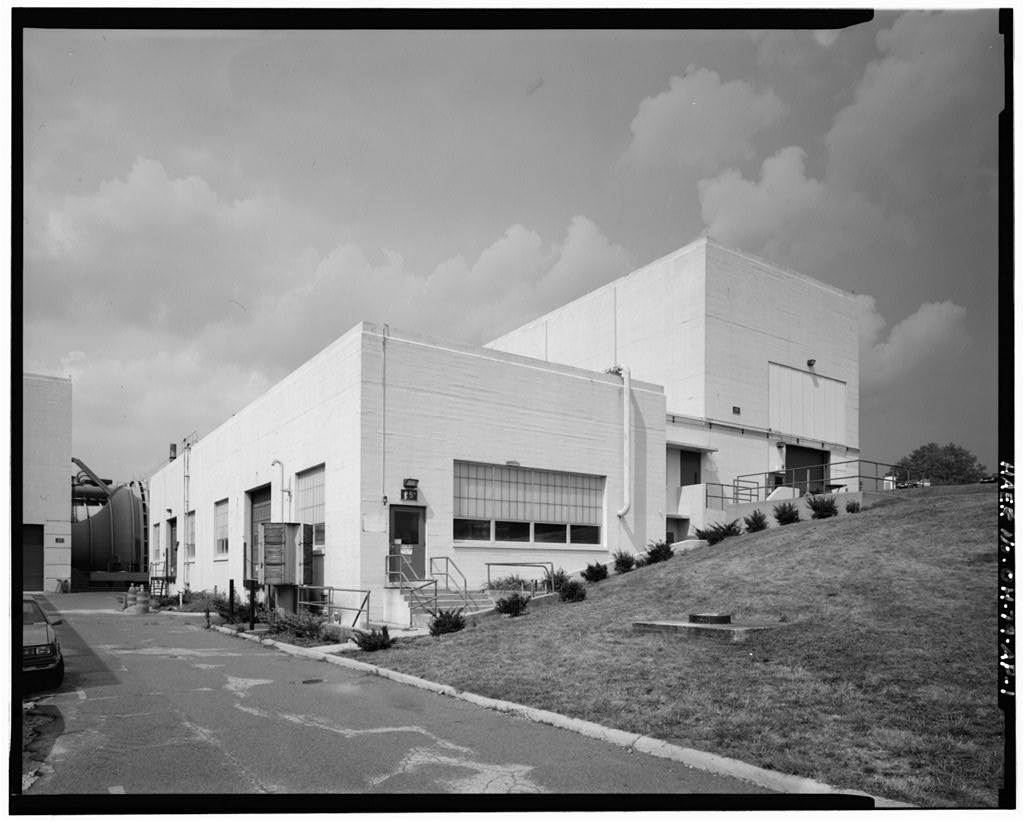
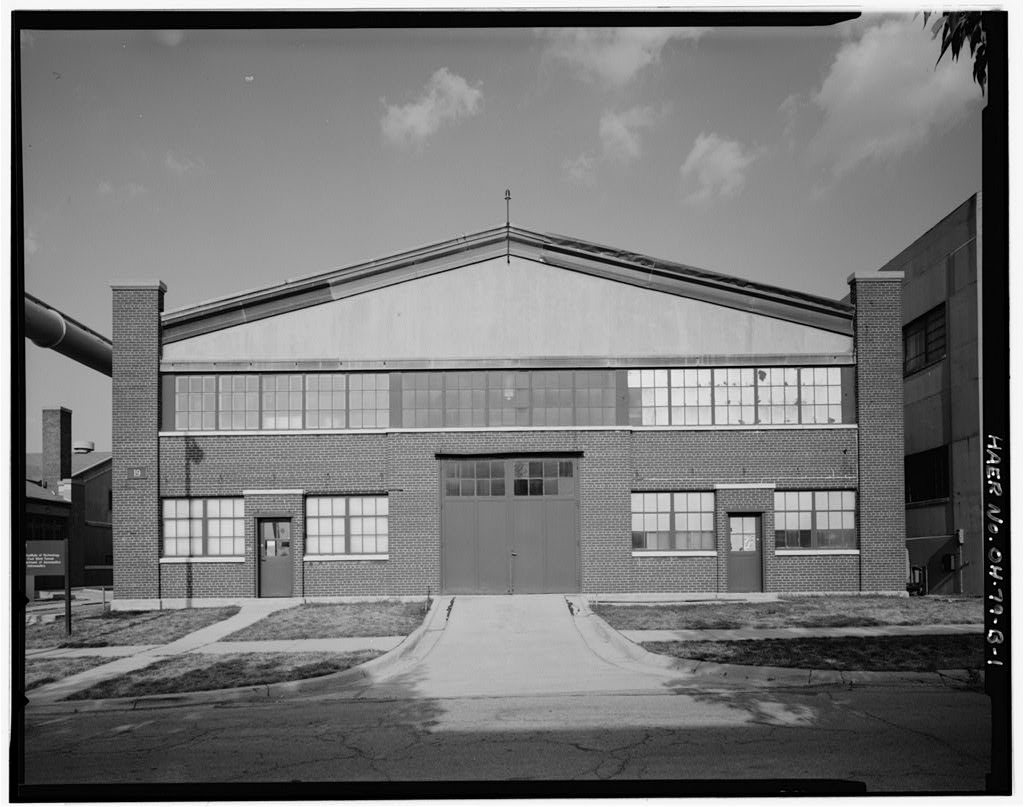
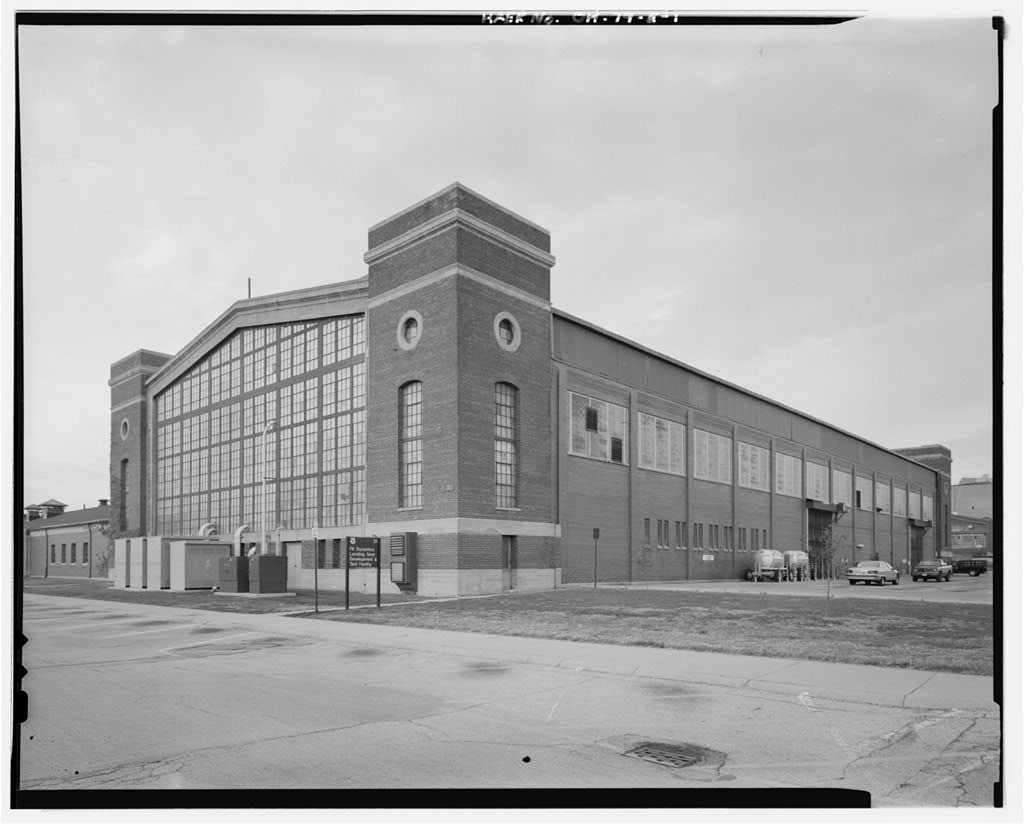
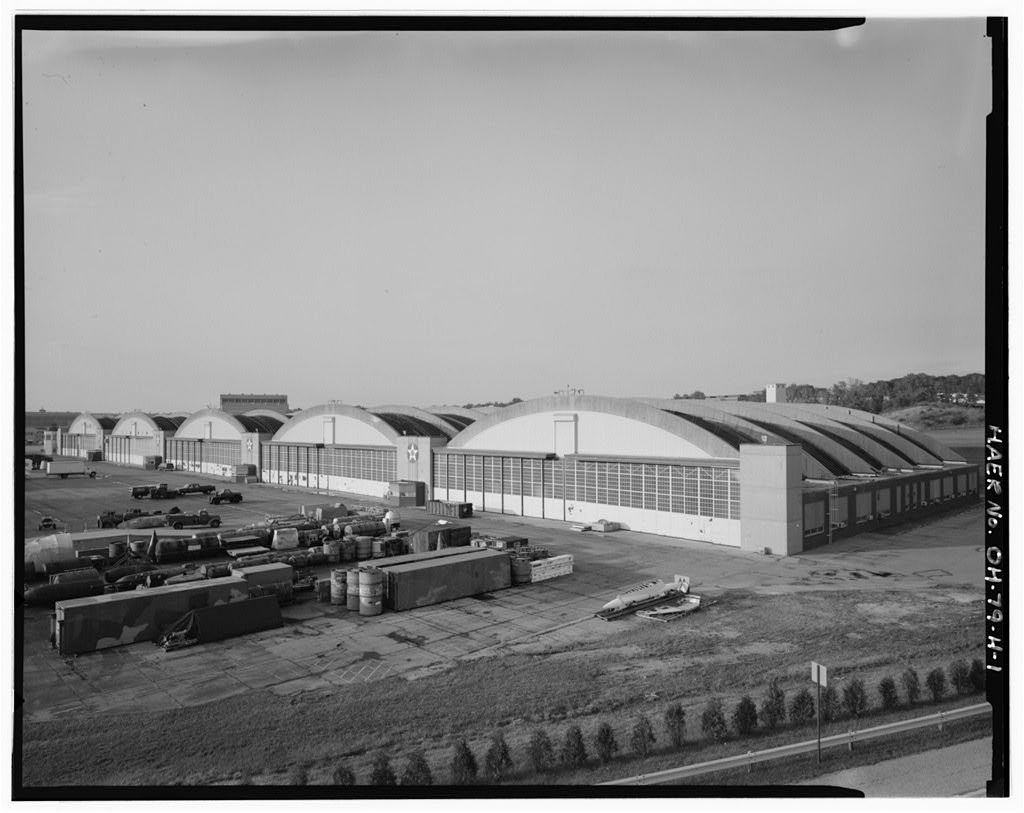
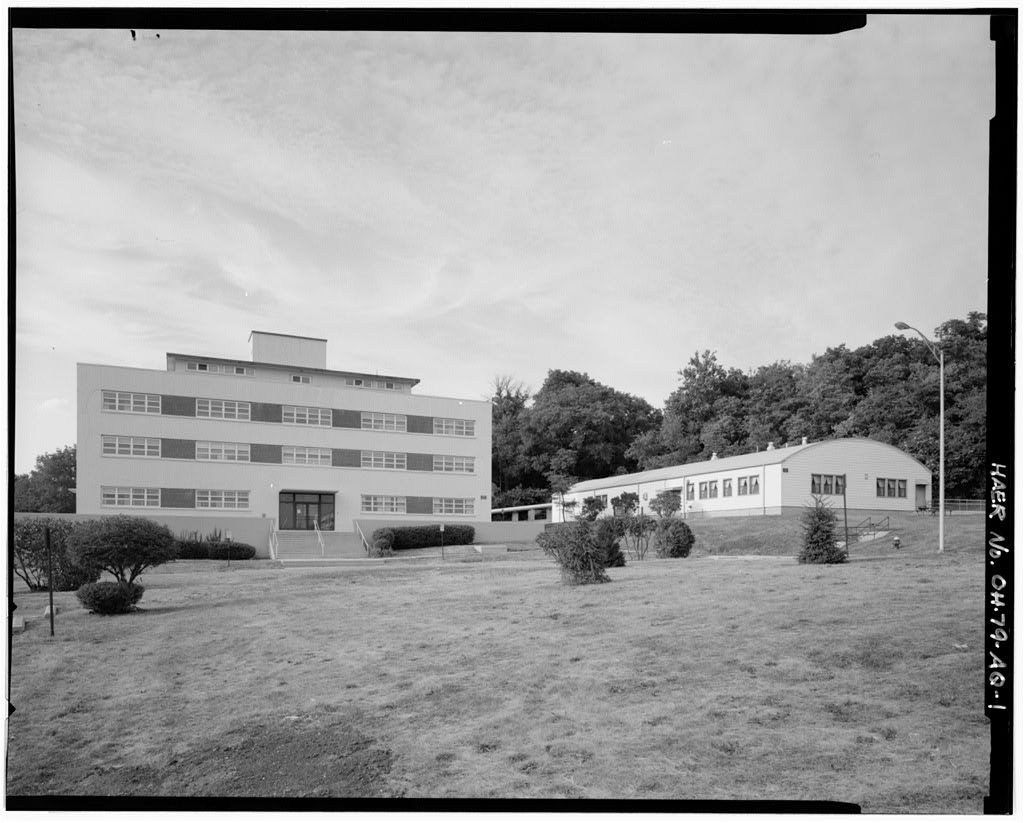
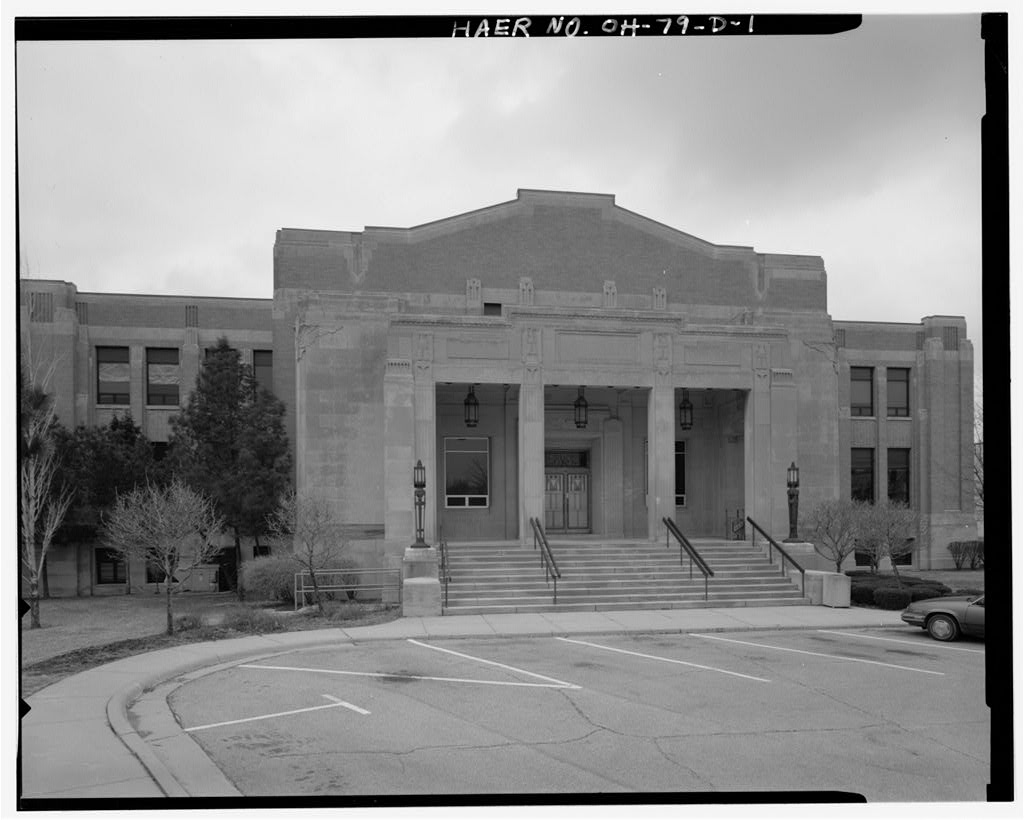
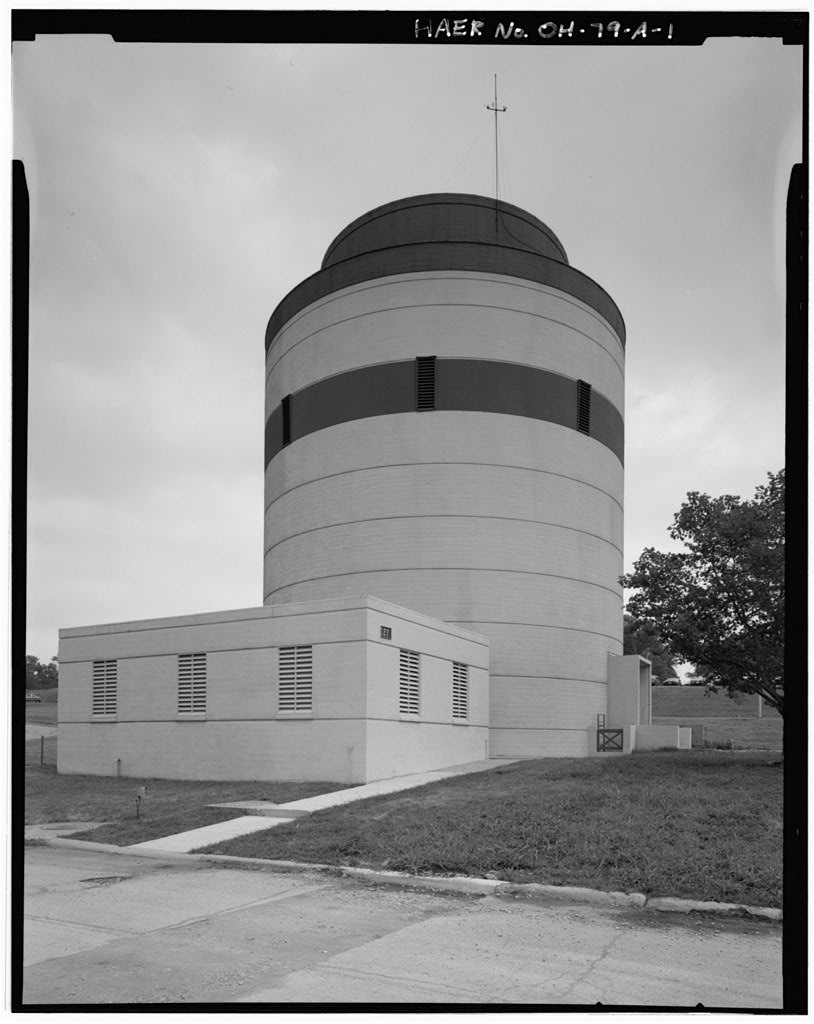
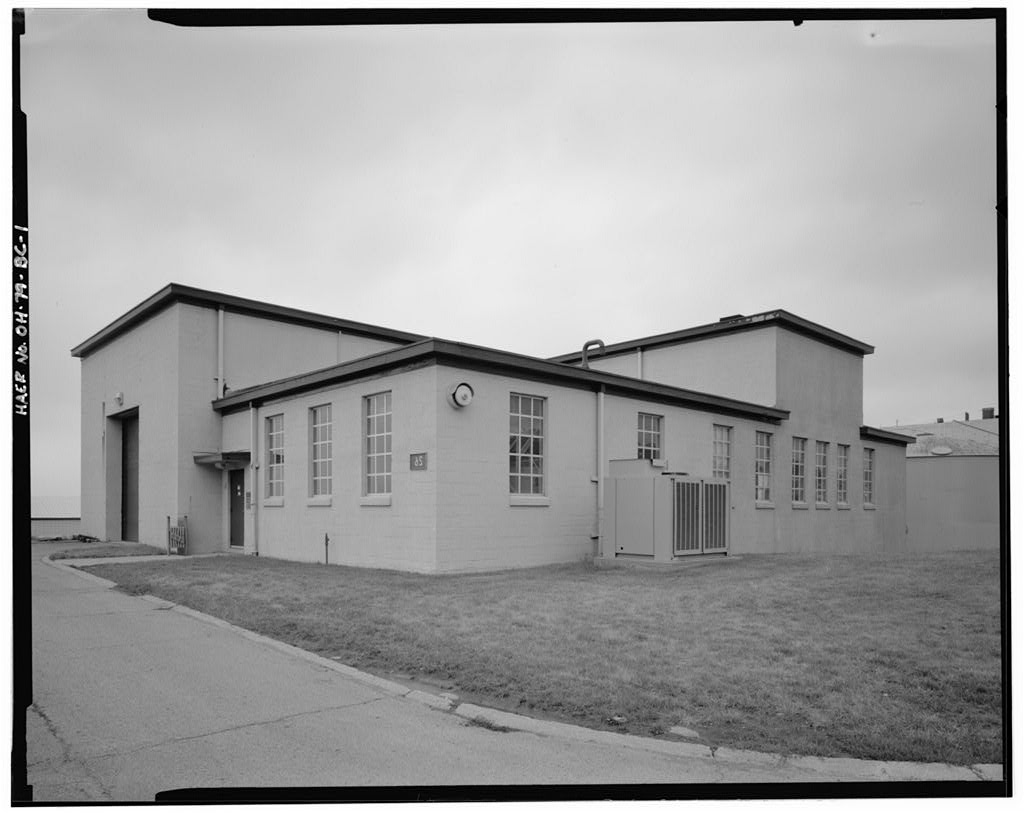
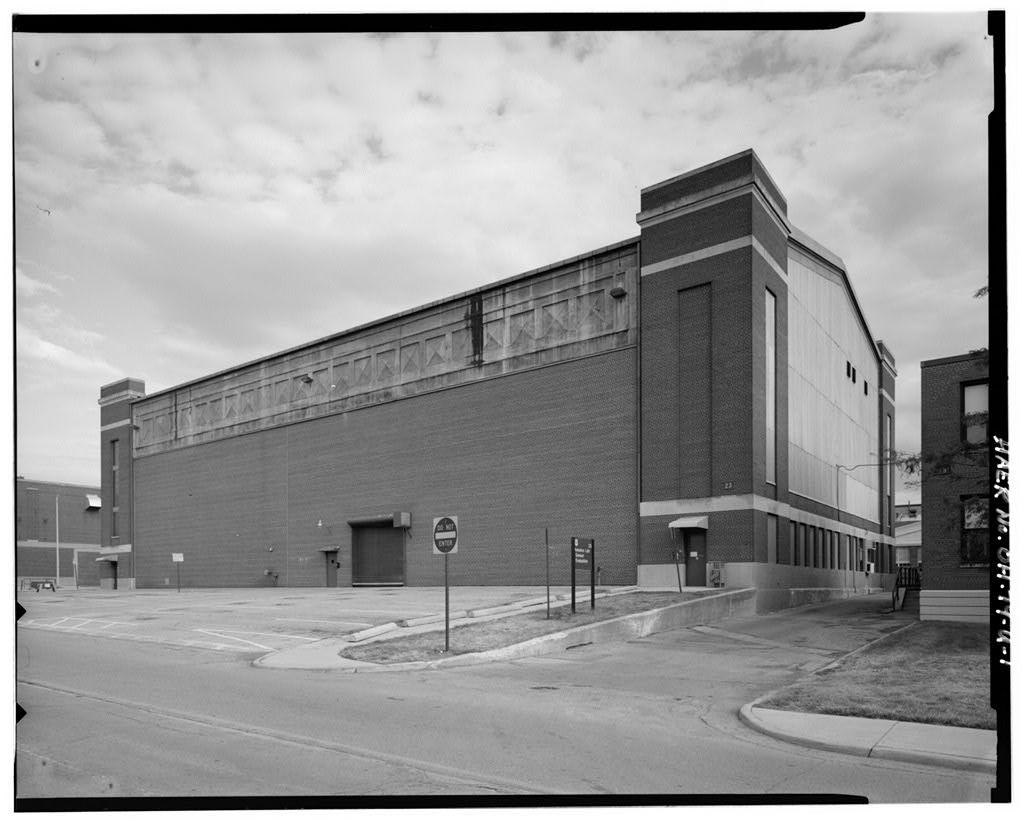
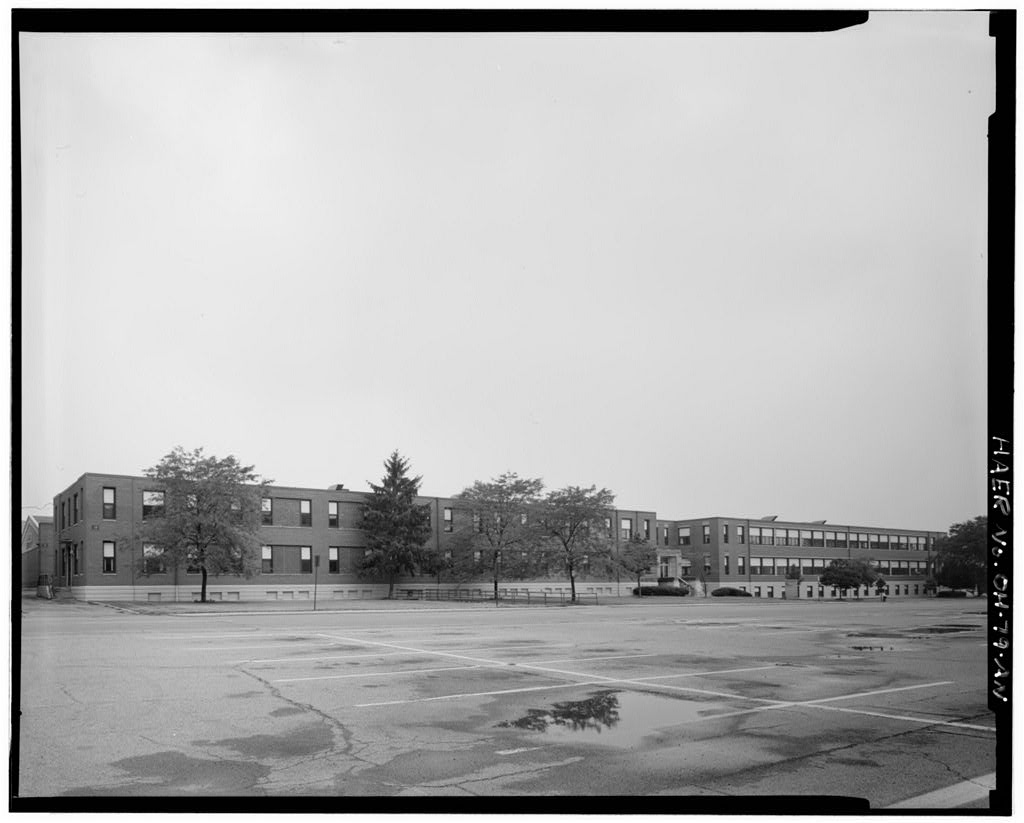
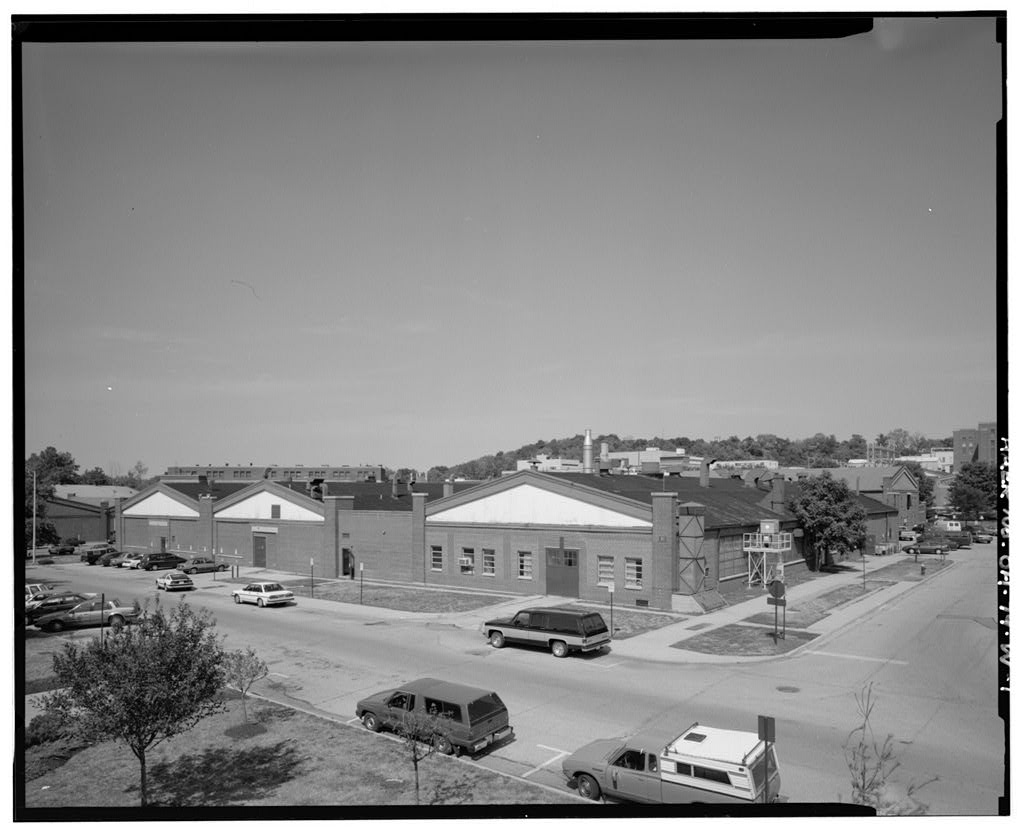
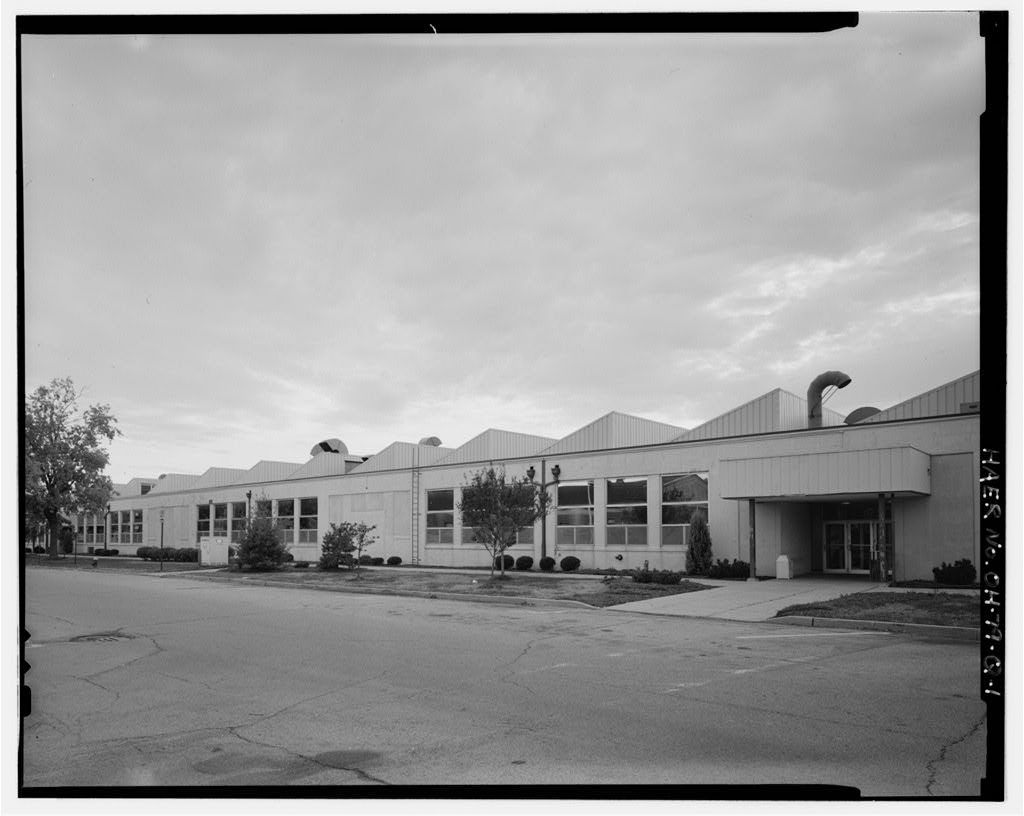
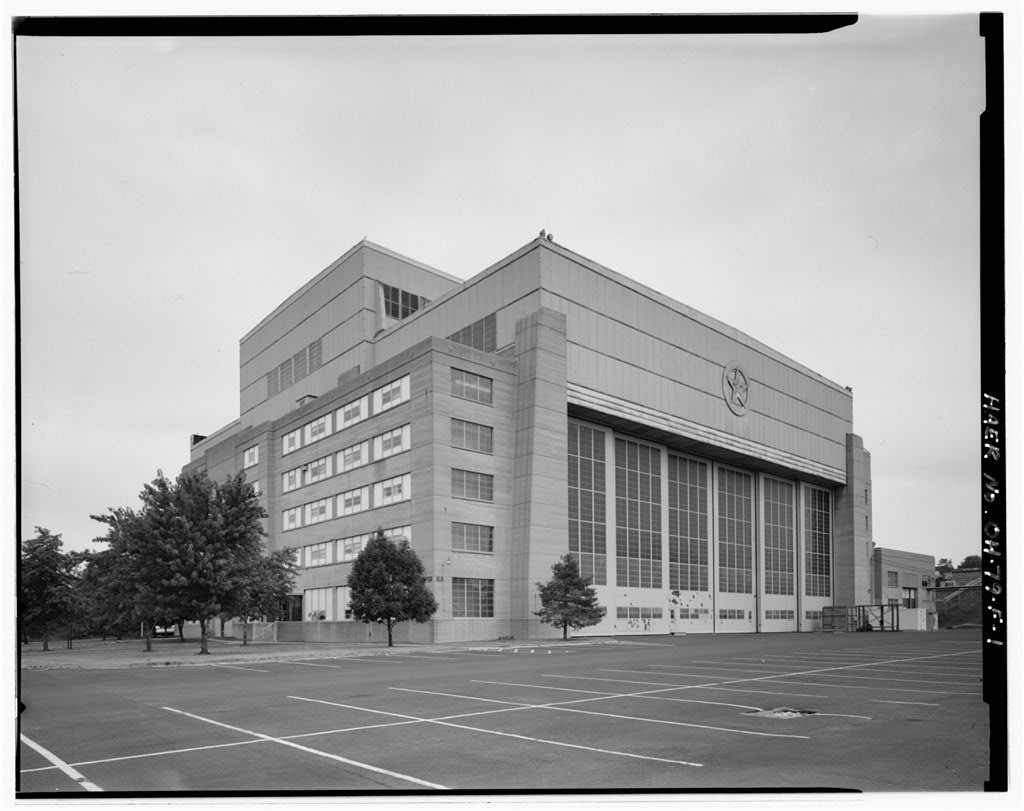
The Army Air Forces Supply Warehouse (Building 57) is a one-story ten-bay building of six-course, American bond brick with a low-pitched roof, wide copper entablature and gables of steel-sashed windows. Between the bays are rectangular brick towers with octagonal bull's eyes with concrete surround. Most of the bays have double steel doors flanked by large windows in the same style as the gable, although some have been bricked up. On the north side is a newer entrance with glass and aluminum doors and a glass transom. The building is very similar in appearance to Building 56 to the west, except that Building 56 has an additional bay, and a railroad siding that is still used on occasion.
HISTORY: The approach of war in the early prompted the Army Air Forces to greatly expand its facilities at Wright Field. One new structure was an additional supply warehouse built in just to the east of the original warehouse. While not directly on the existing railroad tracks, this was the largest space near them, and an extra spur was laid to reach Building loading dock. From the beginning, Building 57 was not used exclusively as a warehouse, and, like Building 56, its function quickly began shifting from storage and supply to laboratories and offices.
The Engineering Analysis Division Directorate of Laboratories occupied square feet, over one-quarter of the building, after its completion in This organization is significant because it possessed the first computing facilities at Wright-Patterson Air Force Base, using them to conduct research in computing techniques. The Digital Computation Facility opened in with a Remington Rand Univac electronic computer. This machine was estimated to be times faster than a mechanical calculator. Later, this facility obtained an IBM computer that utilized transistor technology. The was twenty-five times faster than the The facility solved system dynamics problems for the Systems Management Directorate and also accomplished research in numerical analysis and automatic programming techniques.
The Analogue Computation Facility opened in February of to conduct both basic and applied research. The Facility developed and operated special analogue-type equipment to simulate and solve weapon system problems. This was a typical general task for early computers, but Wright-Patterson possessed a million Reeves System Dynamic Simulator, one of the largest and most advanced computers of the time. It consisted of four different computers, called stations, which operated individually or collectively with a total of 500 computing amplifiers. To insure the validity of both problems and solutions, it included automatic features not available on previous machines, including automatic programming, WRIGHT-PATTERSON AIR FORCE BASE, AREA B, BUILDING 57, AIR FORCE SUPPLY WAREHOUSE HAER No.
OH-79-AF (Page 3) automatic voltage readouts, and automatic setting of functions, all of which increased efficiency by reducing the possibility of human error. Inevitably these machines were superseded by newer, more advanced facilities in the By that time, the remainder of the warehouse had also given way to offices and other laboratories, including the nuclear testing facility of the Materials Laboratory at the south end of the building. Since then the major occupants of Building 57 have been the Aeronautical Systems Division (ASD) System Program Offices (SPOs) for Life Support, Aeronautical Equipment, and the Mark XV Identification Friend or Foe (IFF). For bibliography, see Wright-Patterson Air Force Base overview report (HAER No. OH-79).
 Block
Block